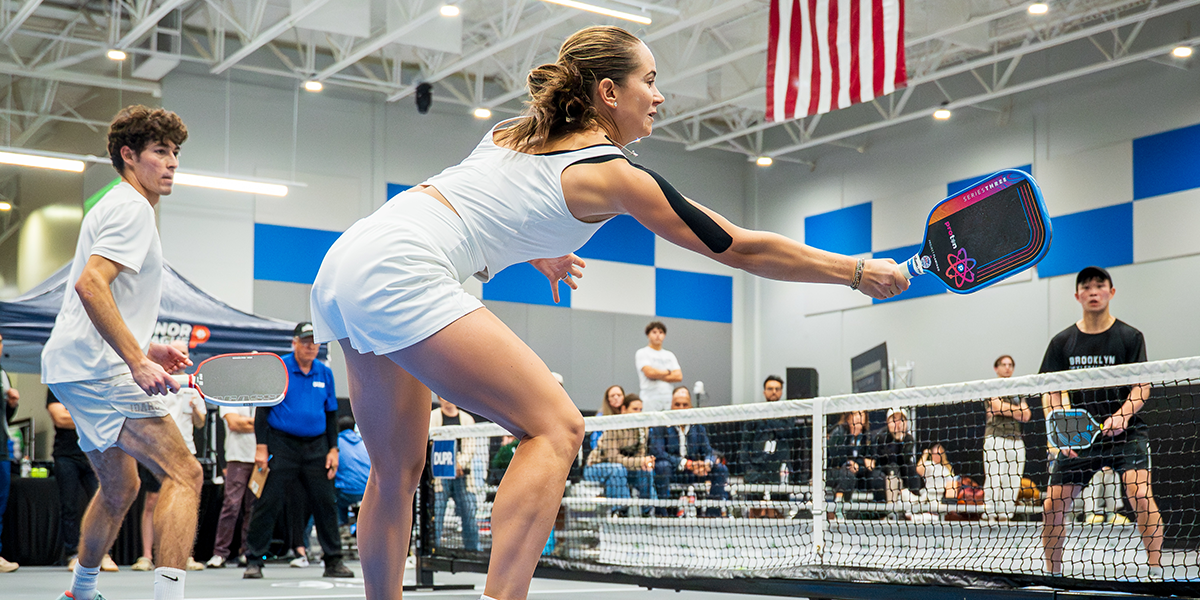
Anna Bright Playing Style Analysis: Deconstructing the #1 Women's Doubles Game
Anna Bright's ascension to the top of professional pickleball didn't happen overnight. The former UC Berkeley tennis player has methodically crafted a playing style that combines her collegiate racquet sports foundation with the unique tactical demands of pickleball. Now sitting at #1 in women's doubles, Bright's game represents a masterclass in modern pickleball strategy.
Signature Shots and Weapons
Bright's most devastating weapon remains her forehand drive from the transition zone. Unlike many players who default to the third-shot drop, Bright possesses the rare ability to thread drives through narrow court openings at speeds that force immediate errors or weak returns. Her JOOLA Anna Bright Scorpeus Pro IV paddle amplifies this strength, providing the power and control necessary for these aggressive transition shots.
Her backhand reset has become legendary among PPA Tour regulars. When opponents attempt speed-ups from the kitchen line, Bright consistently absorbs pace and redirects balls with surgical precision. This shot alone has won her countless rallies at major tournaments including the 2024 PPA Desert Ridge Open and the APP Atlanta Open.
The third signature element is her erne execution. Bright times these around-the-net winners with exceptional court awareness, often setting them up through strategic dinking patterns that pull opponents wide before she strikes. Her erne success rate exceeds most tour professionals, making it a genuine threat that opponents must constantly consider.
Court Positioning and Strategy
Bright's court positioning reflects her tennis background but adapts brilliantly to pickleball's unique spatial demands. She maintains an aggressive kitchen line position, often standing closer to the net than traditional players. This positioning allows her to cut off angles and execute more effective volleys.
Her transition game separates her from the field. Where many players struggle moving from baseline to kitchen, Bright employs a three-shot progression: drive to create pressure, move forward during opponent's defensive shot, then establish kitchen dominance with precise placement. She rarely gets caught in no-man's land because she commits fully to each phase of court position.
In doubles play, her communication and stacking adjustments show tactical sophistication. Bright switches from conventional to stacked formations mid-point when tactical advantages emerge. Her ability to read opponent weaknesses and adjust positioning accordingly has been crucial in victories against top-ranked teams throughout 2024 and 2025.
Strengths That Set Anna Bright Apart
Bright's greatest strength lies in her ability to maintain offensive pressure without sacrificing consistency. Most players face a trade-off between aggression and reliability, but Bright has eliminated this compromise through exceptional shot selection and execution.
Her mental game stands out prominently. During high-pressure moments at tournaments like the PPA Newport Beach Shootout, Bright demonstrates remarkable composure. She doesn't rush shots or abandon strategy when trailing, instead trusting her systematic approach to create opportunities.
The depth of her shot arsenal gives opponents multiple problems to solve simultaneously. While some players excel at one or two shots, Bright threatens from every court position. Her ability to hit winners from defensive positions, combined with her offensive weapons, creates constant uncertainty for opponents.
"Anna's game has evolved incredibly over the past two years. She's developed into a complete player who can beat you in multiple ways, which makes her extremely difficult to game-plan against." - Former doubles partner and current PPA commentator
Areas for Improvement
Despite her #1 ranking, Bright's game shows room for tactical refinement. Her serve placement, while consistent, occasionally lacks the strategic variety that could create more immediate advantages. Developing more serve locations and spin variations would enhance her already strong service games.
Her overhead technique, though solid, doesn't yet match her groundstroke proficiency. In high-level matches where opponents successfully lob, Bright sometimes struggles to put away what should be routine overheads. This improvement would eliminate one of the few remaining ways opponents can successfully defend against her attack.
Shot selection under extreme pressure occasionally becomes conservative. While her mental game is generally excellent, there are moments in crucial points where she defaults to safer options rather than maintaining her typically aggressive approach.
How Anna Bright Matches Up Against Top Competition
Against power players, Bright employs a patience-first strategy. She absorbs their pace through superior court positioning and waits for opportunities to redirect their aggression. Her success against teams like Waters/Johns demonstrates this tactical approach.
Facing defensive specialists requires different tactics. Bright increases her shot variety and employs more drop shots and angle changes to break down defensive walls. She's learned to build points systematically rather than seeking immediate winners against these opponents.
When matched against fellow aggressive players, Bright often engages in tactical battles of court position. She uses her superior transition game to establish net advantages first, then leverages those positions for winning shots. These matches showcase her strategic depth beyond pure shot-making.
What Recreational Players Can Learn
Bright's approach to the third-shot offers valuable lessons for recreational players. Rather than automatically dropping every third shot, study when she chooses drives versus drops based on court position and opponent placement. This decision-making process can significantly improve recreational games.
Her reset technique provides a template for handling pace. Recreational players should emulate her paddle preparation and body positioning when facing hard shots, focusing on absorption rather than immediate counterattack.
Most importantly, her systematic approach to point construction shows the value of having a plan. Bright rarely hits shots without tactical purpose. Recreational players can improve by developing their own point-building sequences rather than simply reacting to opponent shots.
Her doubles communication and positioning adjustments offer lessons in partnership play that translate directly to club-level games. The tactical principles remain constant regardless of skill level.
Last updated: April 07, 2026