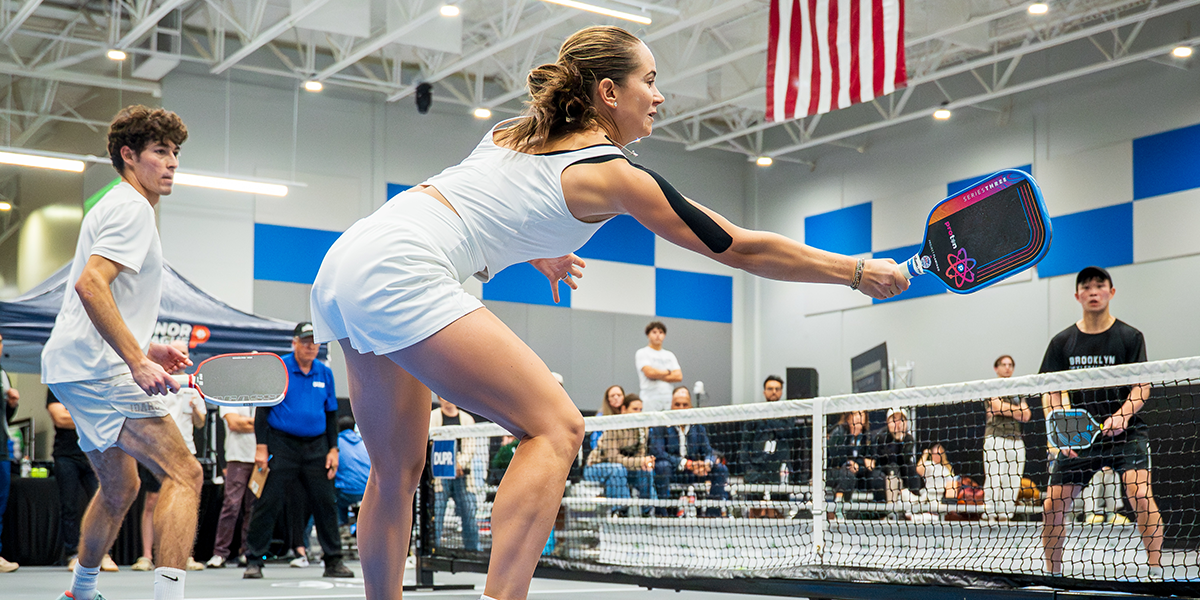
Anna Leigh Waters Playing Style Analysis: Deconstructing the #1 Player's Tactical Dominance
At just 17 years old, Anna Leigh Waters has fundamentally changed how we think about modern pickleball strategy. Her rise to the top of the rankings isn't just about raw talent—it's a masterclass in tactical evolution that has forced every top player to reassess their game.
Waters represents the new generation of pickleball athletes who grew up with paddles in their hands, bringing a level of court awareness and shot-making ability that was previously unseen in professional play. Her style combines the patience of traditional kitchen warfare with explosive offensive capabilities that can end points in milliseconds.
Signature Shots and Weapons
Waters' most devastating weapon isn't her power—it's her disguise. She can transition from a soft dink to a blistering speed-up without any telegraphing, keeping opponents constantly guessing. Her backhand speed-up from the kitchen line is particularly lethal, often catching seasoned pros off-guard with its timing and placement.
The third-shot drop has become Waters' calling card. While many players treat it as a defensive reset, she weaponizes it with subtle variations in pace and spin that create immediate offensive opportunities. Her ability to hit winners directly off third-shot drops at the 2024 PPA Finals in San Clemente demonstrated this perfectly—what should be a neutral shot becomes a point-ender in her hands.
Her erne execution stands out as perhaps the most technically sound on tour. Waters doesn't just hit ernes for highlight reels; she uses them strategically to break up rhythm and create court positioning advantages. The timing of her erne attempts often comes when opponents least expect it, usually after establishing a crosscourt dinking pattern.
The ATP shot has become another signature element. Waters' around-the-post winners from seemingly impossible angles have become routine, but more importantly, she threatens the ATP even when she doesn't attempt it, forcing opponents to adjust their positioning and opening up other areas of the court.
Court Positioning and Strategic Intelligence
Waters' court positioning reveals a chess player's mind trapped in a teenager's body. She consistently positions herself to cut off angles while maintaining optimal reset positions, a balance that many veteran players struggle to achieve.
Her transition game from the baseline to the kitchen represents textbook execution with modern twists. Rather than rushing forward after every third shot, Waters reads her opponent's court position and adjusts accordingly. When facing aggressive returners, she'll hang back an extra step to handle the counterattack. Against passive opponents, she advances more aggressively to maintain offensive pressure.
In kitchen battles, Waters employs what coaching circles call "controlled aggression." She's patient enough to dink for thirty shots when necessary, but she recognizes attackable balls faster than almost any player on tour. Her footwork during extended dinking rallies is particularly impressive—she maintains perfect ready position while subtly adjusting angles to create opportunities.
"Anna Leigh sees openings that other players don't even know exist. Her court vision is what separates good players from champions." - Former ATP tennis pro turned pickleball coach Mark Renneson
Strengths That Set Waters Apart
Waters' greatest strength isn't physical—it's mental processing speed. She processes information faster than her opponents, allowing her to stay one shot ahead in rally construction. This manifests in her ability to set up points three or four shots in advance, a level of strategic thinking typically associated with much more experienced players.
Her paddle control across all power levels is exceptional. Whether she's feathering a drop shot or ripping a putaway, the consistency of her contact point and swing path remains remarkably stable. This technical foundation allows her to execute high-percentage shots under pressure when other players might resort to low-percentage heroes.
The teenager's fitness and court coverage have redefined what's possible in women's professional pickleball. She can retrieve shots that should be winners, then immediately transition back to offensive positioning. Her ability to maintain this level of court coverage deep into three-set matches has worn down numerous opponents who appeared to have physical advantages.
Areas for Tactical Development
While Waters dominates most aspects of the game, there are areas where continued refinement could make her even more formidable. Her serve placement, while effective, occasionally becomes predictable against elite returners who scout her patterns extensively.
Under extreme pressure situations—particularly in decisive fifth games—Waters sometimes abandons her patient game plan too quickly. Her natural aggressive instincts can override tactical discipline, leading to slightly lower-percentage shot selection when the margin for error is smallest.
Her doubles stacking could use refinement against the tour's most experienced teams. While her individual skills often overcome strategic disadvantages, maximizing court positioning through advanced stacking concepts could provide additional advantages in crucial moments.
Tactical Matchup Analysis
Against power players like Catherine Parenteau, Waters adjusts her court positioning to handle pace while looking for reset opportunities that can neutralize aggressive opponents. She's learned to use these players' power against them, creating sharp angles that force difficult defensive positions.
When facing crafty veterans like Simone Jardim, Waters has shown remarkable patience, willing to engage in chess matches that can extend beyond forty-shot rallies. These matchups often come down to who makes the first critical error in pattern recognition.
Against fellow young stars, Waters typically employs more aggressive tactics early in matches, looking to establish psychological advantages through dominant court positioning and early momentum shifts.
Lessons for Recreational Players
Club players can immediately implement Waters' pre-shot routine: she consistently takes the same amount of time between points, maintaining rhythm regardless of score or situation. This mental consistency translates directly to recreational play.
Her dink selection process offers valuable lessons. Waters rarely dinks to the same spot twice consecutively, constantly varying height, pace, and placement within her comfort zone. Recreational players often fall into predictable dinking patterns that allow opponents to anticipate and attack.
Most importantly, Waters demonstrates that patience and aggression aren't opposites—they're complementary tactical elements. Learning to wait for the right ball to attack, rather than forcing offense on marginal opportunities, can dramatically improve any player's success rate.
Study her ready position during kitchen battles. Waters maintains the same athletic stance whether she's about to dink or speed up, never telegraphing her intentions through body language changes that alert opponents.
Last updated: April 07, 2026