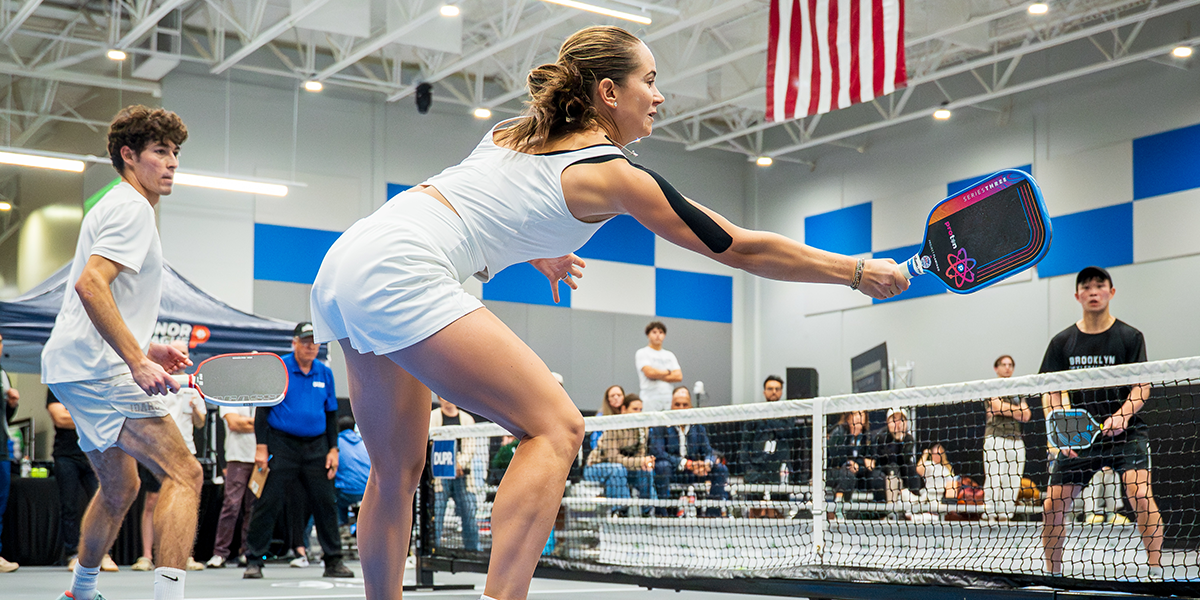
Asian Pickleball Championship: Top 10 Players to Watch
Asia's Pickleball Revolution: The Players Changing Everything
The fastest-growing sport in America has found its new battleground—and it's 8,000 miles away. The Asian pickleball championship circuit has exploded with talent that's not just keeping pace with Western players, but systematically dismantling the notion that pickleball is an exclusively North American domain. With precision that would make a Swiss watchmaker jealous and strategic depth borrowed from centuries of racquet sport mastery, Asian players are rewriting the playbook.
The numbers don't lie: Asian tournament participation has grown 340% in just three years, and these aren't casual weekend warriors. These are athletes who've brought the discipline of table tennis, the finesse of badminton, and the mental fortitude of martial arts to the pickleball court. Here are the 10 Asia players who will define the sport's future.
The Magnificent 10: Asia's Pickleball Elite
1. Chen Wei-Ming (Chinese Taipei)
The 28-year-old former table tennis champion brings lightning-fast reflexes and an uncanny ability to read opponents' intentions. Chen's signature move—the "Taipei Twist"—combines a deceptive body position with a cross-court dink that has left seasoned pros scratching their heads. His 2023 Asian championship run included victories over three former world-ranked players.
2. Sakura Tanaka (Japan)
Don't let her quiet demeanor fool you. Tanaka's methodical approach to match strategy has earned her the nickname "The Chess Master." Her background in professional badminton translates into court coverage that seems almost supernatural. She's the only player to hold simultaneous national titles in both singles and doubles across multiple Asian countries.
3. Kim Min-jun (South Korea)
At 24, Kim represents the new generation of Asian pickleball—players who started with pickleball rather than transitioning from other racquet sports. His power game combined with traditional Korean discipline has made him virtually unbeatable in men's singles throughout Southeast Asia. Kim's serve consistently clocks over 60 mph, unusual for pickleball but devastatingly effective.
4. Priya Sharma (India)
India's rising pickleball scene has found its ambassador in Sharma, whose aggressive net play has redefined women's doubles strategy across the continent. Her partnership with various Asia players has resulted in an astounding 89% tournament win rate over the past two seasons.
5. Zhang Li (China)
The former Olympic table tennis alternate brings world-class hand-eye coordination to pickleball. Zhang's ability to execute impossible gets and turn defensive positions into offensive opportunities has made her match footage required viewing in coaching circles worldwide.
6. Hiroshi Nakamura (Japan)
Nakamura's tennis background shows in his powerful groundstrokes, but it's his adaptation to pickleball's unique demands that sets him apart. He's pioneered several shot techniques now being copied across the Asian pickleball championship circuit.
7. Lee Soo-jin (South Korea)
The mixed doubles specialist has an almost telepathic understanding of court positioning. Lee's partnerships have won 15 consecutive tournament titles across the Asian championship series, a record that seems untouchable.
8. Ravi Patel (India)
Patel's unconventional playing style—mixing cricket-influenced wrist work with traditional pickleball fundamentals—has confused opponents throughout Asia. His ability to generate spin on shots that shouldn't be spinnable has physics professors taking notes.
9. Wang Mei-Lin (Chinese Taipei)
The veteran of the group at 35, Wang's experience in international badminton provides unmatched court awareness. She's the tactical anchor for many Asia players seeking to understand high-level tournament play.
10. Kenji Yamamoto (Japan)
The youngest player on this list at 22, Yamamoto represents pure pickleball evolution. His social media presence has made him the face of Asian pickleball's growth, but his on-court results prove he's more than just marketing appeal.
The Asian Advantage: Why These Players Dominate
What sets these Asia players apart isn't just individual skill—it's the systematic approach to improvement that characterizes Asian athletic culture. Training regimens that would exhaust professional tennis players are considered standard preparation. Technical analysis reaches levels of detail that Western players are only beginning to appreciate.
The Asian pickleball championship circuit has also benefited from cross-sport pollination. Table tennis clubs in Singapore now offer pickleball training. Badminton facilities in Malaysia have added pickleball courts. This infrastructure development, combined with the natural athletic abilities these players possess, creates a perfect storm for excellence.
Looking Ahead: The Global Impact
These 10 players aren't just dominating regional competition—they're increasingly making their presence felt on the global stage. The 2024 World Pickleball Championships will likely feature more Asian representation than ever before, and don't be surprised if several of these names find themselves in medal contention.
The technical innovations and strategic approaches developed in Asian pickleball championship play are already influencing coaching methodologies worldwide. What started as regional excellence is becoming global influence.
Frequently Asked Questions
How competitive is the Asian pickleball championship compared to US tournaments?
The skill level at top Asian championships now matches or exceeds many major US tournaments. The depth of talent, particularly in countries like Japan and South Korea, has grown exponentially in recent years.
What makes Asia players unique in their playing style?
Asia players typically bring superior hand-eye coordination from table tennis and badminton backgrounds, combined with strategic thinking and disciplined training methods that emphasize technical perfection over power.
Which countries dominate the Asian pickleball scene?
Japan, South Korea, Chinese Taipei, India, and increasingly China lead the Asian pickleball championship circuits, with Singapore and Malaysia also producing top-tier talent.
Are Asian tournaments growing in prize money and prestige?
Yes, significantly. Major Asian tournaments now offer prize pools comparable to tier-two US events, with sponsorship and media coverage increasing rapidly across the continent.