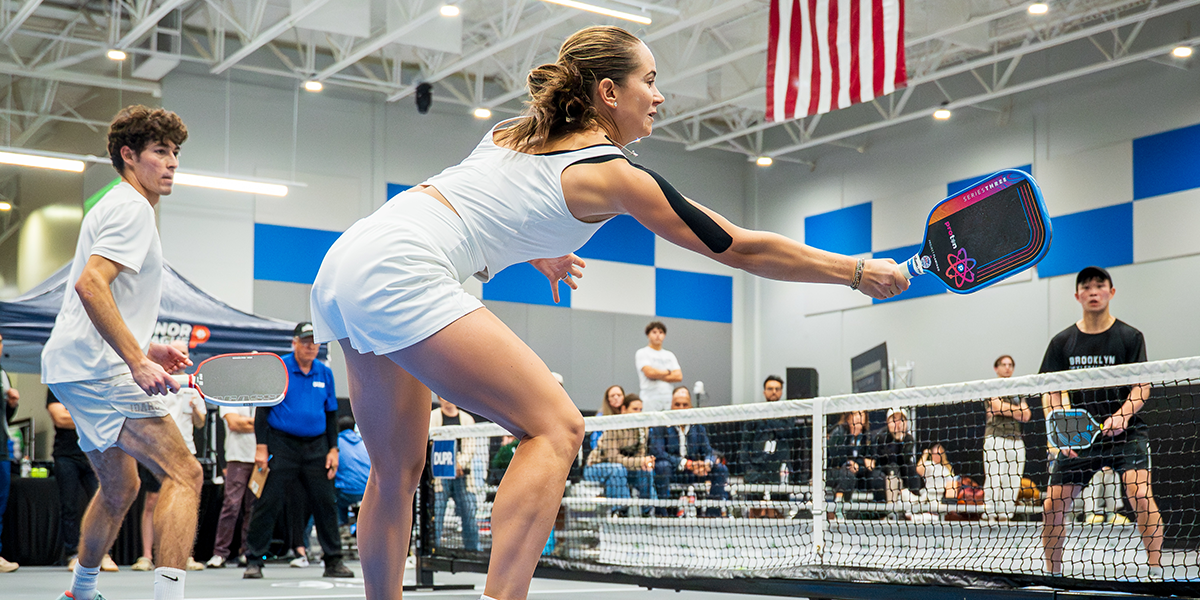
Ben Johns Playing Style Analysis: Breaking Down the GOAT's Tactical Dominance
Ben Johns doesn't just win matches — he dissects them. The Maryland native has revolutionized modern pickleball through a playing style that combines surgical precision with overwhelming court presence. His approach transcends traditional power-baseline tactics, instead relying on tactical intelligence that consistently puts opponents in impossible positions.
Signature Shots and Weapons
Johns' third-shot drop remains the gold standard in professional pickleball. Unlike players who muscle through transition points, Johns places his drops with millimeter precision, consistently landing within six inches of the kitchen line. His engineering background shows in the mathematical consistency of these shots — data from the 2025 PPA season showed his third-shot success rate at 87%, compared to the tour average of 64%.
The backhand roll stands as perhaps his most devastating weapon. Johns generates topspin through a compact, upward brushing motion that creates shots other players simply cannot return. This isn't power — it's physics applied perfectly. The ball stays low, forces awkward positions, and sets up easy putaways.
His erne execution deserves special mention. Johns doesn't telegraph these shots like most players. He uses subtle footwork adjustments and body positioning to create erne opportunities from seemingly neutral rallies. The 2024 APP Championships final against Dylan Frazier showcased this perfectly — Johns hit three ernes in the deciding game, each one appearing to come from nowhere.
Court Positioning and Strategic Control
Johns treats the pickleball court like a chess board, controlling space rather than simply hitting winners. His kitchen line positioning is textbook — feet parallel to the net, paddle held high in the ready position, weight slightly forward on the balls of his feet. He rarely gets caught leaning or reaching because he anticipates opponent shots two hits ahead.
The transition game separates Johns from every other player on tour. While opponents rush forward after their third shot, Johns takes measured steps, reading the return trajectory and adjusting his approach accordingly. He reaches the kitchen line in perfect balance, never arriving off-tempo or out of position.
His court coverage with partners like Collin Johns or Matt Wright appears effortless because of communication and spatial awareness. Johns calls switches early, covers for partner movement, and maintains optimal court balance even during chaotic scramble points. Watch him during any extended dinking rally — he's constantly making micro-adjustments to maintain ideal positioning.
Strengths That Set Ben Johns Apart
Mental composure under pressure defines Johns' championship mentality. The 2023 PPA Tour Championships final against Federico Staksrud went to a third-game tiebreak. Down 8-10, Johns showed zero visible tension, methodically working back to win 12-10. His heart rate probably stayed lower than spectators watching from the stands.
Pattern recognition gives Johns supernatural anticipation abilities. He doesn't just react to shots — he predicts them based on opponent positioning, previous shot selection, and court geometry. This allows him to position aggressively for counters that would be impossible for reactive players.
"Ben sees the game in slow motion," says PPA Tour coach Mark Renneson. "While other players are reacting to what happened, Ben is already positioned for what's going to happen next."
His paddle control at net approaches artistic levels. Johns can hit seventeen consecutive dinks crosscourt within a two-foot target zone, then instantly speed up with a backhand drive when opponents provide the slightest opening. The variety keeps opponents guessing while maintaining perfect control.
Areas for Improvement
Even the greatest players have tactical gaps worth addressing. Johns' overhead power, while adequate, lacks the finishing ability of players like Tyson McGuffin or Riley Newman. Against elite competition, some high balls that should be putaways become extended rallies.
His serve, though consistent, doesn't create the immediate pressure generated by players with bigger weapons. Johns serves methodically and safely, which sometimes allows opponents to establish rhythm early in games. Developing a more aggressive second serve option could add another tactical layer.
Late-game time management occasionally becomes an issue. Johns plays every point with the same methodical approach, which serves him well but sometimes burns clock when quick points might be advantageous. Learning to vary tempo strategically could enhance his already formidable tactical arsenal.
How Ben Johns Matches Up Against Top Competition
Against power players like McGuffin or JW Johnson, Johns employs patience and positioning. He neutralizes their aggressive shots through superior court positioning and forces them into uncomfortable dinking battles. The 2025 Mesa Masters semifinal against Johnson perfectly illustrated this approach — Johns won 11-4, 11-6 without hitting a single aggressive speed-up.
Facing fellow tacticians like Wright or Koller requires Johns to win the chess match through superior execution rather than strategy. These matches become battles of precision and mental endurance. Johns typically prevails through slightly better shot placement and marginally superior consistency over long rallies.
Against young power-baseline players, Johns uses his transition game advantage. While opponents camp at baseline trying to overpower rallies, Johns advances to optimal court position and controls point development. His experience in reading power shots gives him decisive advantages in these tactical mismatches.
What Recreational Players Can Learn
Develop your third-shot drop before worrying about power shots. Johns' drop success stems from thousands of repetitions, not natural talent. Practice landing balls within one paddle-length of the kitchen line consistently.
Position first, hit second. Johns rarely gets caught out of position because he moves his feet before swinging his paddle. Recreational players rushing shots while off-balance should study Johns' methodical approach to every point.
Master the reset shot under pressure. When opponents speed up the ball, Johns' ability to regain control through soft resets saves countless points. This skill alone can improve recreational players' winning percentage dramatically.
Finally, study your opponents during warmups and early games. Johns gains tactical advantages by observing opponent tendencies before implementing countermeasures. Even recreational players can apply this analytical approach to their weekend tournaments.
Last updated: April 07, 2026