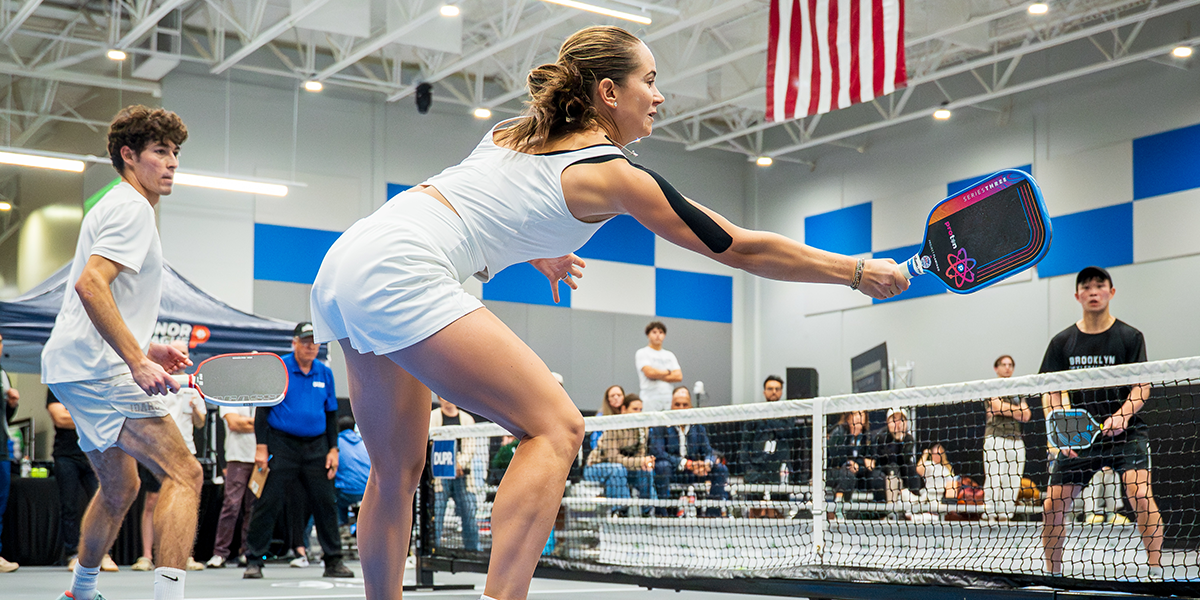
Federico Staksrud Playing Style Analysis: Deconstructing Argentina's #2 Singles Threat
Federico Staksrud has quietly assembled one of the most complete games in professional pickleball. The Buenos Aires native sits at #2 in men's singles on the PPA Tour — a position earned through methodical court craft rather than flashy power. His JOOLA paddle becomes an extension of surgical precision, dissecting opponents through calculated aggression and unforced error minimization.
Staksrud represents the new wave of international talent elevating pickleball's global profile. Unlike the paddle-banging American power players who dominated early professional pickleball, the Argentine brings a chess-master approach that prioritizes positioning over pace.
Signature Shots and Weapons
Staksrud's most devastating weapon remains his third-shot drop execution from impossible court positions. While most players struggle to reset from deep defensive positions, he consistently finds the kitchen line with drops that land within inches of the net. This shot selection transforms defensive scrambles into offensive opportunities.
His backhand erne has become legendary among PPA regulars. Staksrud times his kitchen-line approaches perfectly, stepping around the net for aggressive putaways that leave opponents helpless. The technique requires precise footwork and fearless net commitment — qualities that separate elite players from the pack.
"Federico makes shots that shouldn't exist. He turns impossible angles into winners through pure court geometry." — Ben Johns, following their quarterfinal match at the 2025 Mesa Open
The cross-court speed-up from the left side creates Staksrud's most reliable point-ending sequence. He disguises the acceleration beautifully, maintaining the same paddle preparation whether executing a soft reset or driving the ball through opponents' defenses. This deception forces opponents into reactive positions rather than proactive court coverage.
Court Positioning and Strategy
Staksrud controls the middle third of the court better than almost anyone in professional pickleball. His transition game relies on systematic court movement rather than athletic scrambling. He rarely finds himself out of position because every step serves multiple tactical purposes.
During dinking rallies, Staksrud maintains optimal kitchen-line spacing while subtly adjusting angles to create opponent movement. He understands that pickleball points develop through accumulated advantages rather than single spectacular shots. His positioning forces opponents into increasingly difficult shot selections.
The Argentine's defensive court coverage showcases exceptional anticipation. He reads opponents' paddle positions and weight distribution to predict shot direction before contact occurs. This pre-movement allows him to arrive at defensive positions with time to execute quality resets rather than desperate defensive swings.
His stacking strategies in doubles reveal advanced tactical thinking. Staksrud positions himself to maximize his dominant cross-court forehand while minimizing his partner's weaker shot patterns. These formations create offensive advantages that compound throughout extended rallies.
Strengths That Set Federico Staksrud Apart
Mental toughness distinguishes Staksrud from talented players who crumble under pressure. He maintains identical shot selection and court demeanor whether leading by eight points or facing match point. This psychological consistency translates into reliable performance across different tournament contexts.
His paddle control through extended soft-game exchanges rivals anyone on tour. Staksrud can sustain 40-shot dinking rallies while gradually improving his court position and shot quality. Most players experience control degradation during long exchanges — he somehow becomes more precise.
Court awareness represents another elite-level strength. Staksrud tracks opponent positioning, identifies developing opportunities, and executes tactical adjustments mid-rally. He processes multiple variables simultaneously while maintaining shot execution quality.
The diversity of his counterattack options keeps opponents guessing throughout matches. He can reset aggressive drives, redirect pace for winners, or absorb power into soft drops that restart rallies on his terms. This tactical flexibility prevents opponents from establishing consistent attacking rhythms.
Areas for Improvement
Staksrud's serve lacks the placement precision and pace variation of top American players. His second serve becomes predictable during crucial points, allowing opponents to position aggressively for return attacks. Developing serve weapons would eliminate easy points for opponents.
Physical conditioning appears limiting during extended tournament weekends. His movement quality decreases noticeably during third-set scenarios, particularly in hot weather conditions. Enhanced fitness would maintain his technical precision throughout marathon matches.
The forehand attack from above shoulder height needs refinement. Staksrud often settles for conservative placement when aggressive finishing opportunities present themselves. Developing consistent overhead power would provide additional point-ending options.
His communication and court chemistry in mixed doubles requires development. The cultural and language differences sometimes create coordination issues with American partners during crucial points.
How Federico Staksrud Matches Up Against Top Competition
Against Ben Johns, Staksrud employs patient rally construction and avoids early aggression that plays into Johns' counterattack strengths. He extends points through consistent depth and forces Johns into generating offense rather than redirecting opponent pace.
Versus Connor Garnett's power game, the Argentine focuses on pace absorption and court positioning. He rarely engages in pace battles, instead using Garnett's aggressive shot selection to create reset opportunities and court control.
When facing Dylan Frazier's all-court speed, Staksrud emphasizes angles over pace to move the athletic American laterally. He understands that sustained court movement eventually creates openings against even the fastest defenders.
Against fellow international players, Staksrud adapts his tactical approach based on opponents' cultural playing styles. He recognizes that different pickleball backgrounds create distinct strategic priorities and shot preferences.
What Recreational Players Can Learn
Recreational players should study Staksrud's shot selection discipline. He rarely attempts low-percentage shots, instead building points through high-success-rate ball placement. This approach minimizes unforced errors while maximizing opponent pressure.
His third-shot drop consistency demonstrates the importance of dedicated practice on fundamental shots. Staksrud's technical precision comes from thousands of repetitions, not natural talent alone.
Court positioning awareness offers immediate improvement opportunities for amateur players. Staksrud's systematic movement patterns can be adapted to any skill level, creating better shot opportunities and defensive coverage.
His mental approach during pressure situations provides a blueprint for competitive success. Maintaining consistent shot selection and court demeanor regardless of score situations prevents emotional decision-making that creates unforced errors.
Study his rally patience. Recreational players often rush point development, but Staksrud proves that methodical construction leads to higher-quality opportunities than aggressive shot-hunting.
Last updated: April 07, 2026