Understanding pickleball court dimensions is crucial whether you're building your own court, converting existing space, or simply wanting to improve your game strategy. The standardized measurements ensure consistent play across all venues and skill levels.
Standard Pickleball Court Measurements
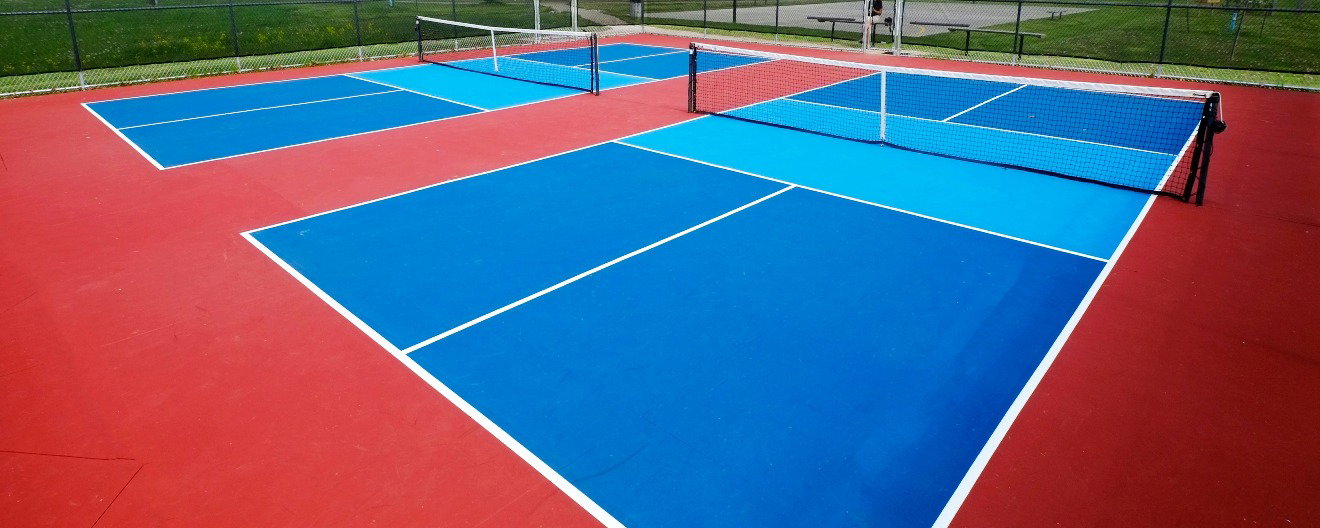
The official pickleball court measures 20 feet in width and 44 feet in length. These dimensions remain constant for both singles and doubles matches, unlike tennis which requires different court sizes. This standardization simplifies court construction and equipment needs.
The total playing area of 880 square feet makes pickleball courts significantly smaller than tennis courts (2,808 square feet), contributing to the sport's accessibility and faster-paced gameplay.
Net Specifications and Positioning
The pickleball net spans the court's full 20-foot width, positioned exactly at the midpoint to create two identical 22-foot sections. Net height varies slightly across its span:
- Sidelines: 36 inches high
- Center: 34 inches high
This 2-inch sag in the center follows the natural tension curve and helps distinguish pickleball from badminton, which maintains uniform net height.
Court Zone Breakdown
The Kitchen (Non-Volley Zone)
Perhaps the most distinctive feature of pickleball courts is the non-volley zone, commonly called "the kitchen." This rectangular area extends:
- 7 feet from the net on each side
- 20 feet across the court's full width
The kitchen line runs parallel to the net and creates a 14-foot by 20-foot total non-volley area. Players cannot hit volleys while standing in this zone, adding strategic depth to the game.
Service Areas
Each side of the court contains two service boxes, created by dividing the area behind the kitchen:
- Width: 10 feet each (half the court width)
- Length: 15 feet (from kitchen line to baseline)
The centerline runs perpendicular to the net, separating right and left service areas. During serve, the ball must land diagonally across in the appropriate service box.
Boundary Lines and Markings
All court lines should be 2 inches wide and clearly visible. The standard color is white, though some facilities use yellow for better visibility. Line markings include:
- Baselines: The back boundaries of each court half
- Sidelines: The left and right court boundaries
- Kitchen lines: Mark the non-volley zone boundaries
- Centerline: Divides service areas
Lines are considered part of the court area they border, meaning balls landing on lines are "in play."
Space Requirements and Clearances
While the court itself measures 20x44 feet, additional space is recommended for safe play:
- Minimum clearance: 10 feet beyond baselines, 6 feet beyond sidelines
- Recommended clearance: 12 feet beyond baselines, 8 feet beyond sidelines
- Overhead clearance: Minimum 18 feet (22 feet recommended)
These buffer zones prevent player collisions and allow for proper ball retrieval during intense rallies.
Court Conversion Considerations
Many facilities convert existing sports courts for pickleball use:
- Tennis courts: Can accommodate 2-4 pickleball courts
- Badminton courts: Nearly identical dimensions for easy conversion
- Basketball courts: Can fit 2-3 pickleball courts depending on layout
Temporary court lines can be added with tape or paint for multi-use facilities.
Surface and Equipment Standards
Court surfaces should provide consistent ball bounce and player traction. Common materials include:
- Concrete with acrylic coating
- Asphalt with proper surfacing
- Specialized court tiles
- Indoor wooden floors (gymnasium style)
The surface should be level with proper drainage for outdoor courts and appropriate lighting for evening play.
Frequently Asked Questions
How does a pickleball court compare to a tennis court in size?
A pickleball court (880 sq ft) is roughly one-third the size of a tennis court (2,808 sq ft). This smaller size contributes to pickleball's reputation as more accessible for players with limited mobility and creates faster-paced games with more volleys and strategic placement.
Can I build a pickleball court in my backyard?
Yes, but you'll need a minimum space of 34x64 feet (including recommended clearances). The court itself requires 20x44 feet, but additional buffer space ensures safe play. Consider local zoning laws, drainage, and neighbor relations before construction.
Why is the kitchen zone exactly 7 feet deep?
The 7-foot depth creates the perfect balance between allowing strategic dinking near the net while preventing aggressive net play that would eliminate longer rallies. This dimension encourages the transition game that makes pickleball unique among racquet sports.