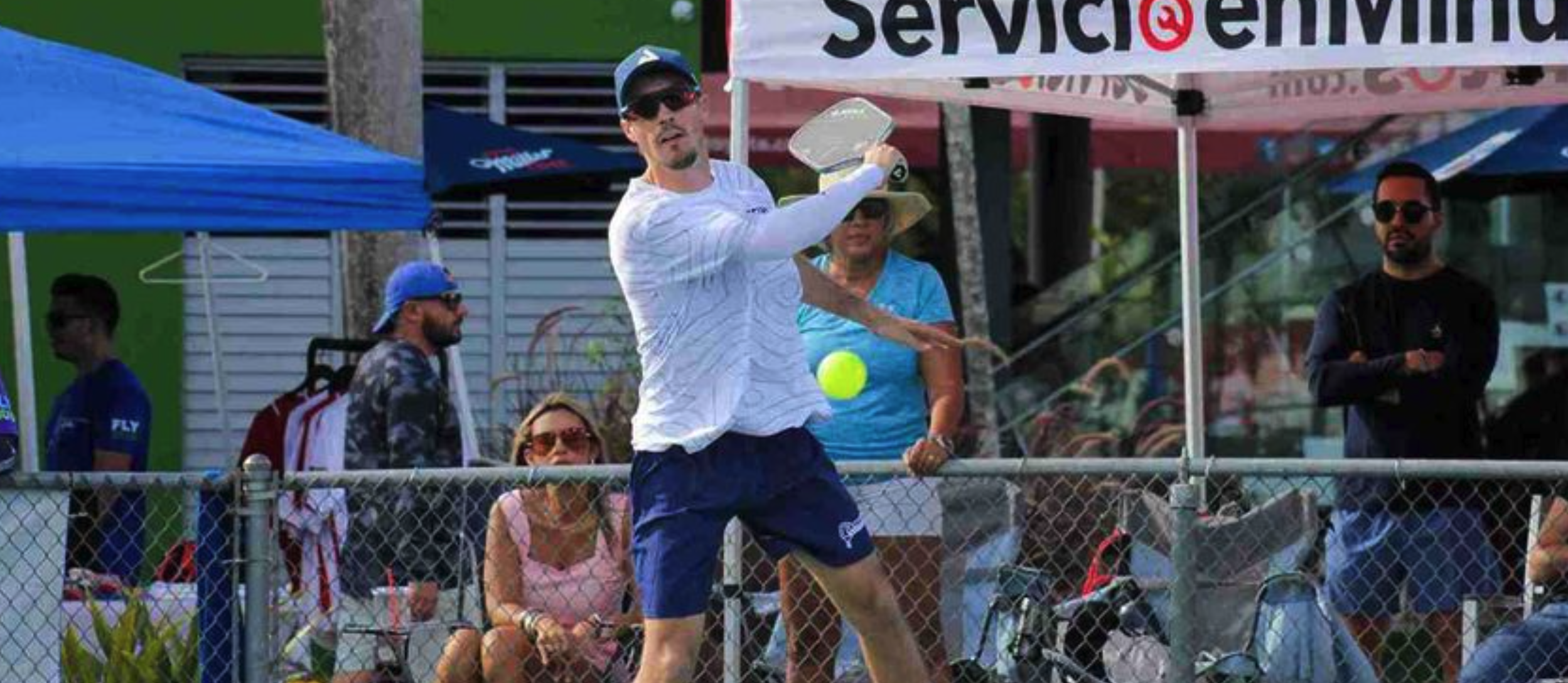
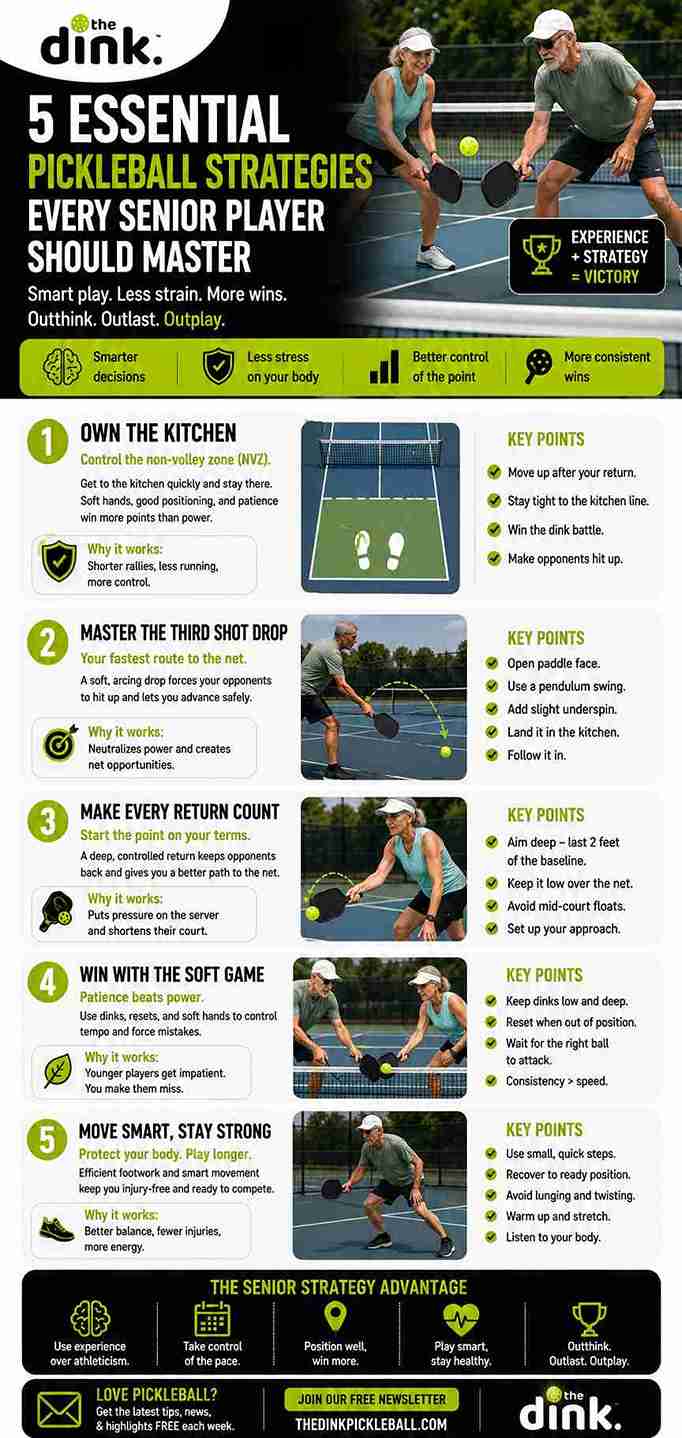
Senior pickleball isn't about slowing down—it's about leveling up your tactical game. These five proven strategies help experienced players dominate matches against younger, more athletic opponents by emphasizing court intelligence over raw power.
Why Senior Strategy Trumps Youth in Pickleball
Unlike many sports where age becomes a disadvantage, pickleball rewards tactical thinking and patience. Studies in sports science show that strategic games significantly reduce the performance gap between age groups compared to power-based activities.
A seasoned 65-year-old player who understands shot placement and game flow can consistently defeat a 35-year-old who relies solely on hard hitting. The key lies in developing a systematic approach to each point.
Strategy #1: Master the Third Shot Drop
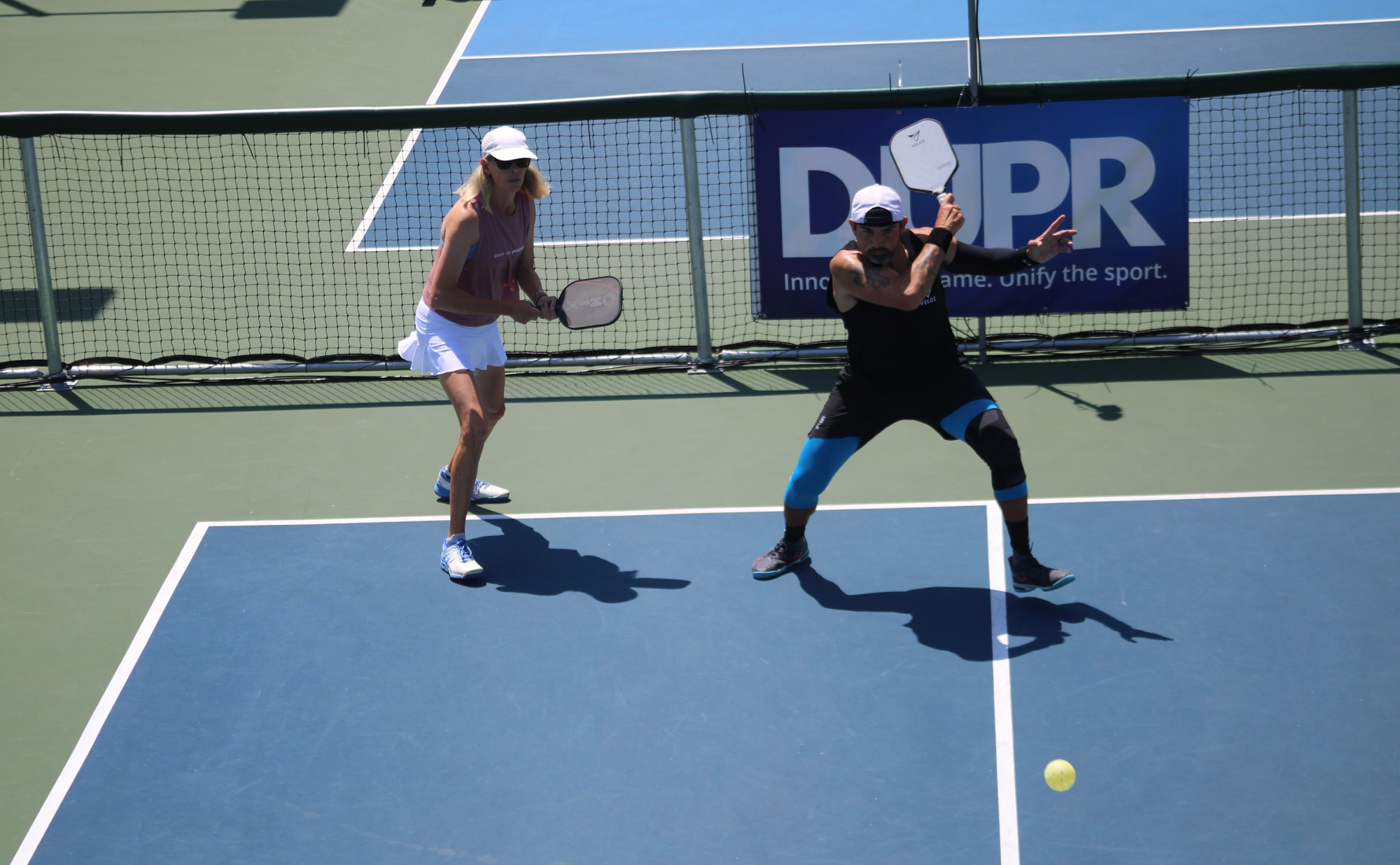
The third shot drop is your gateway to controlling the net. Instead of attempting powerful groundstrokes that often result in errors, focus on hitting soft, arcing shots that land in the opponent's kitchen.
This strategy forces younger players out of their comfort zone. They want to attack, but a well-executed drop shot neutralizes their power advantage and brings you into the point on equal terms.
Key Third Shot Drop Tips:
- Aim for consistency over perfection
- Use a continental grip for better touch
- Focus on trajectory rather than speed
- Practice from various court positions
Strategy #2: Develop Unshakeable Court Positioning
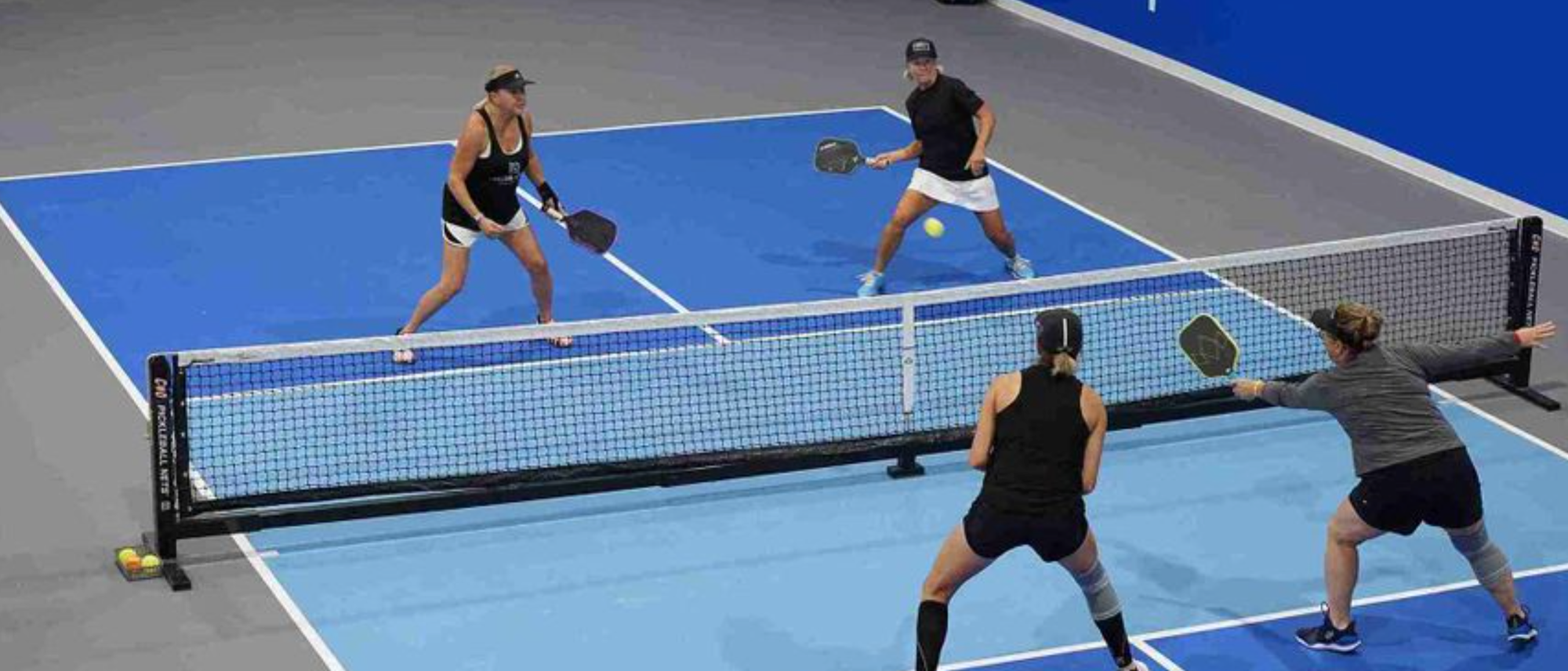
Proper positioning compensates for reduced mobility. By anticipating where the ball will go and moving efficiently, you'll cover more court with less effort.
Stay centered behind the baseline until you can advance safely. When at the net, maintain a ready position that allows quick lateral movement without overcommitting to one side.
Strategy #3: Utilize Patience as Your Secret Weapon
Younger players often beat themselves by attempting low-percentage shots. Your advantage lies in consistency and patience—letting opponents make errors while you keep the ball in play.
This doesn't mean playing defensively. It means choosing your attacking moments wisely and building points methodically rather than going for winners on every shot.
Strategy #4: Target Your Opponent's Weaknesses
Aggressive players typically have identifiable patterns. They might favor their forehand, struggle with soft shots, or become impatient during longer rallies.
Observe these tendencies during warm-up and early points, then exploit them systematically. Hit to their backhand if it's weaker, use more drops if they prefer hard exchanges, or extend rallies if they lack patience.
Common Weaknesses to Target:
- Poor backhand technique
- Difficulty with pace changes
- Impatience during dink rallies
- Overplaying on short balls
Strategy #5: Perfect Your Dinking Game
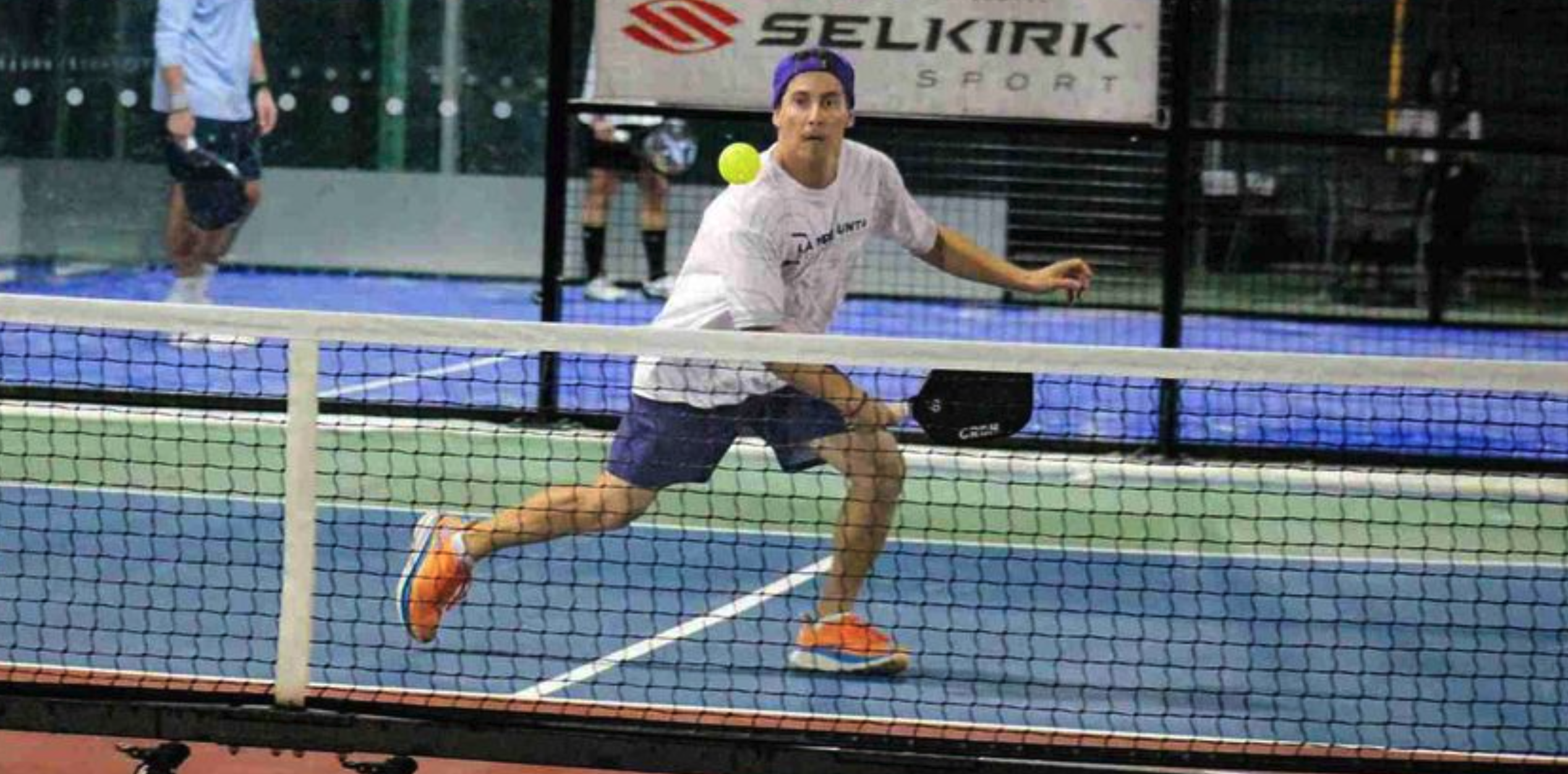
The dink is where experience shines brightest. This soft game requires touch, patience, and tactical awareness—all areas where senior players excel.
Develop variations in your dinking: cross-court angles, down-the-line placement, and subtle pace changes. Use dinks to move opponents around the kitchen, creating opportunities for put-away shots.
Remember, the player who controls the dinking exchange usually wins the point. Make this your domain through consistent practice and strategic thinking.
Implementing Your Senior Strategy System
These strategies work best when combined into a cohesive game plan. Start each match by establishing your third shot drop, then use positioning and patience to build points methodically.
Pay attention to your opponent's reactions and adjust accordingly. If they're getting frustrated with your pace of play, maintain it. If they're making errors on specific shots, continue targeting those areas.
The beauty of senior pickleball strategy lies in its sustainability. While power-based games fluctuate with energy levels and conditions, tactical approaches remain consistent throughout matches and across seasons.
Frequently Asked Questions
How long does it take to master these senior pickleball strategies?
Most players see improvement within 4-6 weeks of focused practice. The third shot drop and dinking require the most repetition, while positioning and patience develop through match experience. Consistent practice 2-3 times per week accelerates the learning process.
Can these strategies work against players of all skill levels?
Yes, these tactical approaches are effective across skill levels. Against beginners, they provide structure and consistency. Against advanced players, they level the playing field by neutralizing power advantages and forcing longer, more strategic rallies.
What's the most important strategy for senior players to focus on first?
Start with the third shot drop, as it's fundamental to transitioning from defense to offense. Once you can consistently hit drops, add positioning improvements and patience. The other strategies build naturally from this foundation.