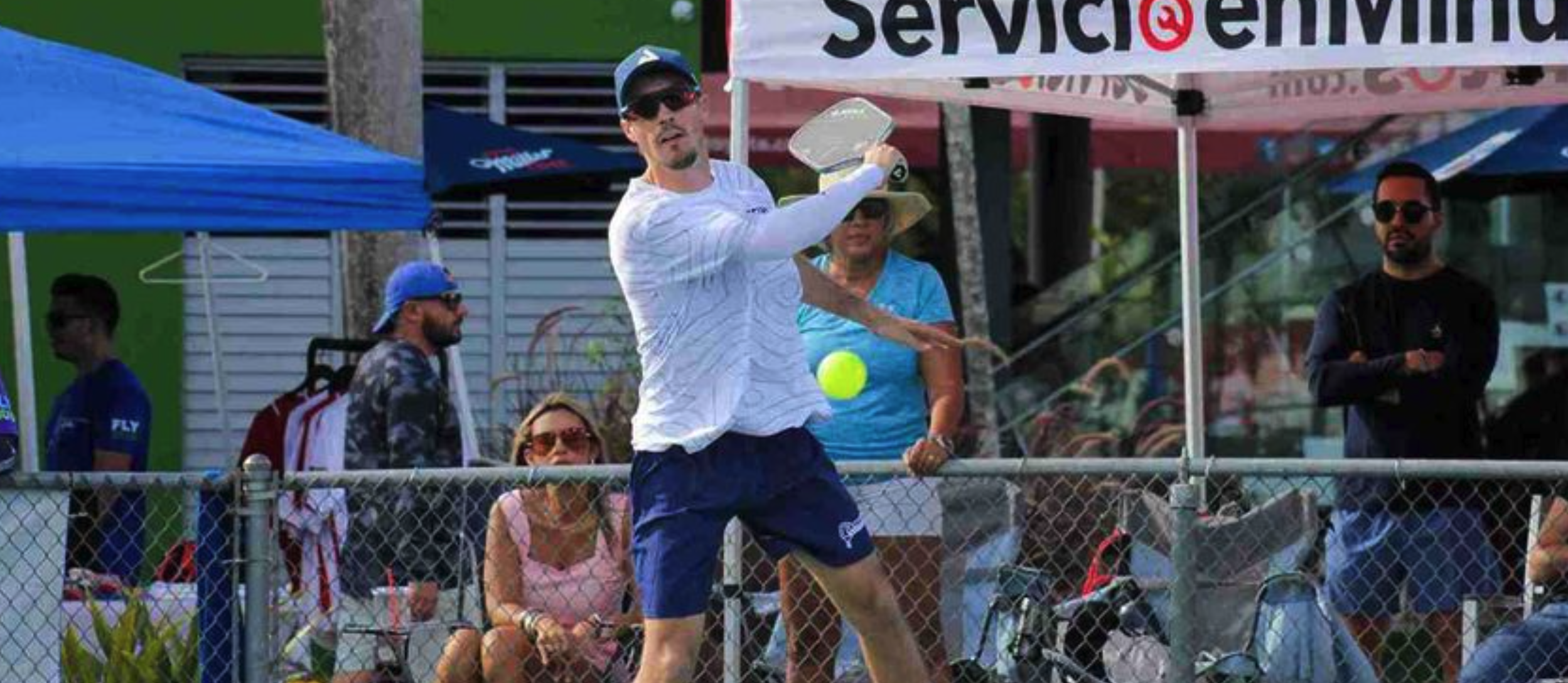
Pickleball lobs are showing up more frequently in recreational games, and they're causing serious injuries. The culprit isn't the lob shot itself—it's the dangerous way most players attempt to defend against it.
Backpedaling while tracking an overhead lob is the single most hazardous move in pickleball, leading to countless emergency room visits for broken bones and head injuries.
The solution? Master the "open the door" footwork technique that keeps you upright, balanced, and injury-free while maintaining defensive positioning.
Why Backpedaling Kills Your Defense (And Your Body)
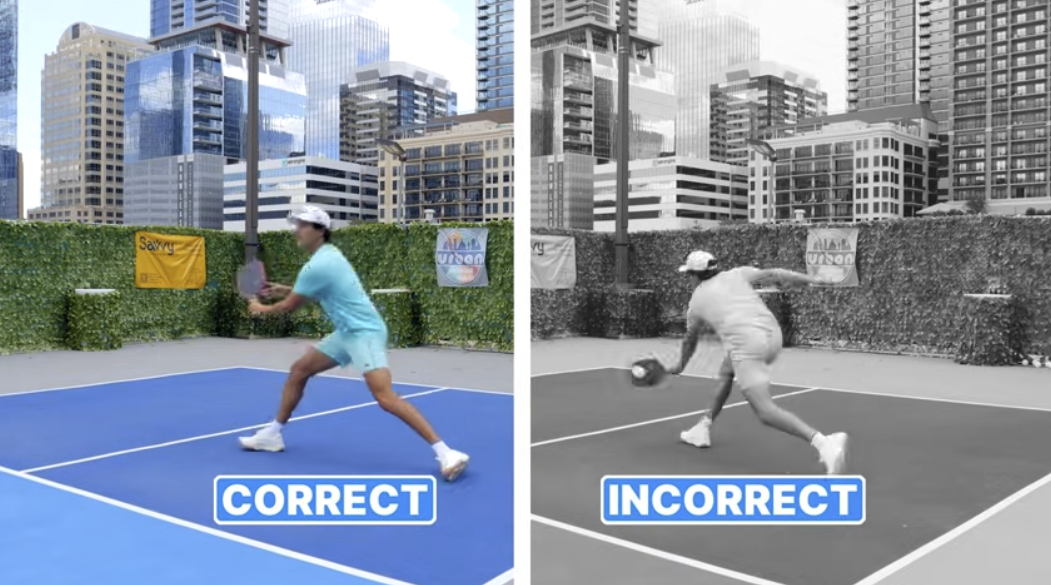
When a lob sails overhead, instinct tells us to shuffle backward while craning our necks skyward. This creates a perfect storm of instability:
- Loss of peripheral vision and spatial awareness
- Compromised balance from awkward body positioning
- Reduced reaction time for directional changes
- High risk of tripping or falling backward
Players over 50 face additional challenges with balance and recovery time, making traditional backpedaling even more dangerous.
The "Open the Door" Technique Explained
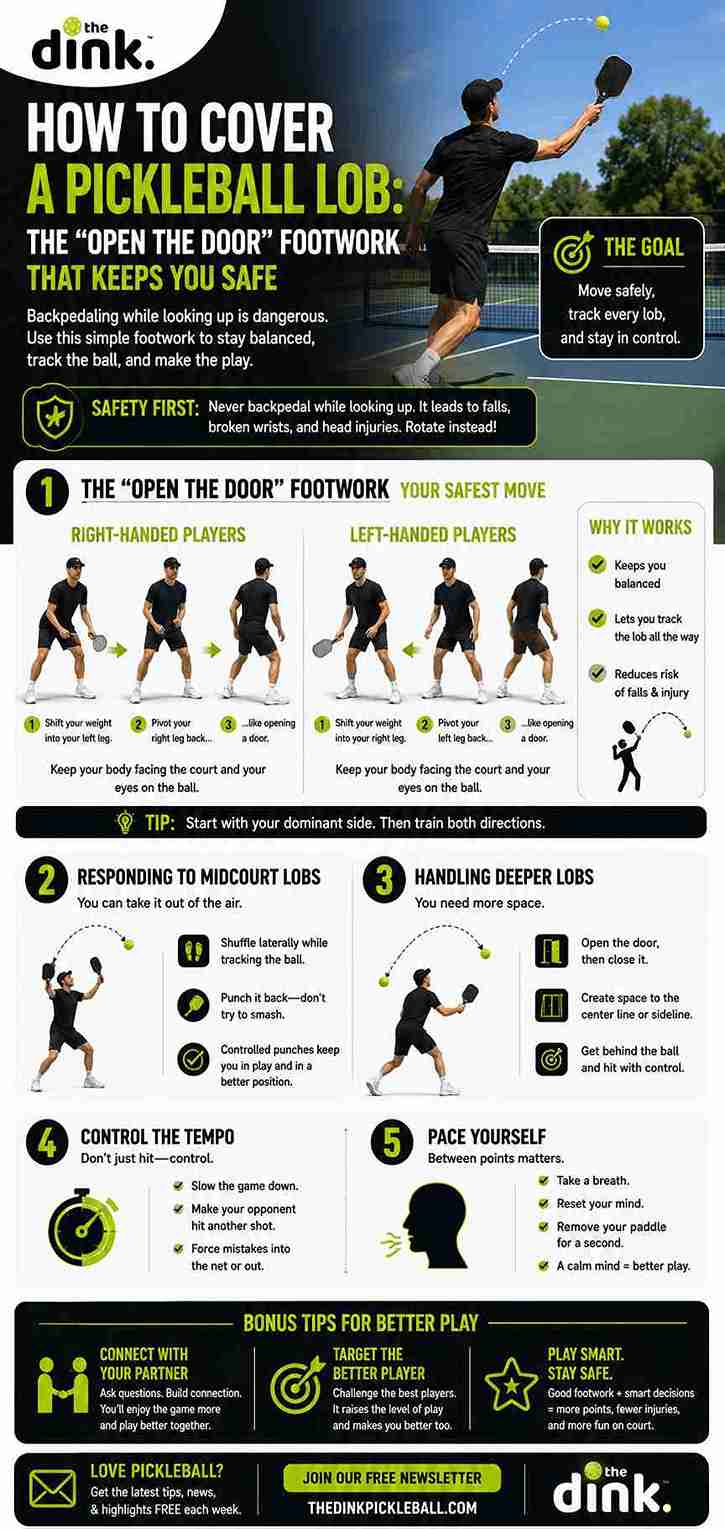
This game-changing footwork pattern mimics opening a door behind you, hence the memorable name. Here's how it works:
Step 1: Turn Your Body
Instead of backpedaling, immediately turn your body sideways to the net. If the lob is going over your right shoulder, turn right. Left shoulder? Turn left.
Step 2: Cross-Step Movement
Use a cross-step pattern to move backward while maintaining visual contact with the ball. Your outside foot crosses behind your inside foot, similar to defensive slides in basketball.

Step 3: Maintain Court Vision
Keep your head up and maintain peripheral awareness of court boundaries and obstacles. You'll cover ground faster while staying oriented.
Four Additional Safety Tips for 50+ Players
1. Know Your Limits
Not every lob requires an aggressive overhead smash. Sometimes the smart play is letting a deep lob bounce and returning with a controlled shot from the baseline.
2. Communication is Key
In doubles play, call "mine" or "yours" immediately when a lob appears. Clear communication prevents collisions and ensures proper court coverage.
3. Position Prevention
Stay slightly deeper at the non-volley zone line during rallies. This extra step gives you more reaction time when lobs come your way.
4. Practice the Reset
When you do reach a lob, focus on placement over power. A well-placed return keeps the point alive better than a wild overhead attempt.
Drilling the Open Door Technique
Master this footwork through deliberate practice:
Solo Practice: Use shadow movements without a ball. Practice the cross-step pattern while imagining lobs to different sides.
Partner Drilling: Have a partner feed gentle lobs while you focus purely on footwork. Speed and power come later.
Game Simulation: Incorporate the technique during recreational play, prioritizing safety and form over winning points initially.
When to Let It Go
Smart pickleball means recognizing when a lob is too deep or well-placed to chase safely. Elite players understand that discretion often trumps aggressive pursuit.
If you're off-balance, too far out of position, or the lob is clearly going long, let it bounce. Your joints will thank you, and you'll maintain better positioning for the next shot.
The "open the door" technique transforms lob defense from a dangerous liability into a controlled, confident movement pattern. Practice it consistently, and you'll notice immediate improvements in both safety and effectiveness on the court.
Frequently Asked Questions
How quickly can I learn the open door footwork technique?
Most players can grasp the basic movement pattern within 2-3 practice sessions. However, developing muscle memory and smooth execution typically requires 2-3 weeks of consistent drilling and game application.
Should I still attempt overhead smashes after age 50?
Overhead shots remain viable for 50+ players when executed safely. Focus on controlled placement rather than power, ensure proper footwork positioning, and avoid overextending your reach. Consider letting questionable lobs bounce rather than risking injury.
What if my opponent keeps lobbing during our match?
Consistent lobbing often indicates your opponent recognizes a weakness in your positioning or footwork. Counter this by staying slightly deeper at the net, improving your cross-court positioning, and using the open door technique to demonstrate confident lob coverage.