Every successful pickleball rally begins with a well-executed serve, making it one of the most crucial skills to develop. The serve sets the tone for each point and can provide a significant strategic advantage when performed correctly. In pickleball, players have two distinct serving options: the drop serve and the volley serve, each offering unique benefits and applications.
Understanding the Drop Serve
The drop serve represents the more accessible entry point for new players entering the sport. This technique involves dropping the ball from any height and allowing it to bounce once before striking it with your paddle. The simplicity of this method makes it ideal for beginners who are still developing their coordination and timing.
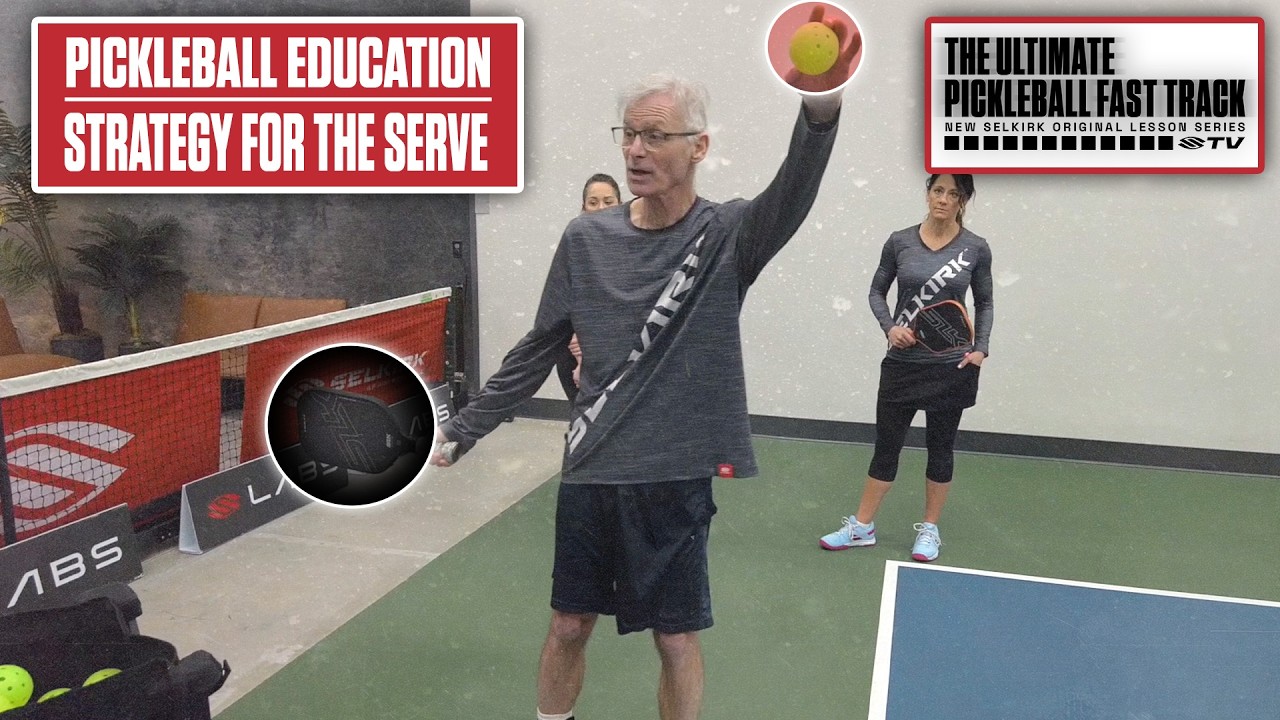
Key advantages of the drop serve include greater consistency, easier timing, and reduced pressure on technique. Players can focus on placement and strategy rather than complex mechanics. The natural bounce provides a predictable contact point, allowing for more reliable serves during crucial moments in matches.
Drop Serve Technique Breakdown
To execute an effective drop serve, position yourself behind the baseline with your feet shoulder-width apart. Hold the ball at chest height, then release it cleanly without adding spin or force. Allow the ball to bounce naturally, then strike it with an upward motion, ensuring contact occurs below waist level as required by official rules.
Mastering the Volley Serve
The volley serve represents the traditional pickleball serving method and remains the preferred choice for competitive players. This technique requires striking the ball directly from your hand without allowing it to bounce, demanding greater precision and timing skills.
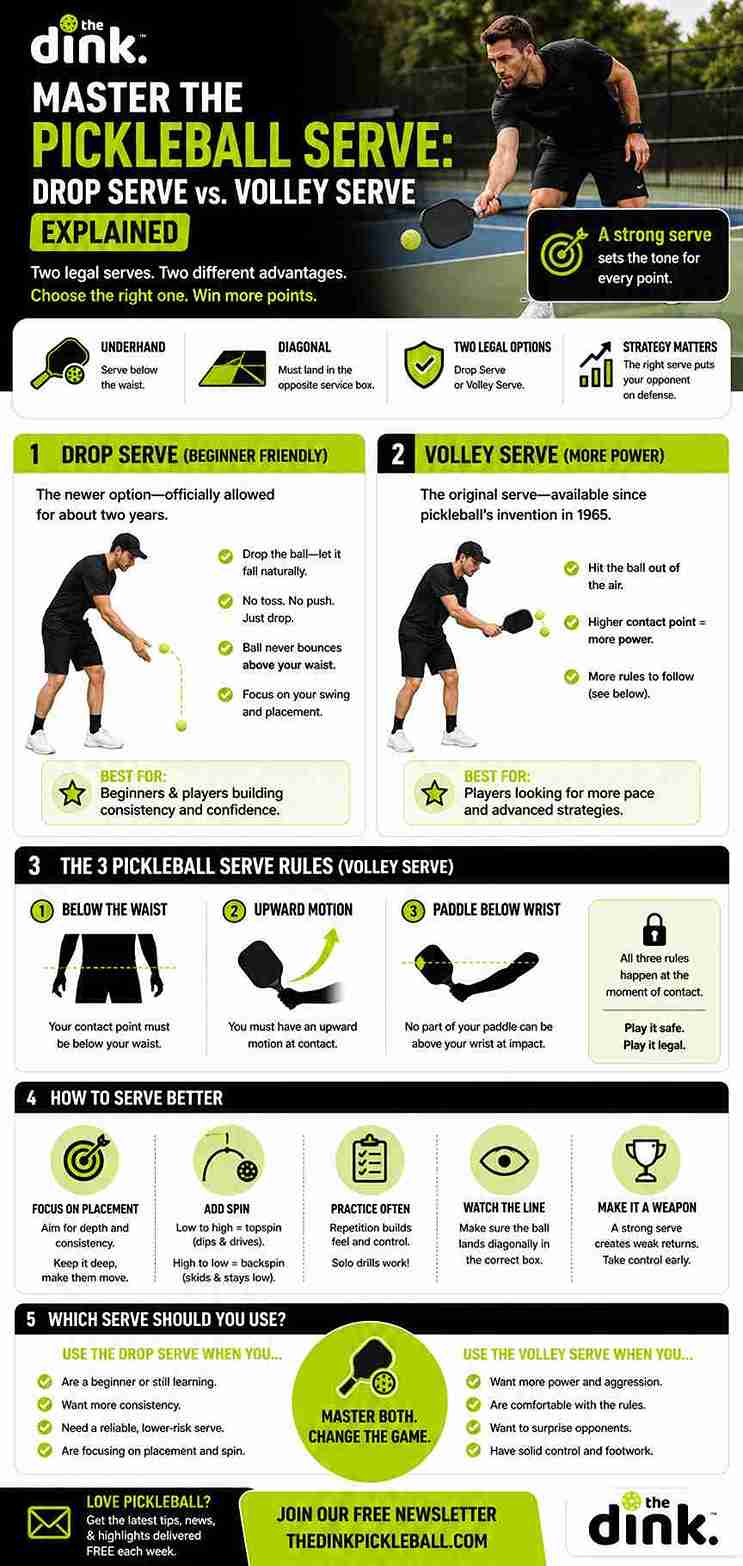
Advanced players favor the volley serve because it offers superior control over pace, spin, and placement. The direct contact allows for more aggressive serves that can put opponents on the defensive immediately. However, this increased potential comes with stricter rule requirements and technical demands.
Volley Serve Technical Requirements
Official pickleball rules mandate that volley serves must be struck with an underhand motion, with the paddle head below the wrist at contact. The ball must be released from the non-paddle hand and struck below waist level. These requirements ensure fair play while maintaining the sport's emphasis on strategy over power.
Strategic Applications and Match Situations
Choosing between drop and volley serves often depends on match circumstances, opponent weaknesses, and personal comfort levels. During high-pressure situations, many players find the drop serve provides greater reliability and consistency, reducing unforced errors that can shift momentum.
Conversely, the volley serve excels when attempting to exploit opponent positioning or create immediate offensive opportunities. Experienced players often mix both techniques throughout matches, keeping opponents guessing and preventing them from settling into comfortable return patterns.
Common Technical Mistakes
Both serving styles present unique challenges that players must overcome. Drop serve errors typically involve poor ball drops, inconsistent bounce heights, or rushing the contact point. Volley serve mistakes often stem from illegal motions, improper release timing, or violations of the underhand requirement.
Regular practice and video analysis help identify and correct these technical flaws. Working with experienced coaches or using slow-motion video can reveal subtle mechanical issues that impact serve effectiveness and rule compliance.
Developing Your Serving Arsenal
Successful pickleball players develop proficiency in both serving techniques, creating a more complete game that adapts to various situations. Start by mastering the drop serve fundamentals, then gradually incorporate volley serve practice as your skills advance.
Focus on consistency before attempting advanced techniques like spin or placement variations. A reliable serve that consistently lands in bounds provides more value than an aggressive serve that frequently results in faults.
Frequently Asked Questions
Can I switch between drop serve and volley serve during the same match?
Yes, players can freely alternate between drop serve and volley serve throughout a match. You must indicate which type you're using before each serve, and you cannot combine elements of both techniques in a single serve.
Which serve type is better for tournament play?
Both serves are equally legal and effective in tournament play. Your choice should depend on your skill level, consistency, and strategic needs. Many competitive players use volley serves for their versatility, while others prefer drop serves for their reliability under pressure.
Are there different rules for recreational versus competitive play?
No, the serving rules remain consistent across all levels of play. Both drop serves and volley serves must follow the same official USA Pickleball regulations regardless of whether you're playing recreationally or competitively.