What separates a recreational pickleball player from a professional isn't raw power or athletic ability—it's the development of lightning-fast hands at the net. This crucial skill determines whether you can dominate kitchen exchanges or find yourself constantly on the defensive.
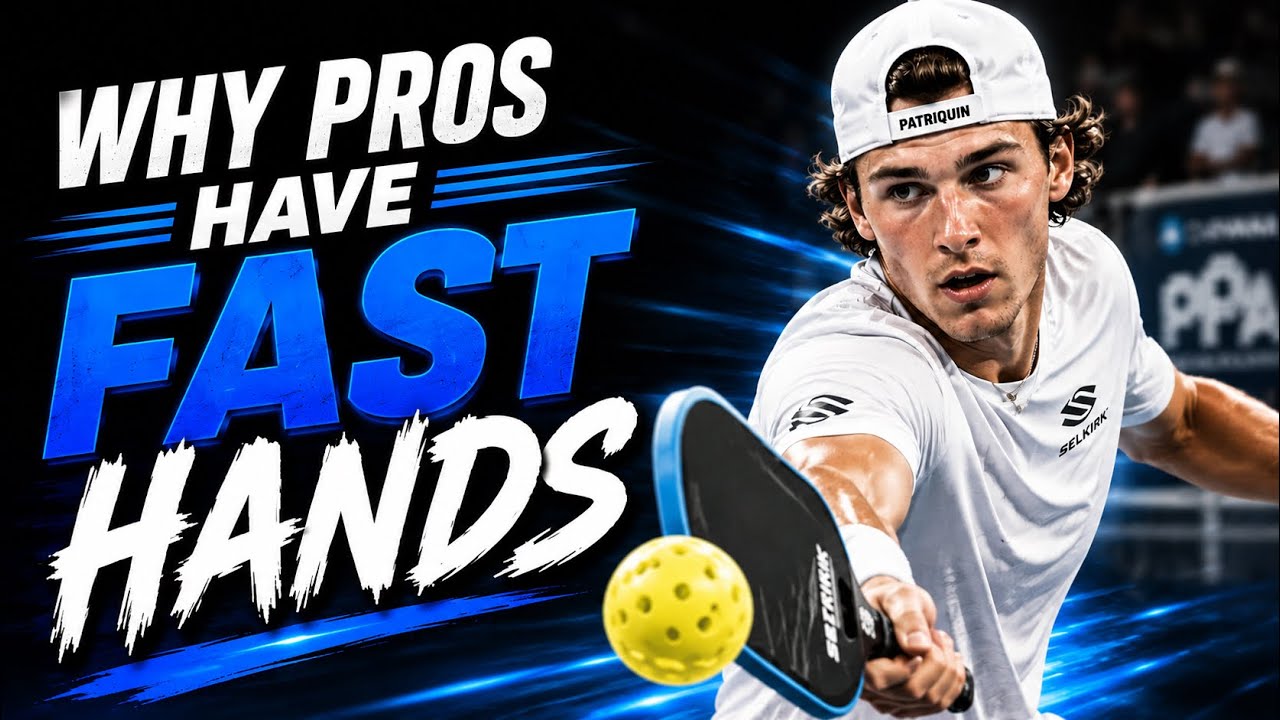
Elite players like Gabe Tardio and Hayden Patriquin have perfected this art, demonstrating that speed comes from technique, not muscle. Their ability to react, reset, and attack with minimal paddle movement is what makes them nearly unstoppable in close-quarters combat.
The Science Behind Lightning-Quick Reactions
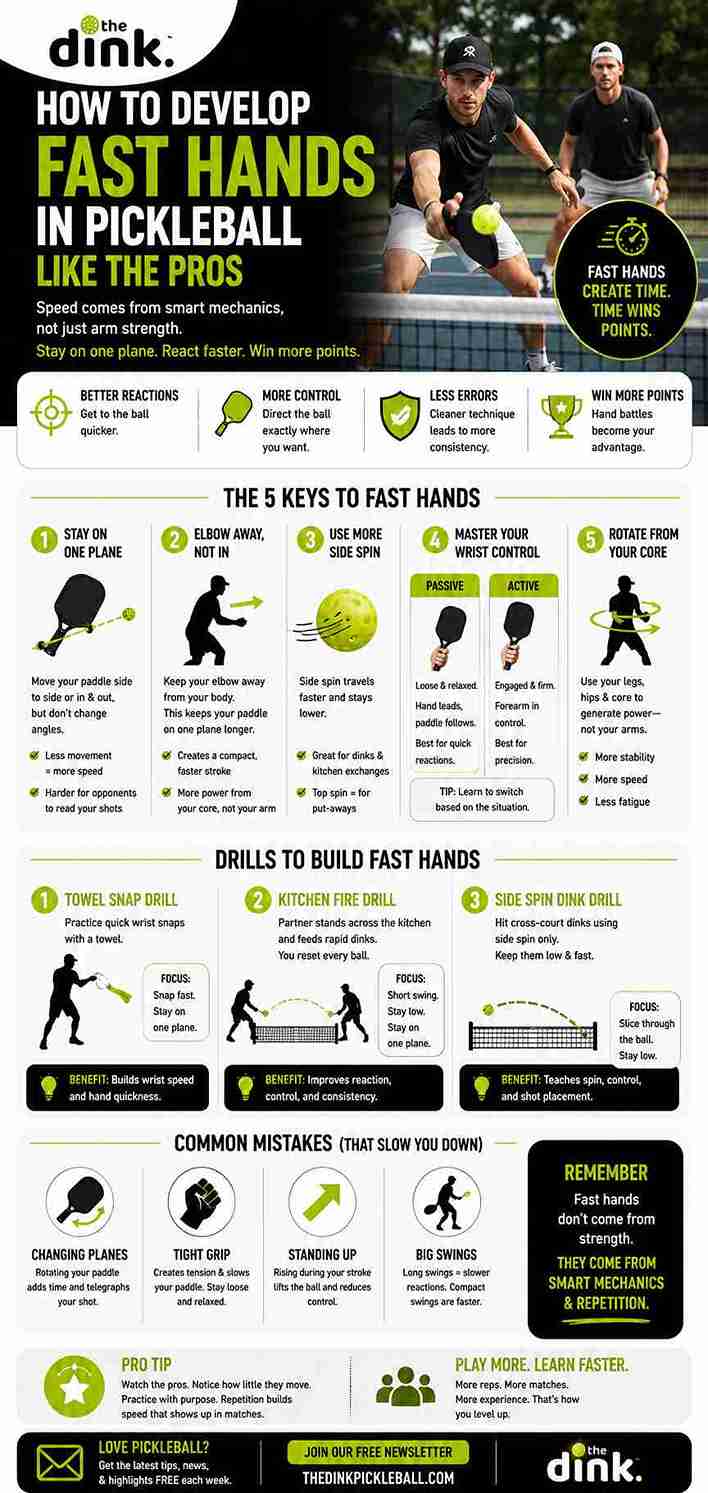
Fast hands in pickleball operate on a completely different principle than most players expect. Instead of generating speed through large arm movements, professionals maintain their paddle on a consistent plane while making micro-adjustments for maximum efficiency.
The key lies in understanding that less movement equals more speed. When your paddle travels shorter distances between shots, your reaction time decreases dramatically. This principle allows pros to handle rapid-fire exchanges that would overwhelm recreational players.
The Single-Plane Philosophy
Professional players keep their paddle face positioned optimally throughout rallies, avoiding the common mistake of excessive preparation time. This technique involves:
- Minimal backswing: Reducing unnecessary paddle movement
- Consistent grip pressure: Maintaining control without tension
- Compact follow-through: Quick recovery for the next shot
- Centered positioning: Keeping the paddle in your strike zone
Training Methods for Explosive Hand Speed
Developing professional-level fast hands requires specific practice routines that challenge your reaction time progressively. The most effective training methods focus on repetition and muscle memory rather than strength building.
Wall Practice Drills
Start with basic wall volleys, maintaining a consistent distance of 3-4 feet. Focus on keeping your paddle face stable while increasing the pace gradually. This drill builds the foundation for quick reactions without the pressure of an opponent.
Partner Speed Volleys
Work with a practice partner to exchange rapid volleys at the kitchen line. Begin slowly and increase tempo while maintaining control. The goal is to sustain longer rallies as speed increases, forcing your hands to adapt to faster exchanges.
Reaction Ball Training
Use reaction balls or tennis balls dropped from various heights to improve hand-eye coordination. This unpredictable training method enhances your ability to adjust paddle position quickly for unexpected shots.
Common Mistakes That Slow You Down
Many players unknowingly sabotage their hand speed through poor technique habits. The biggest culprits include:
Over-preparation: Taking too much time to set up shots creates lag in your reaction sequence. Professional players are constantly ready, maintaining an athletic position that allows instant response.
Tension in the grip: Squeezing the paddle too tightly restricts natural hand movement. A relaxed grip allows for quicker adjustments and better feel.
Excessive arm involvement: Using your entire arm for kitchen volleys creates unnecessary motion. Fast hands come from wrist and forearm control, not shoulder movement.
Mental Aspects of Quick Reactions
Physical technique alone won't develop truly fast hands. Mental preparation and anticipation play crucial roles in elite-level performance. Professionals read their opponents' body language and paddle position to predict shot direction before the ball is struck.
This anticipatory skill, combined with proper positioning, creates the illusion of superhuman reflexes. In reality, these players are simply processing information faster and positioning themselves optimally for quick responses.
Progressive Training Schedule
Developing fast hands requires consistent practice over several months. Start with 10-15 minute daily sessions focusing on basic control, then gradually increase intensity and duration. Most players see significant improvement within 4-6 weeks of dedicated training.
Remember that muscle memory takes time to develop. Consistent daily practice trumps occasional long sessions when building this crucial skill.
Frequently Asked Questions
How long does it take to develop fast hands in pickleball?
Most players notice improvement within 2-3 weeks of consistent practice, with significant gains appearing after 6-8 weeks. Full development of professional-level fast hands typically takes 6-12 months of dedicated training.
Should I focus on power or speed when developing fast hands?
Speed should always be prioritized over power. Fast hands are about quick reactions and precise placement rather than generating force. Power naturally develops as your technique improves and you become more comfortable with rapid exchanges.
What equipment helps improve hand speed training?
A standard paddle, wall space, and practice partner are sufficient for most training. Reaction balls and agility ladders can supplement your routine, but consistent basic practice with proper technique is most important for development.