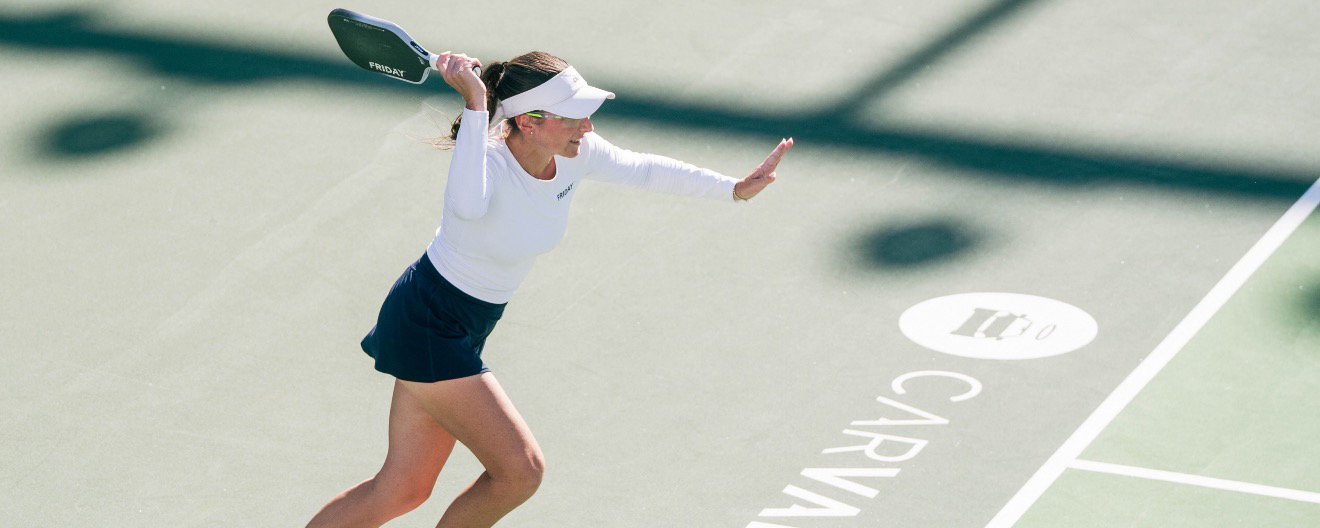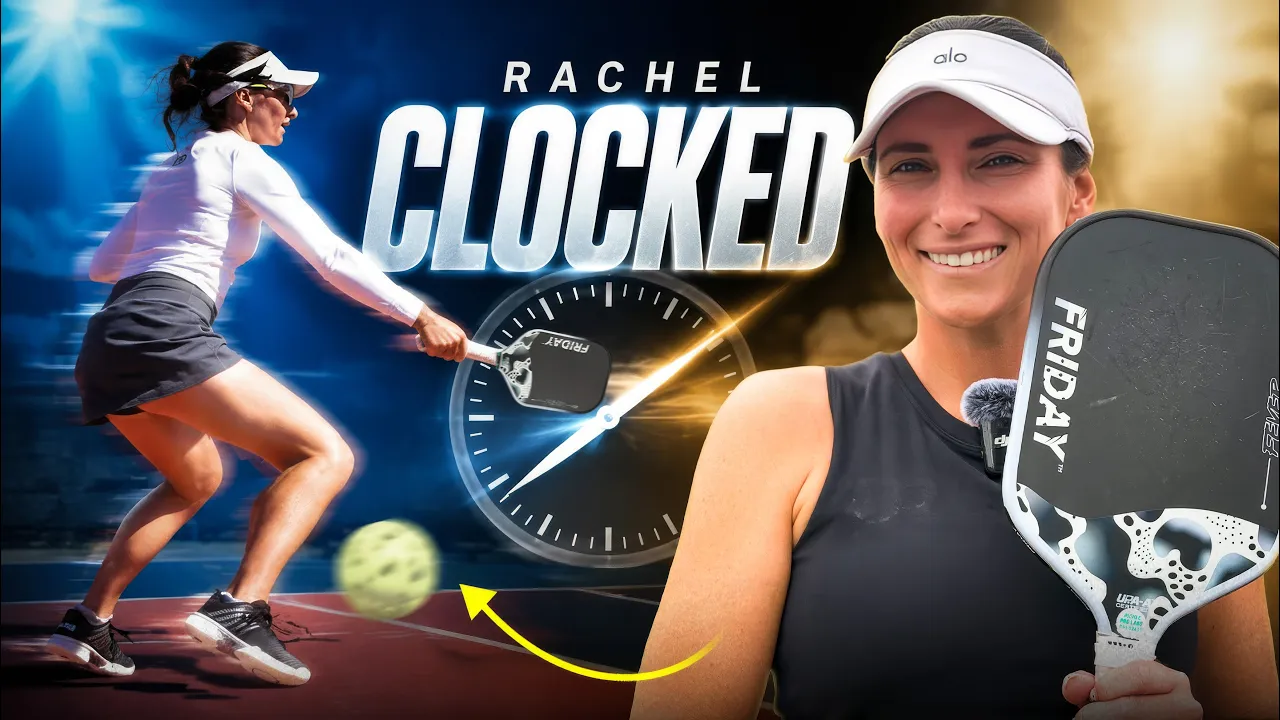
Professional pickleball player Rachel Rohrabacher has become synonymous with power and precision on the court. Her ability to generate incredible spin and place shots with surgical accuracy has made her one of the most formidable players in the game today.
Now, thanks to John Kew's innovative CLOCKED series, we can finally see exactly what makes Rohrabacher's technique so devastating. Using cutting-edge technology including high-speed cameras, radar measurements, and comprehensive paddle testing, Kew has captured something truly remarkable: a spin serve clocking in at an astounding 2,273 RPM.
The Science Behind Elite Performance
What sets this analysis apart from typical coaching videos is the integration of hard data with visual breakdown. Kew's approach combines multiple technological tools to create a comprehensive picture of how elite players generate their power and control.
The high-speed camera footage reveals the intricate details of Rohrabacher's serving motion that would be impossible to detect with the naked eye. Every micro-movement, from her grip adjustment to her follow-through, is captured in stunning slow-motion detail.
Breaking Down the 2,273 RPM Serve
The radar data doesn't lie – Rohrabacher's spin serve generates an incredible amount of rotation that creates unpredictable ball movement. This level of spin isn't just impressive; it's strategically devastating for opponents who must react to a ball that moves differently than expected after bouncing.
The CLOCKED series reveals how Rohrabacher achieves this spin through a combination of factors:
- Precise paddle angle at contact
- Optimal swing path and acceleration
- Strategic body positioning and weight transfer
- Equipment selection that maximizes spin potential
Equipment Meets Technique
One fascinating aspect of Kew's analysis is how he examines the intersection between player skill and equipment performance. The paddle lab testing component reveals how Rohrabacher's choice of equipment amplifies her natural abilities.
This data-driven approach helps answer the age-old question of how much performance comes from the player versus the paddle. In Rohrabacher's case, it's clear that elite technique combined with optimal equipment selection creates a synergistic effect that elevates her game to professional levels.
What Makes Her Game Elite
Beyond the impressive spin numbers, the analysis reveals several key elements that separate elite players like Rohrabacher from recreational players:
Consistency Under Pressure: The high-speed footage shows remarkably consistent mechanics, even when generating maximum power and spin.
Tactical Awareness: Each shot demonstrates strategic thinking about court positioning and opponent movement.
Technical Precision: The margin for error at this level is minimal, requiring perfect timing and execution.
Learning from the Data
While most recreational players won't achieve 2,273 RPM on their serves, the principles revealed in this analysis are applicable at every level. Understanding how elite players generate spin, power, and precision can help players of all abilities improve their own games.
The CLOCKED series represents a new era in pickleball instruction, where objective data supports subjective coaching observations. This scientific approach to understanding technique provides insights that traditional coaching methods might miss.
The Future of Pickleball Analysis
As pickleball continues to grow and evolve, this type of detailed performance analysis will likely become more common. Players and coaches now have access to the same type of data-driven insights that have revolutionized other sports.
For aspiring players looking to understand what it takes to compete at the highest levels, analyses like this provide a roadmap for development. The combination of technique, equipment, and strategic thinking required for elite performance becomes crystal clear when viewed through the lens of high-speed cameras and precise measurements.
FAQ
How does a 2,273 RPM spin serve compare to other racquet sports?
This level of spin is exceptionally high for pickleball, comparable to advanced tennis serves. The shorter court and different ball characteristics in pickleball make this spin rate particularly effective for creating difficult-to-return serves.
Can recreational players learn to generate this much spin?
While 2,273 RPM requires elite-level technique and conditioning, recreational players can certainly improve their spin serves by focusing on the fundamental mechanics revealed in the analysis, including proper grip, swing path, and contact point.
What equipment factors contribute to maximum spin generation?
Paddle surface texture, weight distribution, and grip size all play roles in spin generation. However, as the analysis shows, proper technique remains the most critical factor in achieving high spin rates.