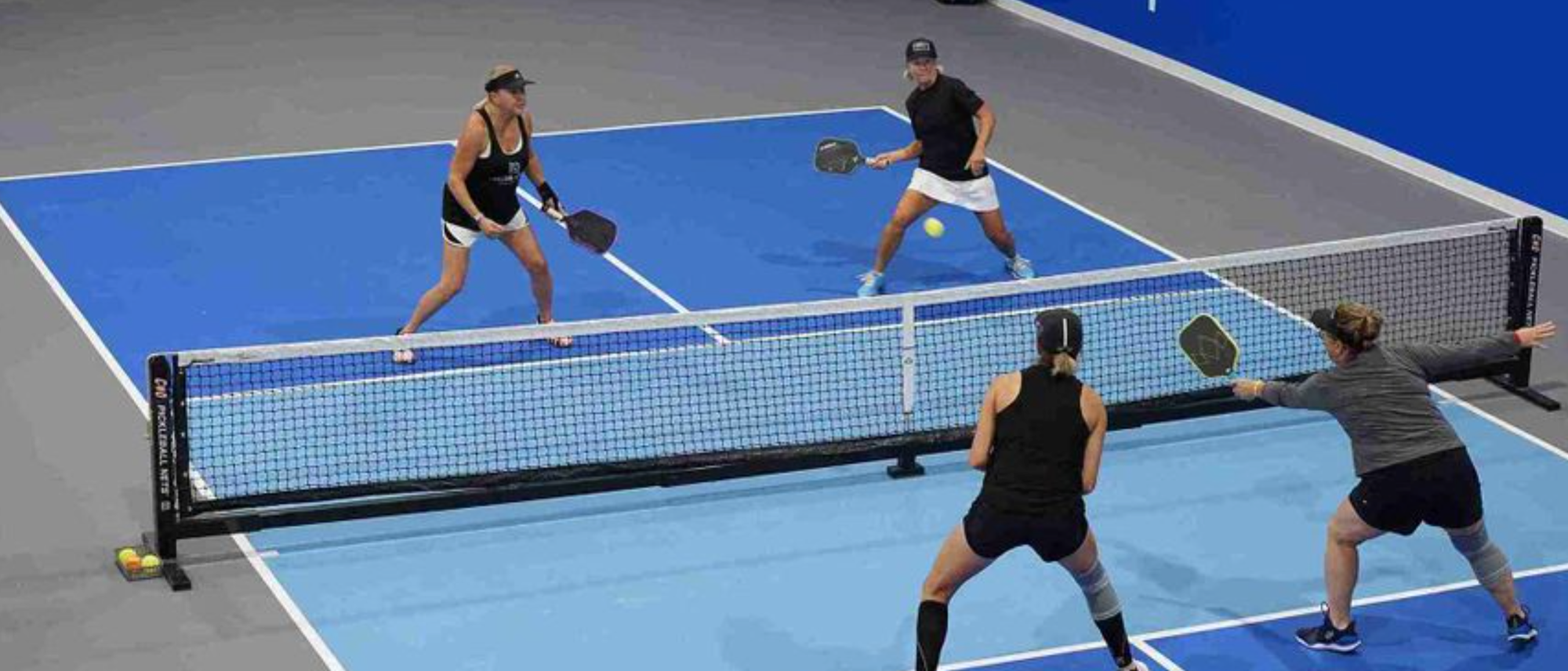
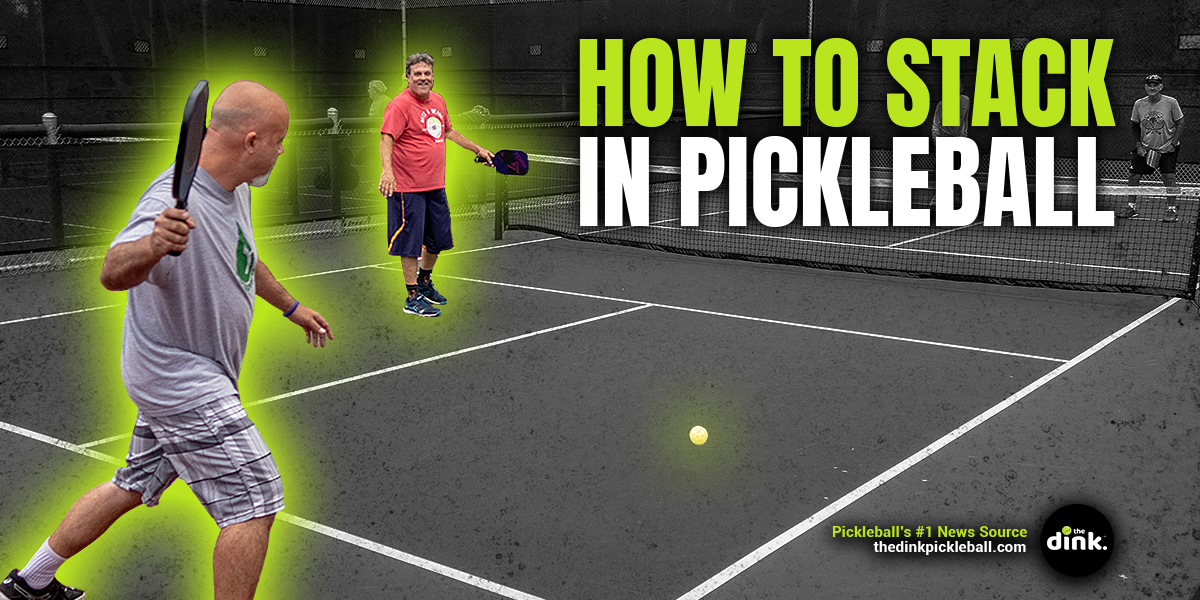
Stacking in pickleball doubles transforms random court positioning into strategic advantage. This tactical approach to player placement is what distinguishes coordinated teams from pairs who simply hit balls back and forth.
When you observe professional doubles matches, players often appear to stand in unconventional positions before serves. This intentional positioning system is stacking, and mastering it will revolutionize your doubles strategy.
What Is Stacking in Pickleball?
Stacking involves deliberate positioning where partners temporarily abandon traditional court sides to optimize their strengths. Instead of each player staying on their designated left or right side, teams coordinate position swaps to ensure the stronger player handles specific shots or court areas.
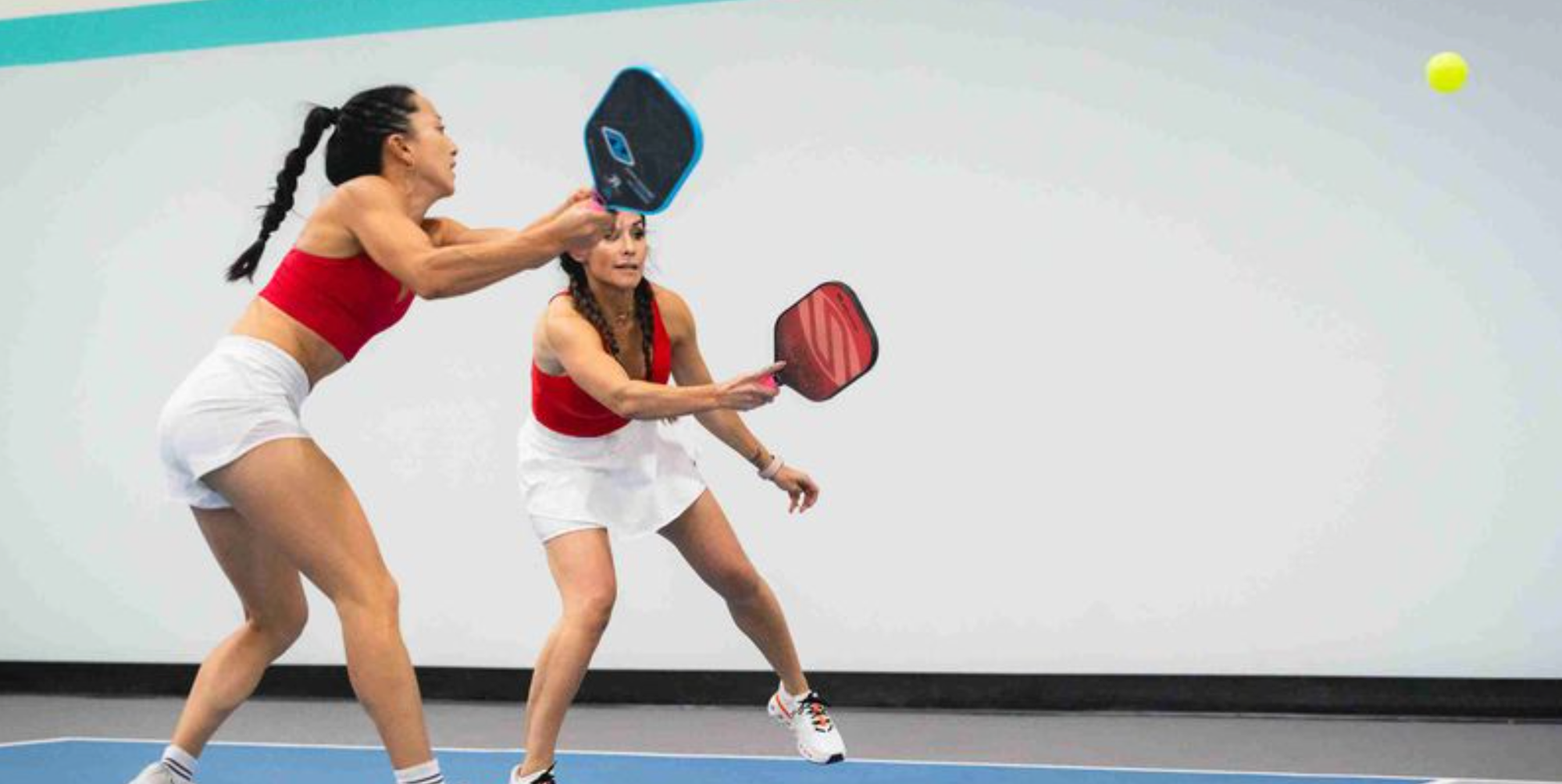
The fundamental concept centers on maximizing each player's strengths while minimizing weaknesses. If one partner excels at backhand shots while the other dominates with forehands, stacking allows both players to utilize their preferred strokes more frequently.
Full Stack Strategy Explained
Full stacking means both partners switch sides completely during the point. This comprehensive approach requires precise coordination and communication between teammates.
When to Use Full Stack
Full stack works best when:
- One player has significantly stronger shots from a specific side
- Your partner struggles with particular angles or positions
- You want to confuse opponents who target perceived weaknesses
- Both players can execute the positioning switch smoothly
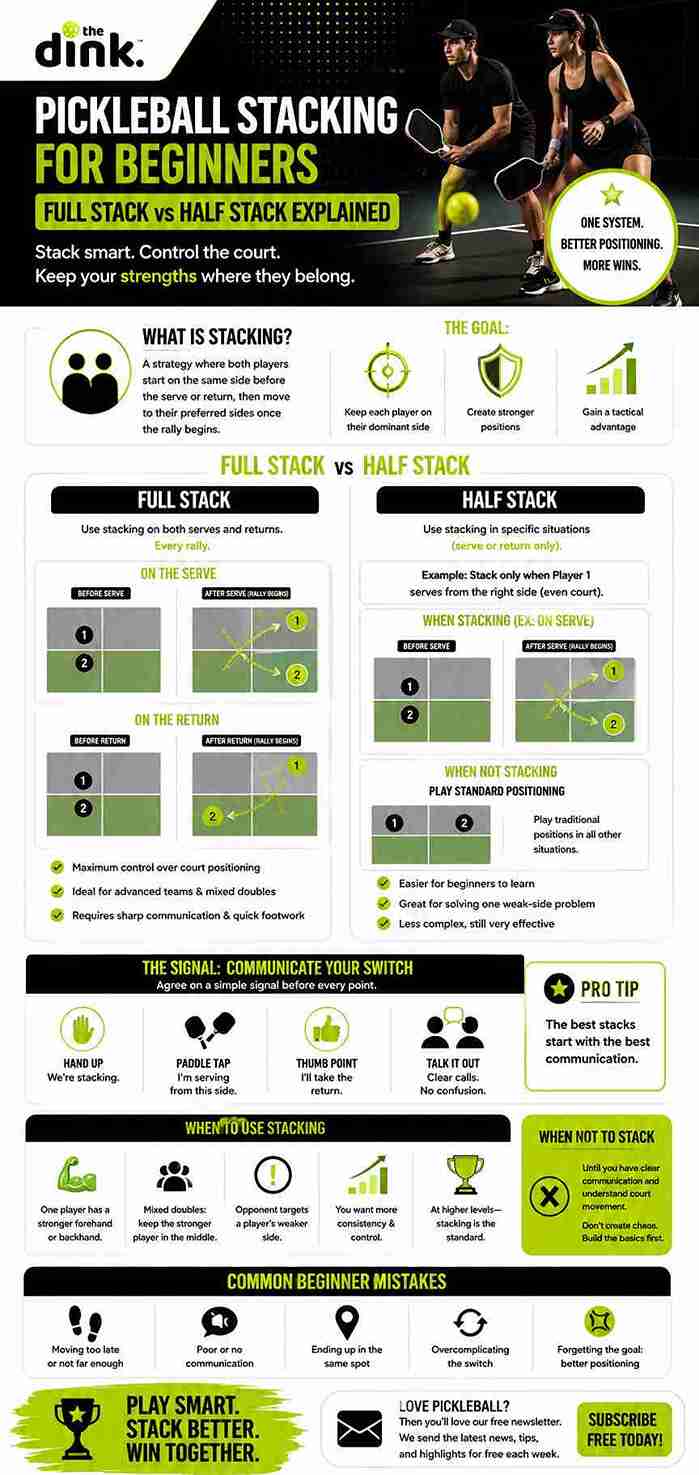
Full Stack Execution
During serve preparation, both players line up on the same side behind the baseline. After the serve, they immediately cross to their intended positions. The non-serving partner moves first, followed by the server after completing their shot.
Half Stack Strategy Breakdown
Half stacking involves only one partner switching sides while the other maintains their original position. This approach offers more conservative positioning adjustments.
Advantages of Half Stack
Half stack provides several benefits:
- Simpler coordination requirements
- Reduced risk of positioning confusion
- Easier implementation for beginning stackers
- Maintains court coverage during transitions
This strategy particularly benefits teams where one player needs occasional positioning help rather than complete side switching.
Common Stacking Mistakes to Avoid
Beginners often struggle with stacking implementation, creating more problems than solutions. Understanding these pitfalls helps prevent costly errors.
Timing Issues
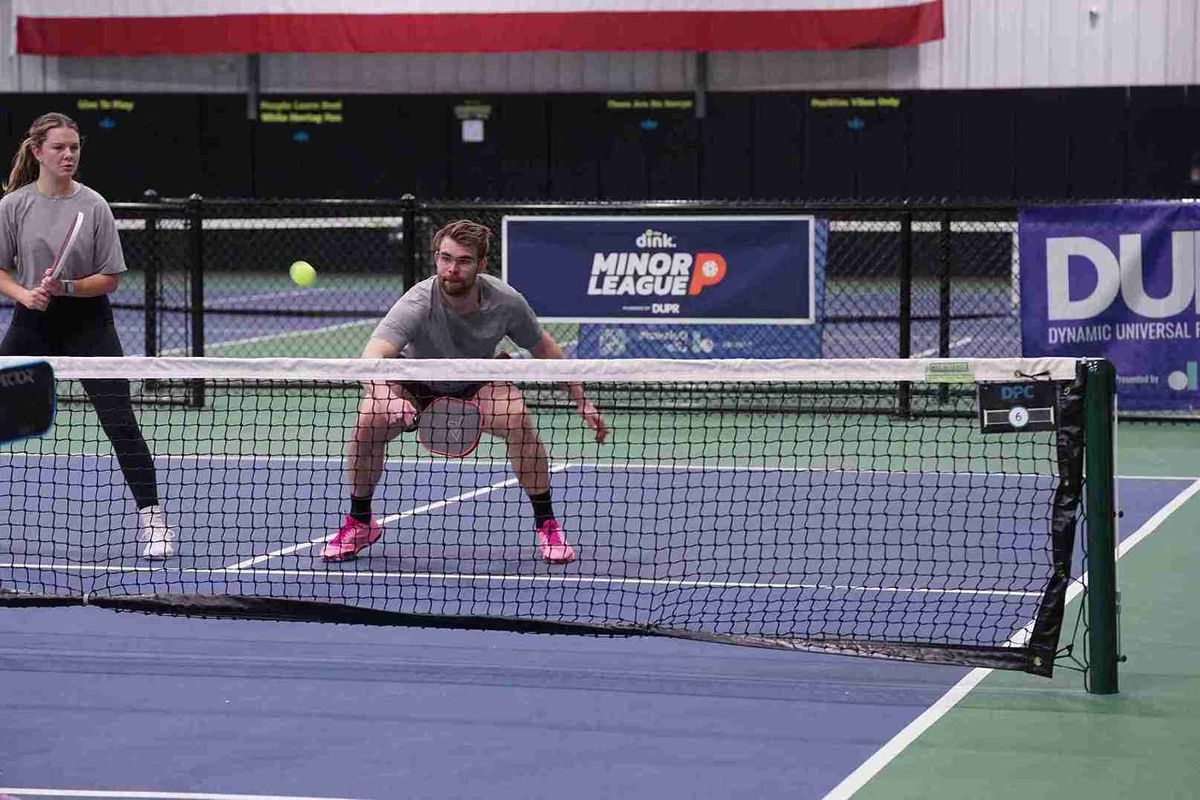
Poor timing during position switches leaves gaps in court coverage. Partners must practice smooth transitions that don't create opportunities for opponents to exploit open areas.
Communication Breakdowns
Successful stacking requires clear, consistent communication. Develop simple signals or verbal cues to indicate stacking intentions before points begin.
Overcomplicating Simple Points
Not every point requires stacking. Use this strategy selectively when it provides clear advantages rather than implementing it constantly.
Practicing Stacking Techniques
Effective stacking demands dedicated practice with your regular partner. Start with stationary positioning drills before progressing to live ball exercises.
Begin practicing half stack movements during casual games. Once comfortable, gradually introduce full stack positioning. Focus on smooth transitions that maintain court coverage throughout the movement.
Work on recognizing optimal stacking situations during match play. Develop instincts for when stacking provides tactical advantages versus when traditional positioning suffices.
Strategic Applications in Match Play
Implement stacking strategically rather than as a constant approach. Analyze opponent tendencies to identify when position switching creates advantages.
Use stacking to neutralize opponents who consistently target one partner or exploit specific court areas. This tactical adjustment forces opponents to adjust their strategy while playing to your team's strengths.
Frequently Asked Questions
Should beginners attempt stacking immediately?
Start with half stack techniques once you're comfortable with basic doubles positioning. Full stack requires more advanced coordination and should be practiced extensively before using in competitive play.
How do we decide which stacking approach to use?
Choose based on your team's specific strengths and weaknesses. If one player needs complete side switching, use full stack. If minor positioning adjustments suffice, half stack provides simpler implementation with good results.
What's the biggest stacking mistake recreational players make?
Using stacking constantly instead of selectively. Implement these techniques when they provide clear tactical advantages, not as a default positioning system for every point.