The Hidden Overhead Danger Sending Players to the ER

A recreational player in Honolulu stepped backward to track a high lob, racquet raised for what seemed like a routine overhead. Three steps later, he was flat on his back with a potential concussion, his head mere inches from concrete. He walked away unscathed, but emergency room physicians across the country see dozens of players each month who aren't so fortunate.
The statistics paint a sobering picture: backward falls during overhead attempts account for nearly 30% of all serious pickleball injury prevention cases that require emergency medical attention, according to data compiled from sports medicine centers in Arizona, Florida, and California.
Unlike tennis, where players have more court space and time to position themselves, pickleball's confined dimensions create a perfect storm for dangerous backward movement during overhead shots.
The Anatomy of a Dangerous Overhead
Dr. Sarah Chen, a sports medicine physician who treats pickleball injuries at Phoenix Sports Medicine Institute, sees the pattern repeatedly. "Players lose spatial awareness when tracking the ball overhead," she explains. "They focus entirely on making contact and forget they're moving toward the baseline or, worse, toward unforgiving court surfaces."
The most dangerous overhead scenarios involve:
- Deep lobs near the baseline - Players backpedal beyond safe positioning
- Surprise lobs during kitchen rallies - Sudden backward movement without court assessment
- Windy conditions - Ball drift forces players further back than anticipated
- Doubles confusion - Partners calling for balls while players are already committed to backward movement
The injury mechanism differs significantly from forward falls. When players fall backward, they can't use their hands to break the fall effectively, leading to direct impacts on shoulders, backs, and heads.
Why Pickleball Overhead Safety Demands Different Tactics
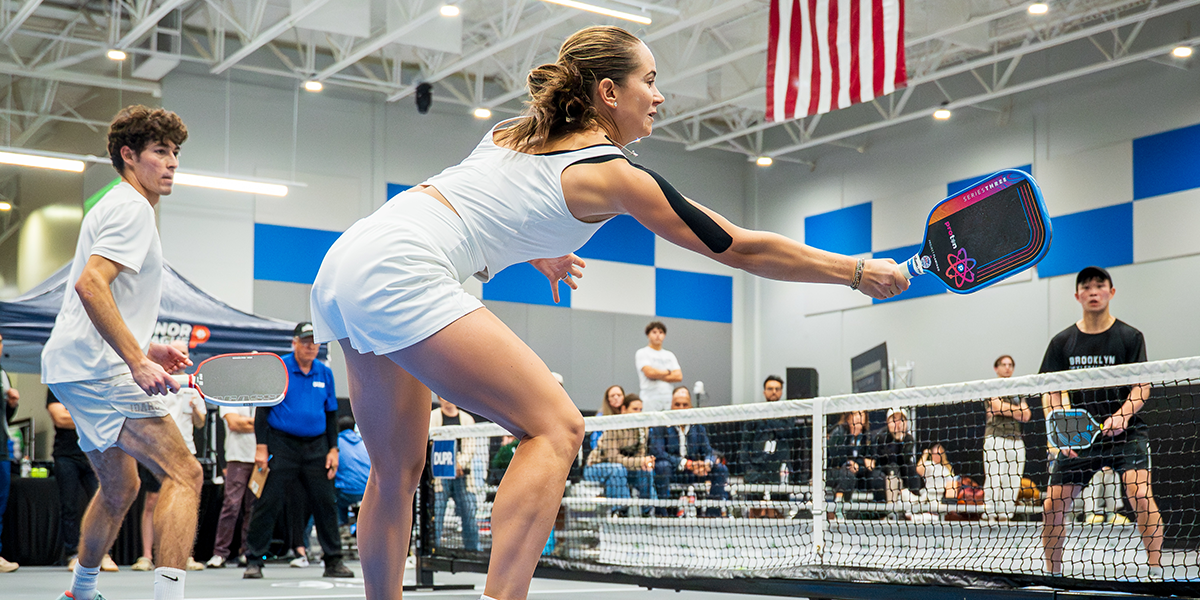
Professional players rarely attempt overheads while moving backward - they've learned to let questionable balls go or reposition using lateral movement. Recreational players, however, often feel compelled to chase every shot.
Pickleball backward falls occur more frequently than in tennis because of court dimensions and game flow. The non-volley zone creates positioning that leaves players closer to the net when lobs are deployed, requiring more dramatic backward movement to reach the shot.
"The best overhead is often the one you don't attempt. Court positioning and spatial awareness trump aggressive shot-making every time." - Maria Santos, Level 5 PPR Certified Coach
Professional players use a "two-step rule" - if an overhead requires more than two backward steps to reach, they either let it bounce or use alternative positioning strategies.
Emergency Room Data Reveals the Real Risks
A six-month study tracking pickleball injuries at Desert Regional Medical Center in Palm Springs found backward fall injuries resulted in:
- Average emergency room visit lasting 3.2 hours longer than forward fall injuries
- 23% higher rate of CT scans due to head impact concerns
- Average recovery time of 4-6 weeks versus 2-3 weeks for other court injuries
- Higher incidence of shoulder separation and rotator cuff damage
Dr. James Rodriguez, who compiled the study data, notes that players over 50 face exponentially higher risks. "Balance, reaction time, and spatial awareness all decline with age, but many players attempt the same shots they made in their 30s," he observed.
The most severe cases involved players who attempted overheads while backpedaling on outdoor courts with concrete surrounds or indoor courts with minimal padding beyond the playing surface.
Smart Court Positioning Strategies
Elite coaches teach pickleball court positioning that prioritizes safety without sacrificing competitive advantage. The key lies in anticipation and footwork preparation rather than reactive chasing.
Defensive positioning adjustments:
- Maintain at least six feet from the baseline when anticipating lobs
- Use shuffle steps rather than crossover steps when tracking balls
- Plant outside foot first when moving backward to maintain balance
- Keep paddle up and ready rather than winding up while moving
Advanced players employ "zone coverage" where they identify areas they can safely cover with overheads versus zones where they'll use defensive positioning. This mirrors professional strategies seen in our analysis of professional ball-tracking techniques.
The Alternative Shot Selection
Rather than attempting dangerous overheads, players can use high-percentage alternatives:
- Defensive lobs - Return height with height to reset positioning
- Half-volley approach - Let the ball bounce and drive forward
- Lateral repositioning - Move sideways to create better angles
- Partner communication - Switch coverage responsibilities mid-point
Equipment and Environmental Factors
Pickleball injury risks compound when environmental factors align poorly. Courts with minimal surrounding space, concrete surfaces, or inadequate lighting create dangerous conditions for backward movement.
Facility operators should consider:
- Minimum 10-foot clearance beyond baselines where possible
- Non-slip surface treatments in high-traffic areas
- Proper court marking to help players maintain spatial awareness
- Warning signs about overhead safety near courts with limited space
Footwear plays a crucial role in backward fall prevention. Shoes with proper heel support and lateral stability reduce the risk of losing balance during backward movement.
Court awareness beats shot execution every time. The point you save by avoiding injury is worth more than the point you might win with a risky overhead.
Understanding how to prevent pickleball overhead injuries requires recognizing that recreational pickleball prioritizes longevity over individual point outcomes. Players who adopt conservative overhead strategies report fewer injuries and longer playing careers.
The data suggests a clear path forward: educated shot selection, improved spatial awareness, and honest assessment of court conditions before attempting overheads while moving backward.
Frequently Asked Questions
What are the most common pickleball overhead injury mechanisms?
Backward falls account for nearly 30% of serious overhead-related injuries, typically involving head impacts, shoulder separation, or spinal compression from uncontrolled falls onto court surfaces.
How can recreational players safely execute overhead shots?
Use the two-step rule - if an overhead requires more than two backward steps, consider alternative shots like defensive lobs or lateral repositioning to avoid dangerous backward movement.
What should facility operators do to improve overhead shot safety?
Ensure minimum 10-foot baseline clearance, install non-slip surface treatments, maintain proper lighting, and post safety guidelines about overhead positioning near courts with limited space.
Stay updated with the latest pickleball news, rankings, and gear reviews at PicklrLab.com.
Inspired by community discussion.