Why Your Forehand Speed-Up Keeps Failing
The forehand speed-up should be your secret weapon at the kitchen line. Instead, it's probably your biggest source of frustration. One moment you're setting up what looks like an innocent dink, the next you're watching the ball sail into the net or fly past the baseline like a rocket.
You're not alone in this struggle. The forehand speed-up is deceptively complex, requiring perfect synchronization of mechanics, positioning, and timing. When executed correctly, it's nearly unstoppable. When it goes wrong, it hands your opponents an easy point.
The 5 Critical Mistakes Killing Your Speed-Up
1. Relying Too Much on Your Wrist
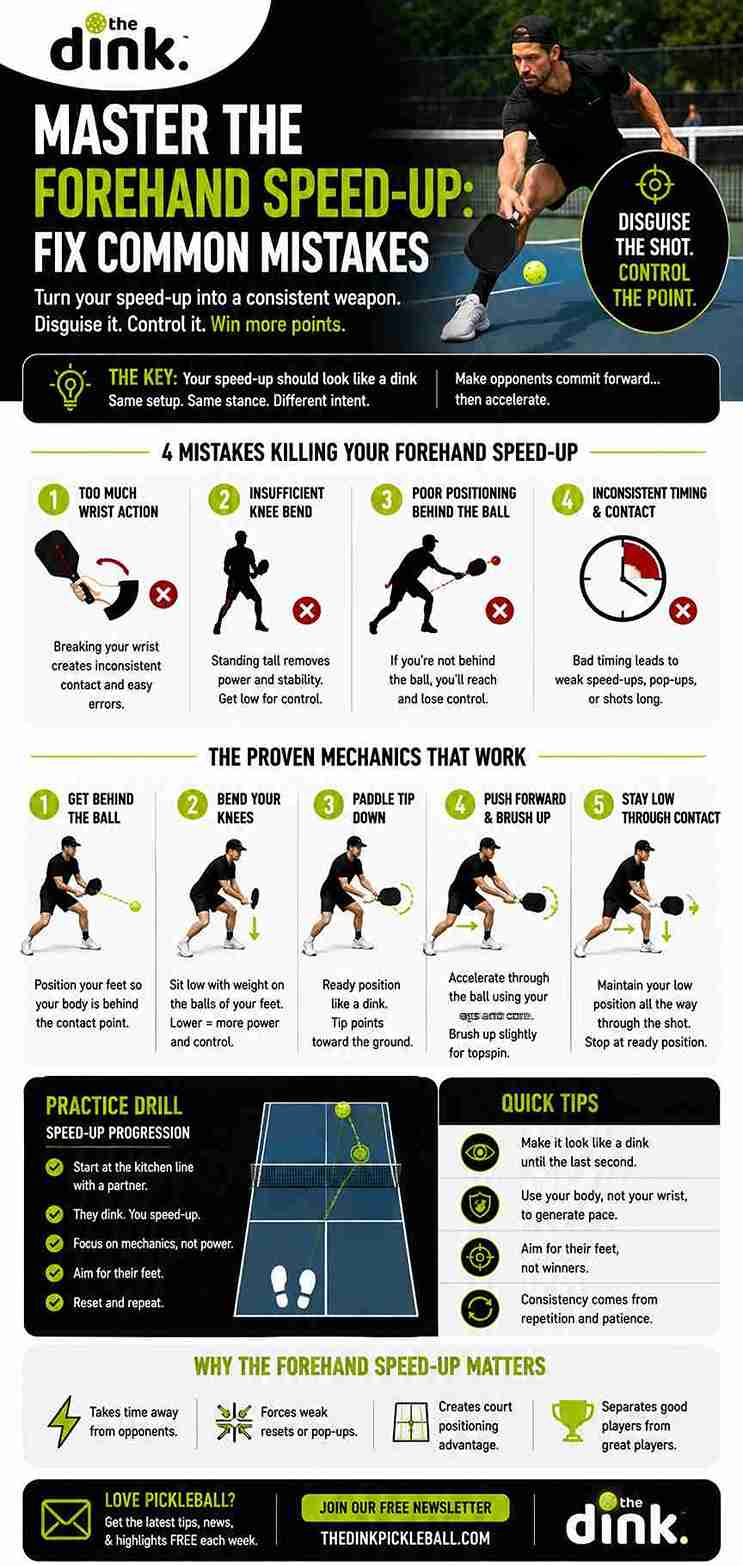
The biggest culprit behind inconsistent speed-ups is excessive wrist action. Many players try to generate power by flicking their wrist through contact, creating unpredictable ball flight and poor control. Your wrist should remain firm and stable throughout the entire motion.
2. Poor Body Positioning
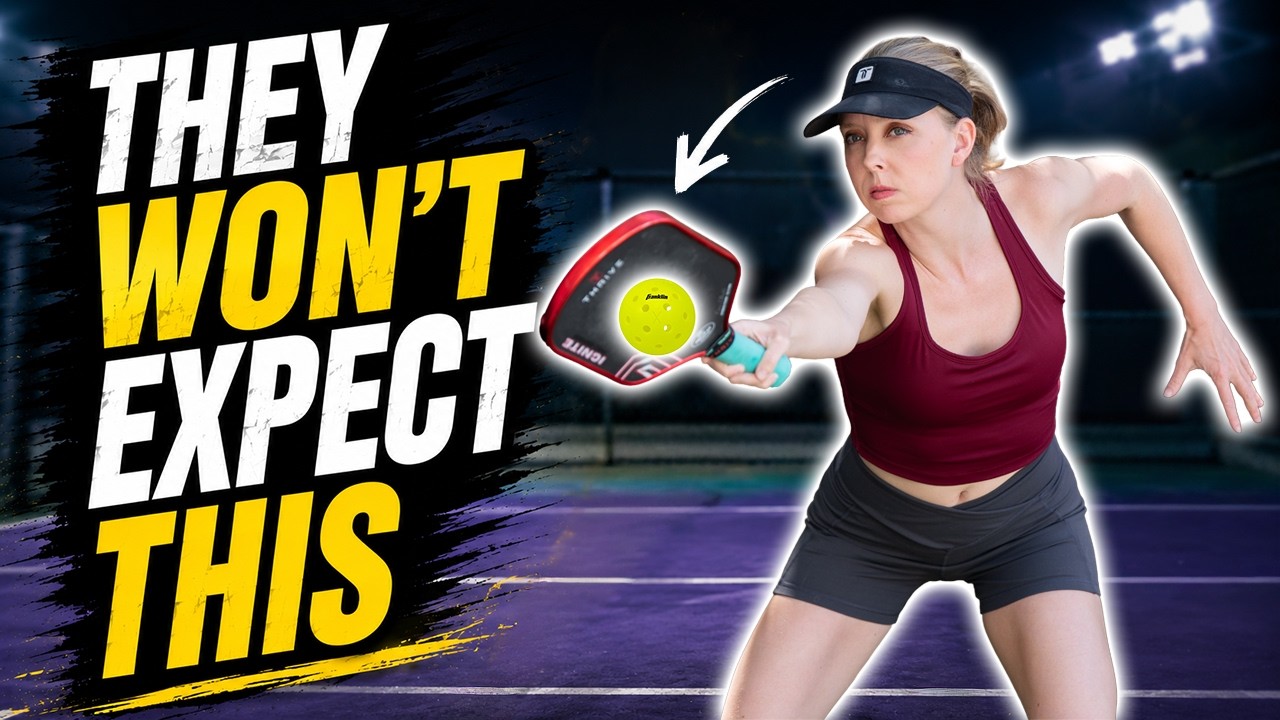
Your feet and body position determine everything about your speed-up success. Standing too upright or too far from the ball forces you to reach, destroying your timing and power transfer. Position yourself so you can make contact with the ball slightly in front of your body while maintaining balance.
3. Wrong Contact Point
Many players make contact too late or too early, sending balls into the net or long. The ideal contact point is when the ball is rising slightly, allowing you to drive through it with a descending paddle face while maintaining net clearance.
4. Inconsistent Follow-Through
A choppy or abbreviated follow-through leads to erratic results. Your follow-through should be smooth and controlled, finishing with your paddle face pointing toward your target. This ensures consistent ball direction and spin.
5. Poor Shot Selection
Not every ball deserves a speed-up. Attempting to speed up balls that are too low, too wide, or poorly positioned sets you up for failure. Wait for the right opportunity when you can execute with proper form.
The Correct Forehand Speed-Up Technique
Setup and Preparation
Begin in a comfortable athletic stance with your feet shoulder-width apart. Keep your knees slightly bent and weight balanced on the balls of your feet. Hold your paddle in a neutral position, ready to react quickly when the opportunity presents itself.
Recognition and Timing
Identify the right ball to attack – typically one that bounces at or above net height and lands in your strike zone. Start your preparation early by turning your shoulders slightly and loading your weight onto your back foot.
Execution
Step into the shot with your front foot while rotating your hips and shoulders toward the target. Keep your paddle face slightly closed to ensure net clearance, and accelerate smoothly through contact. Focus on driving through the ball rather than hitting at it.
Follow-Through and Recovery
Complete your follow-through with control, letting your paddle naturally finish toward your target. Immediately return to ready position, as your opponent may counter-attack quickly.
Practice Drills to Perfect Your Speed-Up
Start with stationary ball practice, focusing on contact point and follow-through consistency. Have a partner feed you balls at the ideal height and position until your mechanics become automatic.
Progress to live ball drilling where you alternate between dinks and speed-ups. This helps you develop the disguise element that makes the shot so effective in match play.
Finally, practice shot selection by having your partner vary ball height, pace, and placement. Learn to recognize which balls to attack and which to leave alone.
Common Troubleshooting
If your speed-ups consistently go long, you're likely making contact too early or with an open paddle face. Focus on a slightly closed paddle face and later contact point.
If balls keep hitting the net, check your contact point and follow-through. You may be hitting down on the ball or stopping your swing too early.
Frequently Asked Questions
How hard should I hit my forehand speed-up?
Focus on placement over power. A well-placed speed-up at 70% power is far more effective than a full-power shot that lacks control. Speed comes naturally as your technique improves.
When should I use the forehand speed-up during a point?
Use it when you receive a ball that bounces at or above net height in your forehand zone, and you're in good position to execute proper technique. Avoid forcing the shot when you're off-balance or the ball is too low.
How can I disguise my speed-up better?
Keep your preparation identical to your dink setup until the last possible moment. The key is maintaining the same body language and paddle position until you commit to accelerating through the ball.