The third shot drop stands as pickleball's most crucial transitional shot, yet most players approach it all wrong. While recreational players treat it as a defensive reset, competitive players weaponize it to seize control of the point. The difference lies in execution, mindset, and three specific techniques that can elevate your game immediately.
Why Most Players Get the Third Shot Drop Wrong
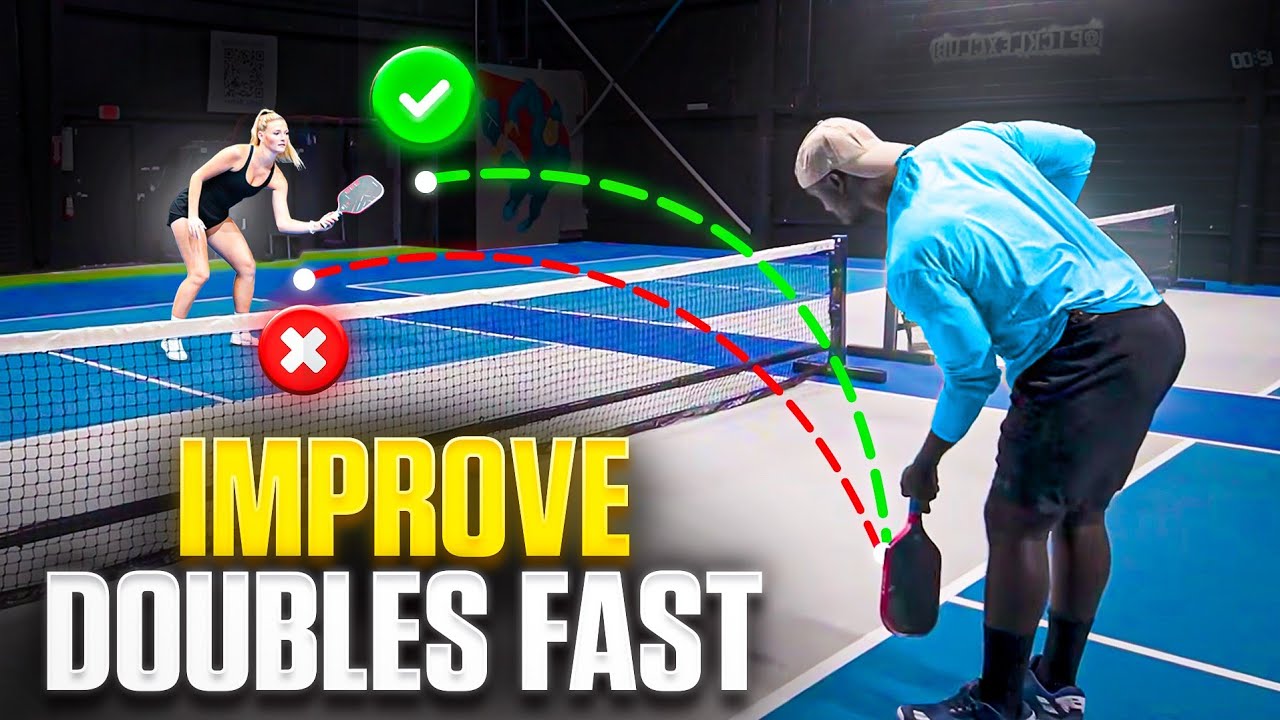
The typical recreational approach involves a timid, high-arcing shot that barely clears the net. Players focus solely on getting the ball into the non-volley zone, hoping their opponents won't attack. This passive mindset surrenders the initiative and keeps you trapped at the baseline longer than necessary.
Competitive players understand that the third shot drop serves multiple purposes: neutralizing your opponents' positioning advantage, creating opportunities to advance to the net, and applying pressure through precise placement and pace control.
The Three Keys to an Aggressive Third Shot Drop
1. Contact Point Optimization
The foundation of a penetrating third shot drop begins with your contact point. Strike the ball at waist height or higher whenever possible, maintaining a firm wrist throughout the motion. This elevated contact allows for a more direct trajectory while maintaining the necessary arc to clear the net.
Position yourself behind the ball with your paddle face slightly open at contact. The key is controlling the angle without sacrificing forward momentum. Many players make the mistake of scooping under the ball, creating excessive height that gives opponents easy attack opportunities.
2. Strategic Placement and Pace
An aggressive third shot drop targets specific zones within the kitchen. Aim for the sidelines or directly at your opponents' feet, forcing them into awkward positions. The pace should be firm enough to limit their reaction time but controlled enough to land soft.
Vary your targets consistently. Hit behind players who are moving forward aggressively, or place shots to their backhand sides when they're positioned centrally. This strategic thinking transforms your drop shot from predictable to problematic for your opponents.
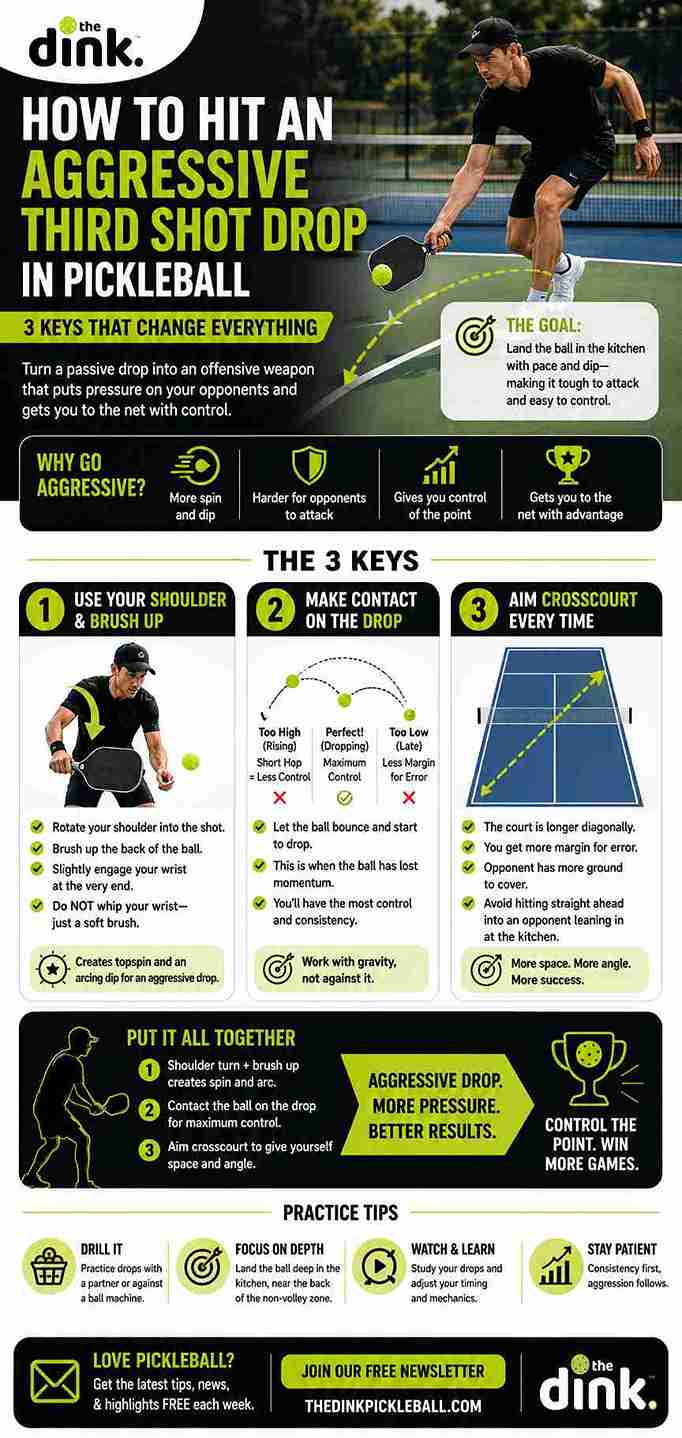
3. Follow-Through and Court Movement
The most overlooked aspect of the aggressive third shot drop is what happens after contact. Your follow-through should be low and forward, not upward. This technique creates the necessary topspin to bring the ball down while maintaining forward pace.
Immediately after hitting your drop shot, begin your advance toward the net. The aggressive nature of your shot should buy you the time needed to reach a more favorable court position before your opponents can mount their counterattack.
Practice Drills for Mastery
Start with stationary practice, focusing on consistent contact points and placement. Set up targets in the corners of the non-volley zone and aim for 70% accuracy before adding movement elements.
Progress to live ball drills where partners feed you various depths and paces from the baseline. This develops the adaptability necessary for match situations where perfect setups don't exist.
Finally, incorporate the shot into point play during practice matches. Focus on execution over winning initially, as muscle memory development requires consistent repetition under pressure.
Common Mistakes to Avoid
Avoid the temptation to hit every third shot as a drop. Sometimes the drive or lob presents better tactical options. Develop court awareness to recognize when the aggressive drop shot offers the highest probability of success.
Don't sacrifice accuracy for pace. A well-placed moderate drop shot outperforms a fast shot that lands deep or in the net. Consistency in execution builds confidence and puts sustained pressure on opponents.
Frequently Asked Questions
When should I choose a drop shot over a drive on the third shot?
Choose the drop shot when opponents are positioned at the net with good court coverage, when you're out of position and need time to recover, or when the return forces you to hit from below net height. The drive works better against players hanging back or when you have an excellent setup.
How do I know if my third shot drop is too aggressive?
Monitor your error rate and opponent responses. If you're consistently hitting into the net or giving opponents easy put-aways, dial back the pace while maintaining precise placement. The goal is controlled aggression, not reckless power.
What's the biggest difference between recreational and competitive third shot drops?
Competitive players use the shot tactically, varying placement, pace, and spin based on court positioning and opponent tendencies. Recreational players often hit the same safe shot repeatedly, making it easy for opponents to anticipate and attack.