The difference between pickleball doubles teams that dominate and those that collapse often comes down to one overlooked skill: communication. While most players obsess over perfecting their third shot drop or dink technique, the smartest competitors focus on what they say and when they say it.
Why Communication Wins Championships
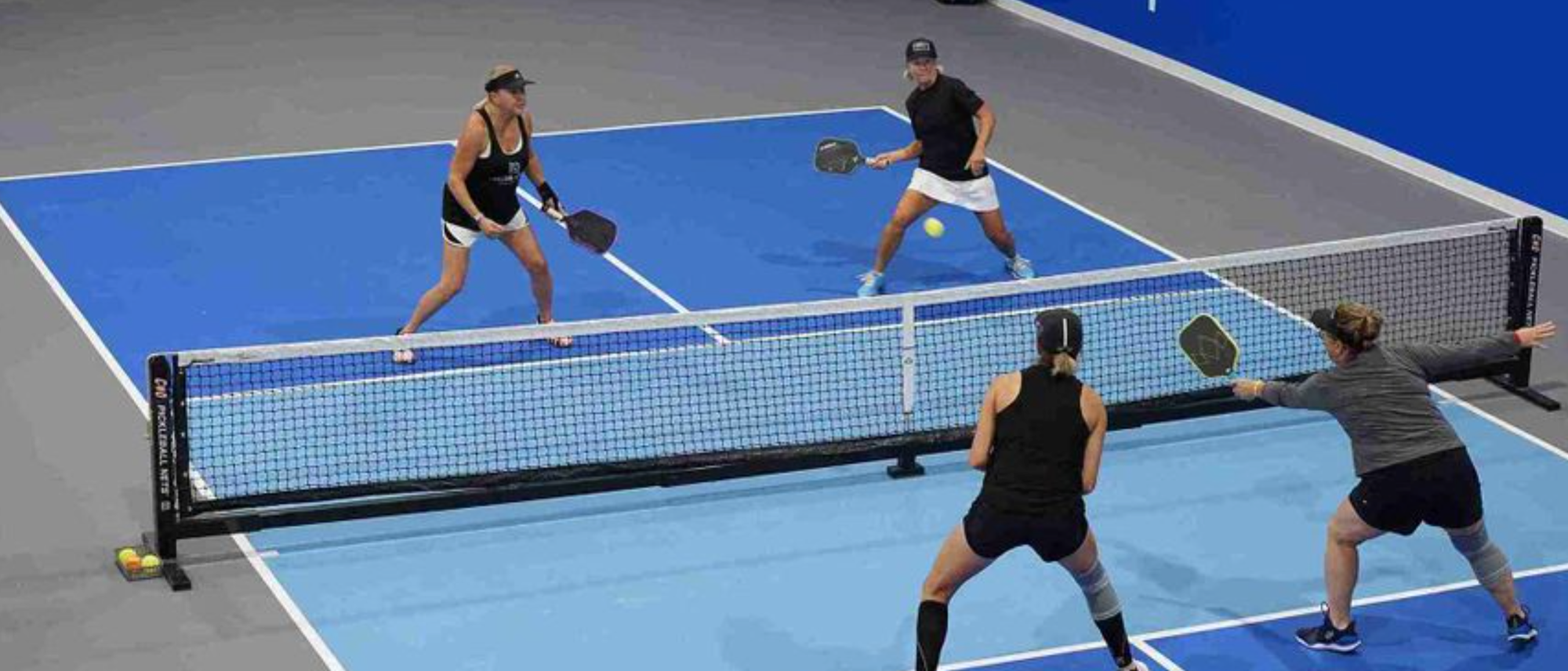
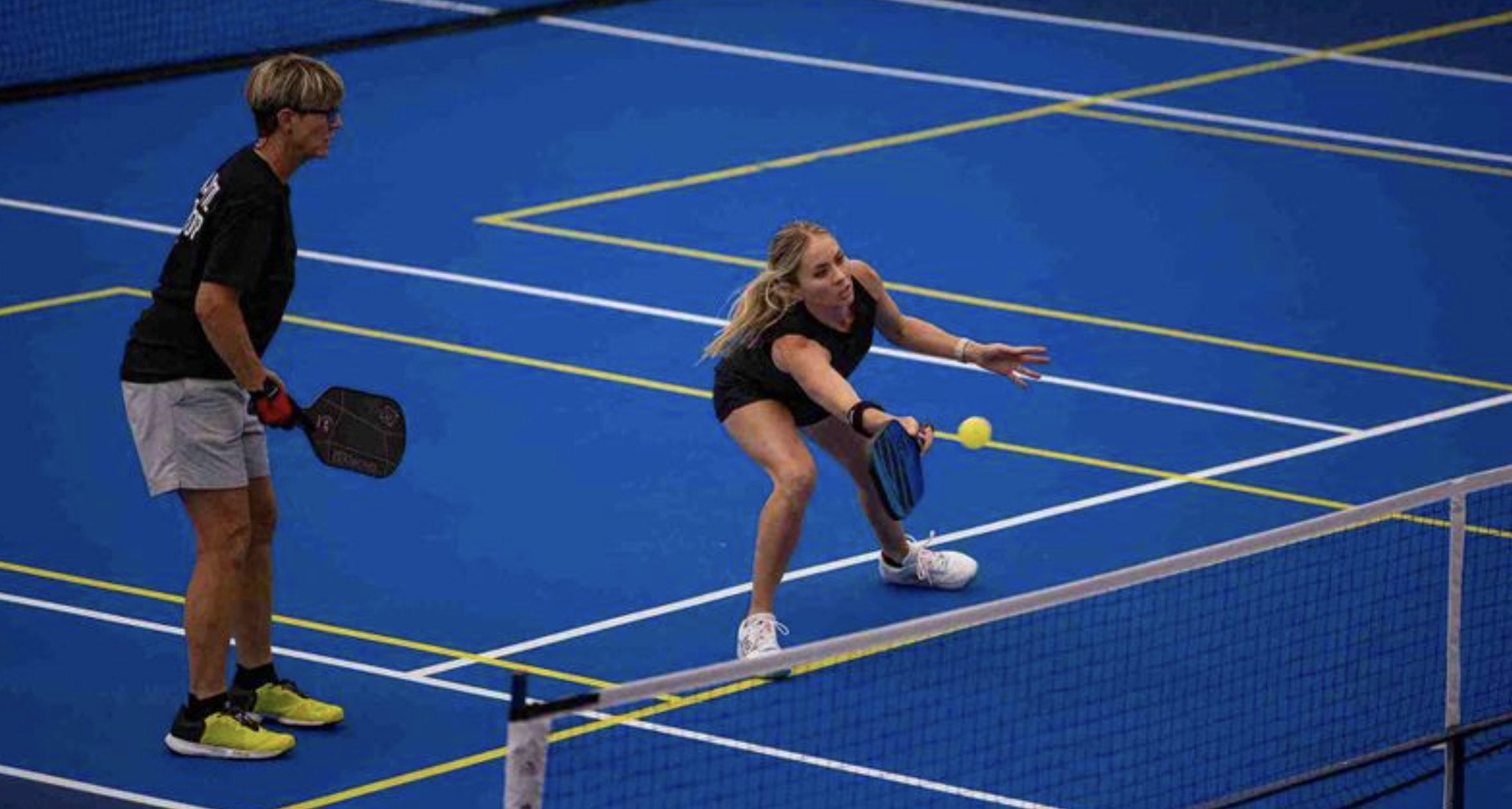
Elite doubles teams move like synchronized swimmers, anticipating each other's movements and covering the court seamlessly. This coordination doesn't happen by accident—it's the result of deliberate communication strategies developed through practice and refined under pressure.
Poor communication leads to predictable failures: balls dropping between partners, collisions at the net, and confusion about who takes which shots. These mental errors compound quickly, turning winnable points into frustrating losses.
Essential Pre-Point Communication
Serve and Return Strategy
Before each point begins, effective teams establish their positioning and strategy. The serving team should confirm target zones and discuss immediate follow-up plans. Simple calls like "middle return" or "attack forehand" set clear expectations without overthinking.
Receiving teams benefit from pre-determining return placement and third shot coverage. A quick "crosscourt deep" or "middle and move up" keeps both players aligned on the opening sequence.
Formation Adjustments
Advanced teams use brief tactical discussions between points to adjust their formation based on opponents' tendencies. Identifying whether to stack, switch sides, or maintain traditional positioning can neutralize opponent strategies before they develop momentum.
Mid-Point Communication That Matters
Ball Coverage Calls
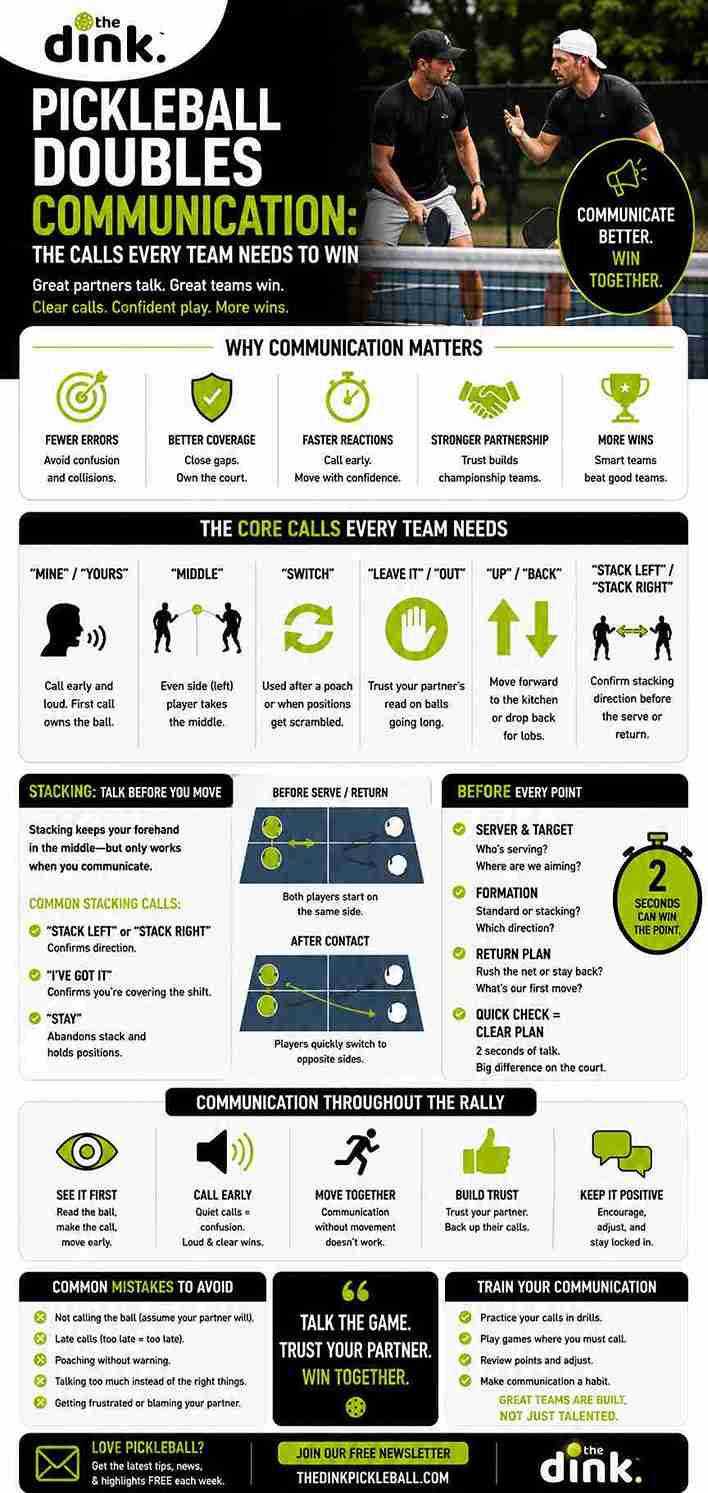
The most critical communication happens during live play. Clear, decisive calls prevent the dreaded "yours-mine-oops" scenario that plagues recreational players. Establish these non-negotiable rules:
- "Mine" means complete ownership—partner backs off immediately
- "Yours" provides definitive assignment when the ball's trajectory is unclear
- "Help" signals when a player is out of position and needs backup
Court Position Awareness
Smart partners provide constant spatial awareness updates. Calls like "stay" or "move up" help maintain proper court coverage without requiring visual confirmation. This running commentary becomes especially valuable during fast exchanges when players can't afford to check their partner's position.
Advanced Tactical Communication
Opponent Exploitation
Experienced teams develop shorthand for targeting opponent weaknesses. Code words like "backhand" or "short" can direct attack patterns without telegraphing intentions to opponents. This tactical layer adds significant strategic depth to communication systems.
Momentum Management
Championship-level teams use communication to manage emotional momentum. Positive reinforcement after good shots and quick reset calls after errors prevent negative spirals that destroy confidence. A simple "next point" or "stay aggressive" keeps partners mentally connected during difficult stretches.
Building Your Communication System
Developing effective doubles communication requires intentional practice. Start with basic ball coverage calls during drilling sessions, then gradually add tactical elements as coordination improves. The goal is making communication automatic under pressure.
Record your matches to identify communication breakdowns and missed opportunities. Most teams discover they're either talking too much (creating confusion) or too little (missing crucial coordination moments).
Common Communication Mistakes
Avoid these partnership killers: making calls too late to be useful, using unclear language that creates confusion, and failing to establish pre-match communication protocols. The best teams sound almost boring in their consistency—every situation has a predetermined call or signal.
FAQ
When should I call "mine" versus "yours" during doubles play?
Call "mine" when you're clearly in the best position to handle the shot and want complete ownership. Use "yours" when you can see your partner has a better angle or when the ball's trajectory makes ownership unclear. Make these calls early enough for your partner to react appropriately.
How can we communicate strategy without opponents hearing our plans?
Develop simple code words or hand signals for common tactical adjustments. Many teams use predetermined signals for switching positions, targeting specific opponents, or changing formation. Keep communications brief and establish your system during practice, not during matches.
What's the most important communication habit for new doubles teams?
Consistent ball coverage calls are the foundation of all doubles communication. Master "mine," "yours," and "help" calls before adding tactical complexity. Once basic coverage becomes automatic, you can layer in strategic communications without overwhelming your system.