Why Pickleball Volleys Make or Break Your Game
The volley is the defining shot that separates recreational players from competitive ones in pickleball. When executed properly, volleys control the pace of play, create offensive opportunities, and put immense pressure on opponents. However, many players struggle with consistency and power in their volleys due to fundamental flaws in grip and positioning.
Understanding the mechanics behind successful volleys isn't just about hitting the ball out of the air—it requires mastering grip pressure, court positioning, and strategic shot placement. Let's break down the essential components that will transform your net game.
The Foundation: Proper Grip Technique
Continental Grip Mastery
The continental grip is your foundation for consistent volleys. Place your hand on the paddle as if you're shaking hands with it, with your index finger knuckle positioned on the top right bevel (for right-handed players). This grip allows for quick transitions between forehand and backhand volleys without changing hand position.
Many players make the mistake of using their groundstroke grips for volleys, which creates timing issues and reduces control. The continental grip naturally positions the paddle face slightly open, helping you get under the ball and create the necessary lift for clearing the net.
Grip Pressure and Control
Maintain a firm but flexible grip pressure—about 6 out of 10 on the pressure scale. Too loose, and you'll lose control on impact. Too tight, and you'll create tension that reduces feel and quick reactions. Your grip should tighten slightly at the moment of contact, then relax immediately after.
Strategic Court Positioning for Volley Success
The Optimal Net Position
Position yourself approximately 7-9 feet from the net, just behind the non-volley zone line. This distance gives you enough time to react to hard-hit balls while maintaining aggressive positioning for put-away opportunities. Standing too close makes you vulnerable to balls hit at your feet, while standing too far back reduces your angle and power advantages.
Ready Position and Movement
Maintain an athletic stance with feet shoulder-width apart, knees slightly bent, and weight on the balls of your feet. Keep your paddle up at chest level with both hands ready—your non-dominant hand should support the throat of the paddle for quick transitions.
Stay light on your feet and maintain constant small movements. This "dancing" keeps your muscles engaged and ready for quick directional changes. When the ball approaches, take small adjustment steps rather than large lunges.
Technical Execution Tips
The Compact Swing
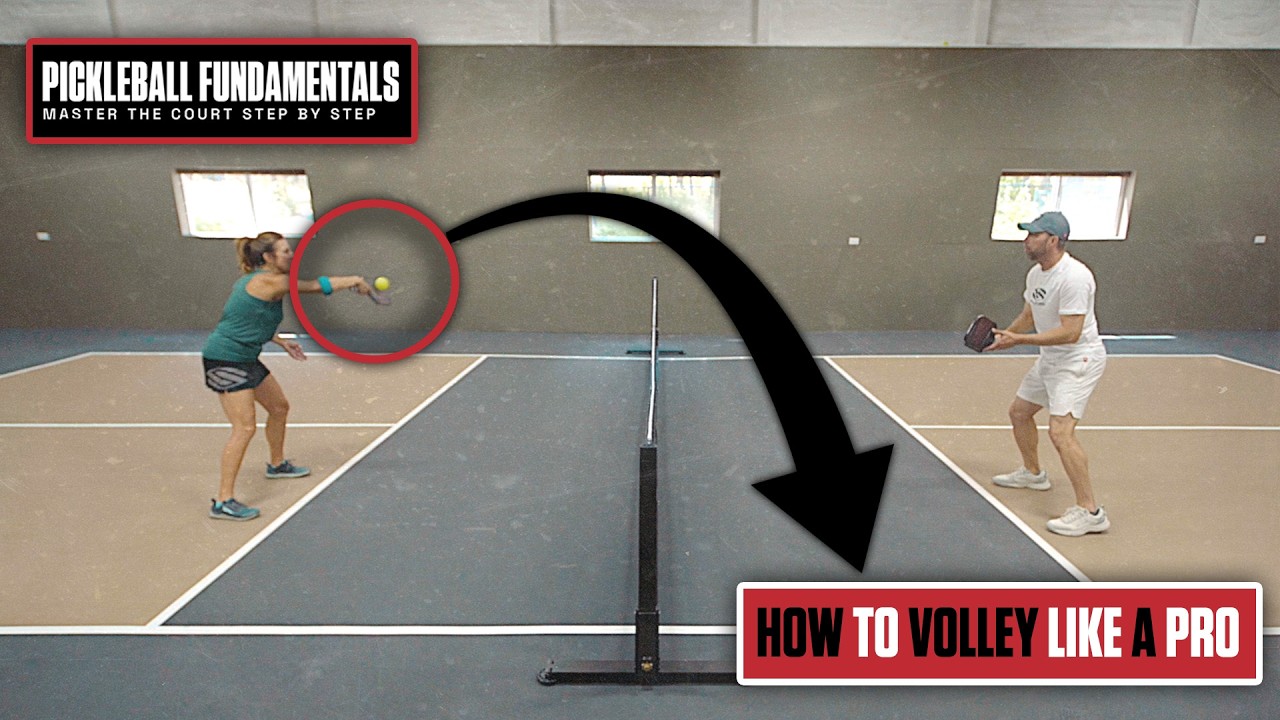
Volleys require compact, controlled swings rather than full groundstroke motions. Use a short backswing—no more than 12 inches—and focus on moving the paddle forward through contact. The power comes from the approaching ball's momentum, not from your swing.
Keep your swing path slightly upward to create the necessary arc over the net. Aim to contact the ball at or slightly above net height whenever possible, as this gives you the best angle for aggressive shots.
Target Selection and Placement
Focus on consistency before power. Aim for the middle third of the court initially, then progress to targeting sidelines and your opponent's feet. Cross-court volleys are generally safer than down-the-line shots due to the longer court distance and higher net clearance.
When you have a high volley opportunity, be aggressive and aim downward at sharp angles. Low volleys require more patience—focus on getting the ball up and deep rather than trying for winners.
Common Volley Mistakes to Avoid
Avoid these frequent errors that plague developing players: taking the paddle back too far, hitting with an open paddle face on low volleys, backing away from the ball instead of moving forward, and trying to generate too much power through arm swing rather than using the ball's existing pace.
Frequently Asked Questions
How do I handle fast volleys hit directly at me?
Stay calm and use a blocking motion rather than a full swing. Keep your paddle firm and let the ball's pace work for you. Aim to redirect the ball back deep to give yourself time to recover position.
Should I use different grips for forehand and backhand volleys?
No, stick with the continental grip for both sides. While it may feel awkward initially on the backhand side, the continental grip allows for quicker reactions and more consistent contact points as volleys happen quickly at the net.
When should I be aggressive versus defensive with my volleys?
Be aggressive when the ball is contacted above net height and you have good balance. Play defensively when handling low volleys, balls hit with heavy pace, or when you're off-balance. The key is recognizing these situations quickly and adjusting your strategy accordingly.