The dink shot in pickleball might look simple, but it's arguably the most crucial skill that determines whether you're playing recreational ball or competing at an advanced level. This soft, controlled shot executed near the net separates weekend warriors from serious competitors.
While power shots and aggressive play grab attention, the subtle art of dinking controls the pace and outcome of most rallies. Here are three essential dinking techniques that will elevate your kitchen game and give you a competitive edge.
Understanding the Fundamentals of Dinking
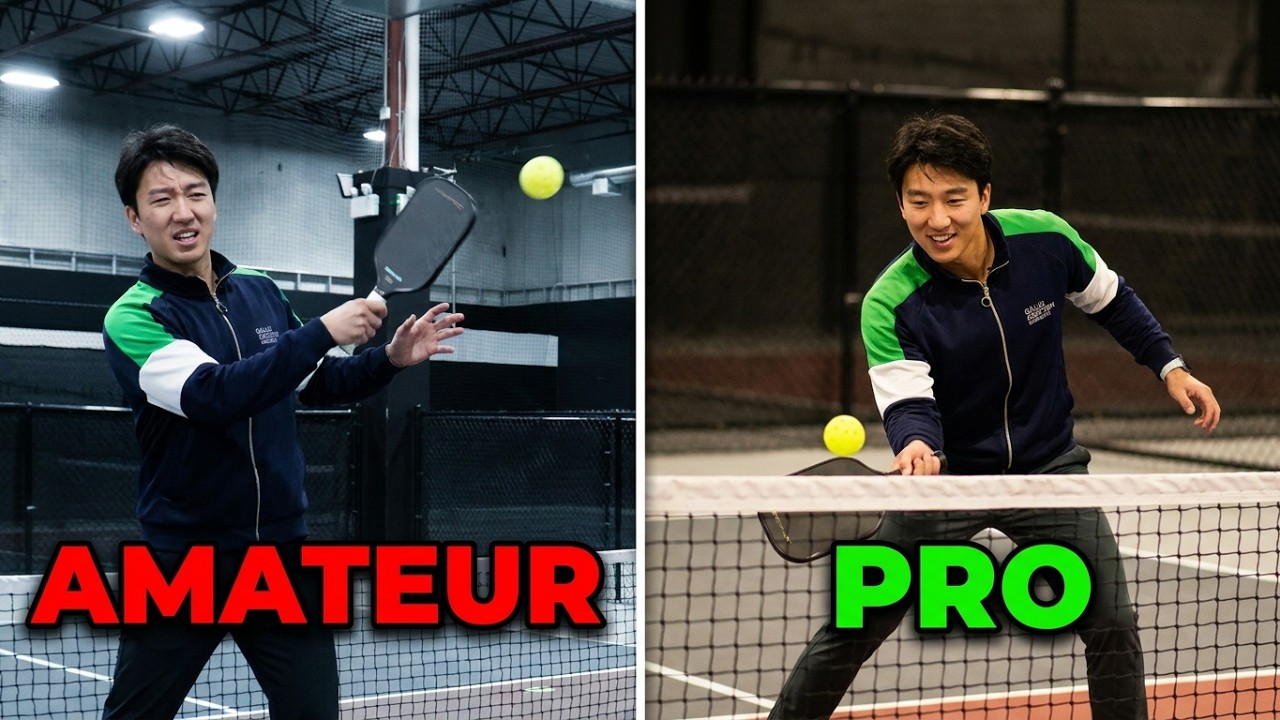
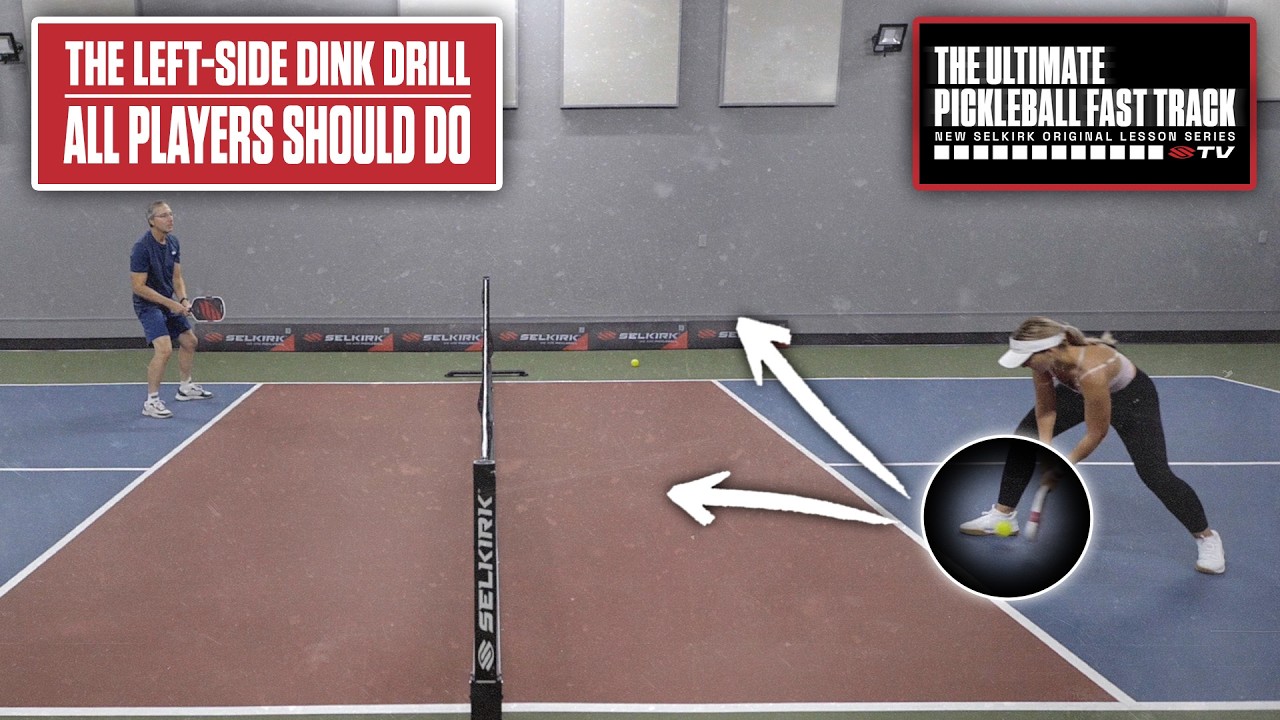
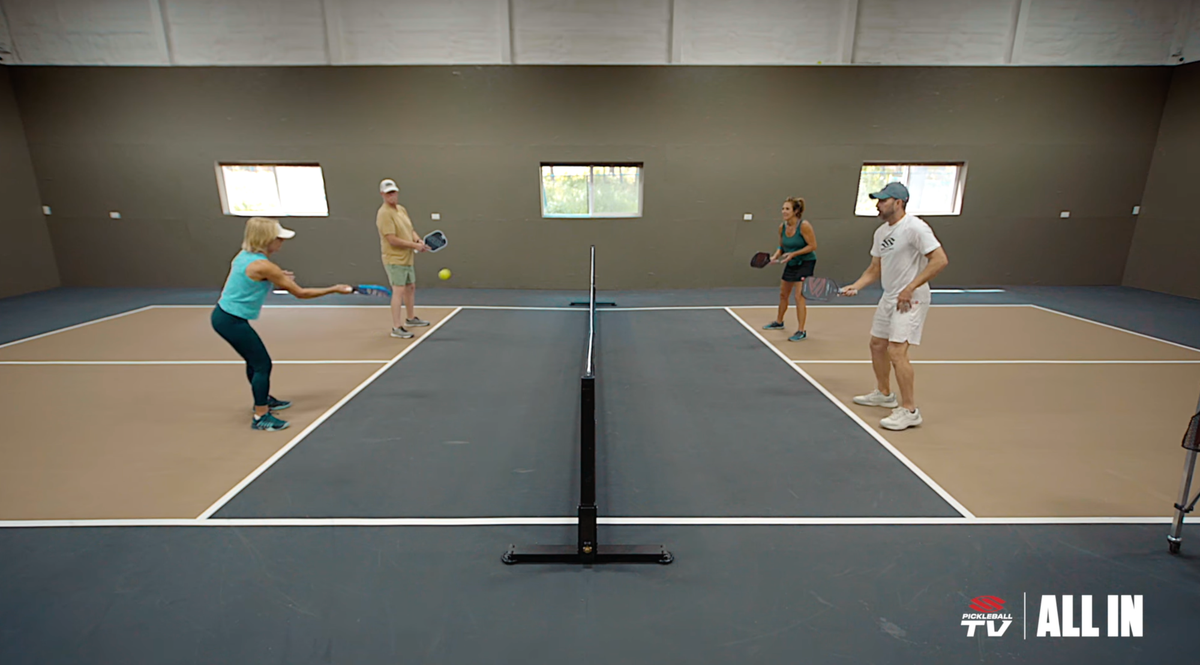
A pickleball dink is a soft shot hit from the non-volley zone that arcs gently over the net and lands in your opponent's kitchen. The goal isn't to hit winners immediately, but to create opportunities through patience and precision.
The key to effective dinking lies in control rather than power. You're looking to keep the ball low, force your opponents into difficult positions, and wait for the right moment to attack.
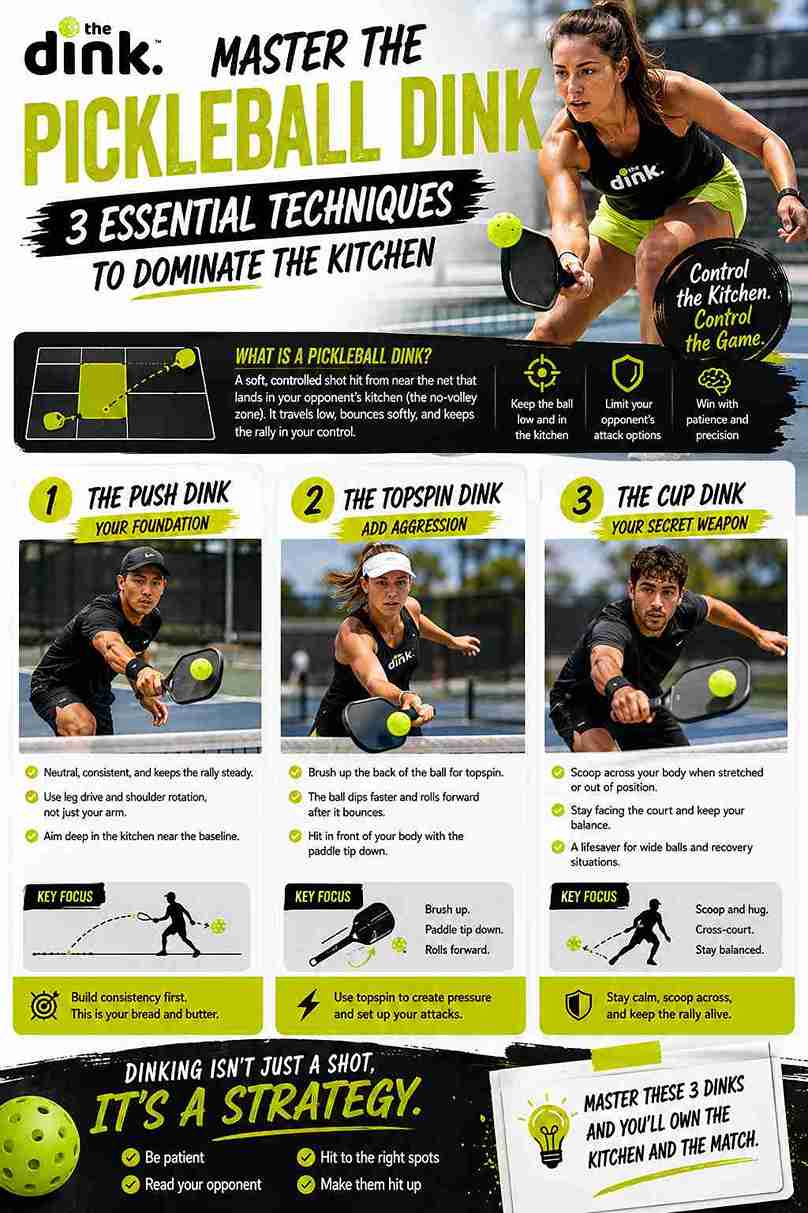
Technique #1: The Cross-Court Dink
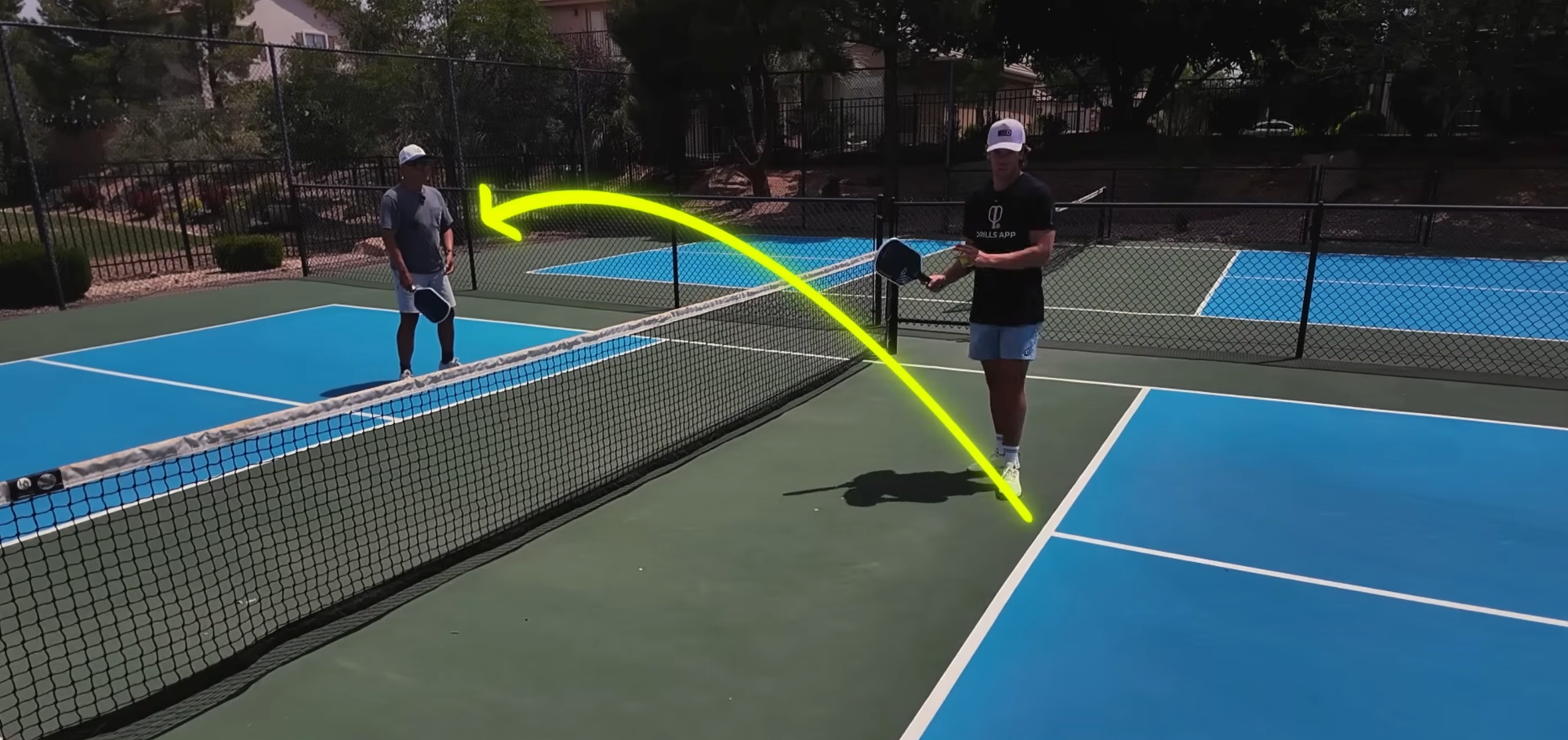
The cross-court dink is your bread and butter shot that should make up roughly 80% of your dinking game. This technique offers the highest margin for error due to the longer distance and lower net height at the center.
Execution Tips:
- Keep your paddle face slightly open
- Use a gentle lifting motion rather than a forward push
- Aim for the opponent's backhand side when possible
- Maintain consistent arc height of 2-3 feet above the net
The cross-court dink is particularly effective because it pulls opponents out of position and creates angles that open up the court for your next shot.
Technique #2: The Drop Dink
The drop dink is a more advanced technique that involves hitting the ball with minimal arc, causing it to drop quickly after clearing the net. This shot is devastating when executed properly because it forces opponents to hit up on the ball.
Key Elements:
- Contact the ball at its highest point
- Use a downward paddle motion with an open face
- Apply slight backspin for better control
- Target the opponent's feet or front edge of the kitchen
Master this technique and you'll find opponents struggling to return your shots effectively, often popping the ball up for easy put-aways.
Technique #3: The Attacking Dink
The attacking dink bridges the gap between soft dinking and aggressive play. This shot carries more pace and penetration while maintaining the low trajectory that keeps opponents defensive.
When to Use:
- When opponents are playing too far back from the kitchen line
- Against players who struggle with faster-paced soft shots
- To change the rhythm after several slow dinks
- When you have a high ball to work with
The attacking dink requires precise timing and paddle control. You're adding firmness to the shot without sacrificing accuracy or height control.
Common Dinking Mistakes to Avoid
Even with proper technique knowledge, many players fall into predictable patterns that limit their effectiveness:
Hitting too many straight-ahead dinks: This makes it easy for opponents to anticipate and attack your shots.
Inconsistent height: Balls that are too high become attackable, while shots that hit the net obviously end the point.
Lack of patience: Rushing to end points prevents you from setting up better opportunities.
Developing Your Dinking Skills
Like any fundamental skill, dinking requires dedicated practice. Set up drills that focus on consistency, placement, and varying your shots. Practice with partners of different skill levels to experience various dinking styles and speeds.
Remember that effective dinking is as much mental as it is physical. Stay patient, observe your opponents' weaknesses, and use these three techniques strategically rather than randomly.
Frequently Asked Questions
How long should a dinking rally last?
There's no set duration for dinking rallies. Focus on quality over quantity - look for opportunities to attack when opponents give you a higher ball or get out of position, rather than dinking indefinitely.
Should I always dink cross-court?
While cross-court dinks are safer and more effective in most situations, mixing in occasional straight-ahead dinks keeps opponents guessing. Use straight dinks strategically when you have a clear advantage or need to change the angle.
What's the biggest mistake recreational players make when dinking?
The most common error is trying to hit winners too early in the rally. Recreational players often lack the patience required for effective dinking, leading to unforced errors when better opportunities would have developed with continued soft play.