The third shot drop stands as pickleball's most game-changing yet challenging shot. While it can transform your court positioning and strategic advantage, it's also the shot that frustrates players at every level.
Professional player Tanner Tomassi has identified three fundamental errors that plague recreational players' third shot drops. After years competing at the highest levels, he's witnessed these same mistakes repeatedly sabotage otherwise solid players.
The encouraging news? These fixes are more straightforward than most players realize.
Understanding the Third Shot Drop's Importance
The third shot drop serves a crucial strategic purpose in pickleball. Following the serve and return, this soft shot allows the serving team to advance from the baseline to the kitchen line, where rallies are typically won and lost.
Without a reliable third shot drop, players remain trapped at the baseline, giving their opponents a significant positional advantage. This shot essentially levels the playing field and creates opportunities for offensive positioning.
Mistake #1: Improper Paddle Angle and Contact Point
The most common error involves paddle positioning at contact. Many players approach the third shot drop with the same paddle angle they'd use for drives or aggressive shots.
For effective drops, the paddle face must open slightly, creating the necessary upward trajectory to clear the net while maintaining soft landing characteristics. The contact point should occur slightly below waist level, allowing for proper swing mechanics.
The Fix:
Practice with an open paddle face and focus on contacting the ball as it descends rather than rushing the shot. This timing adjustment alone can dramatically improve drop shot consistency.
Mistake #2: Excessive Swing Speed and Follow-Through
Power-oriented players often struggle with third shot drops because they maintain aggressive swing speeds. The drop shot requires finesse, not force.
Tomassi emphasizes that successful drops come from controlled, abbreviated swings rather than full follow-throughs. Players who swing too hard typically send balls sailing long or create unpredictable bounces that favor their opponents.
The Solution:
Develop a compact swing with emphasis on paddle control rather than speed. Think of the motion as guiding the ball rather than hitting it. Practice shadow swings at reduced speeds to build muscle memory for the proper tempo.
Mistake #3: Poor Target Selection and Arc Trajectory
Many players aim too aggressively when attempting third shot drops, targeting areas too close to the kitchen line or trying to hit winners immediately.
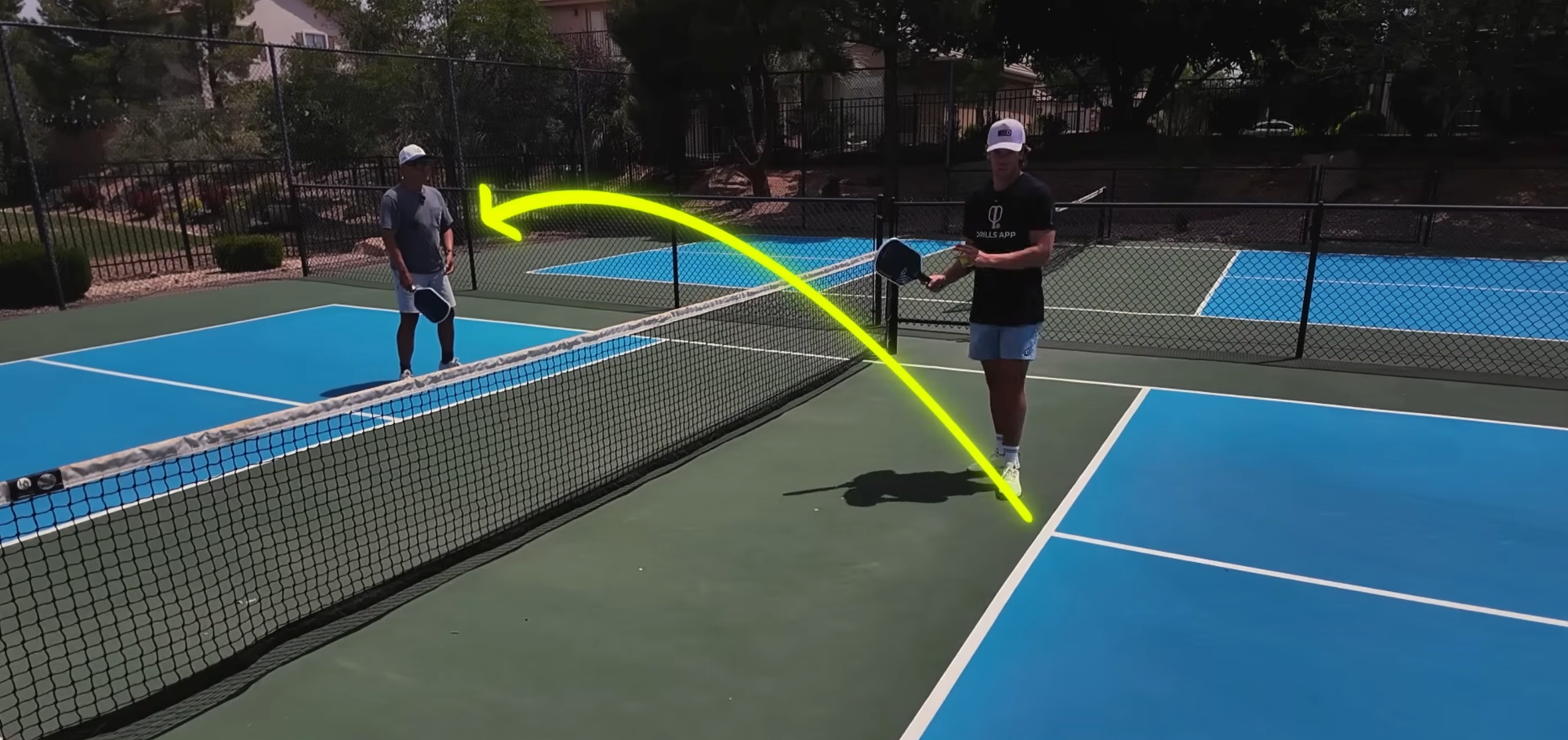
Effective drops should arc high enough to clear the net with margin for error while landing deep in the transition zone. This forces opponents to hit up on their next shot, maintaining the rally's neutral or favorable dynamics.
The Correction:
Aim for a landing zone 3-5 feet behind the kitchen line initially. As consistency improves, gradually work the target area closer to the line. Focus on creating a rainbow-like trajectory that peaks well above net height.
Practice Drills for Third Shot Drop Mastery
Developing reliable third shot drops requires dedicated practice beyond casual play. Set up specific drilling sessions focusing exclusively on this shot.
Start with stationary practice, hitting drops from the baseline with a partner at the kitchen line. Gradually introduce movement and varying ball speeds to simulate game conditions.
Cross-court drops often provide larger margin for error than straight-ahead shots, making them ideal for building confidence and consistency.
Mental Approach and Shot Selection
Beyond technical adjustments, successful third shot drops require proper mental approach. Accept that not every drop will be perfect, and focus on consistency over perfection.
Recognize when conditions favor drops versus drives. Wind, opponent positioning, and court surface all influence optimal shot selection. Develop the judgment to know when alternative third shots might prove more effective.
Building Progressive Skill Development
Master third shot drops through progressive skill building. Begin with slow, high drops focusing purely on consistency. Gradually introduce pace and precision as basic mechanics solidify.
Track success rates during practice to monitor improvement objectively. Aim for 70-80% consistency before advancing to more aggressive drop variations.
Frequently Asked Questions
How high should my third shot drop arc over the net?
Aim for 3-6 feet of net clearance initially. Higher arcs provide greater margin for error and create steeper descent angles that challenge opponents. As skill improves, gradually reduce arc height while maintaining consistency.
When should I choose a drive instead of a drop?
Consider drives when opponents position themselves very close to the kitchen line or when they demonstrate weak overhead skills. Also use drives occasionally to keep opponents honest and prevent them from anticipating drops exclusively.
What's the biggest difference between recreational and professional third shot drops?
Professionals demonstrate superior consistency and can execute drops under pressure while moving. They also show better judgment about when to attempt drops versus alternative shots, adapting quickly to changing court conditions and opponent positioning.