When most people think about professional pickleball players, they imagine a life of tournaments, sponsorship deals, and athletic glory. The reality is far more demanding—and far less glamorous—than what appears on social media.
Jack Munro, a rising star on the APP tour, recently opened up about his complete daily routine, offering an unprecedented look into what it actually takes to compete at pickleball's highest level. From pre-sunrise training sessions to meticulous recovery protocols, Munro's schedule reveals why only a select few can maintain elite-level performance.
The Early Bird Gets the Court
Munro's day begins at 5:30 AM sharp. No gradual wake-up routine, no leisurely coffee—just immediate action. "The alarm goes off, and I'm up," Munro explains. "There's no time for meditation or journaling like you see other athletes do. Every minute counts when you're trying to stay competitive."
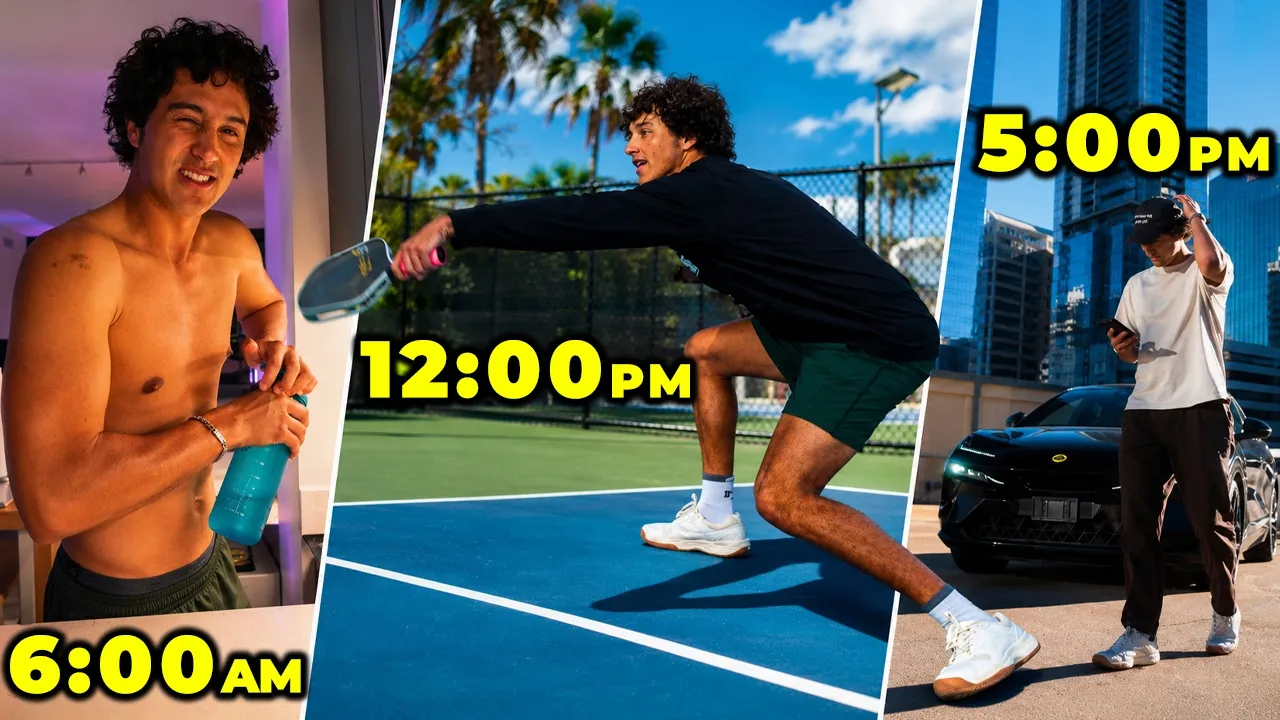
This early start isn't just about getting ahead of the competition—it's about securing quality court time before recreational players fill up the facilities. For professional players without access to private training centers, public courts become their office, and arriving early means better conditions and fewer distractions.
Training Sessions That Build Champions
Munro's training regimen combines technical skill development with intense physical conditioning. His morning sessions typically include:
Technical Drilling (6:00-8:00 AM)
Precision is everything in professional pickleball. Munro spends two hours working on specific shots, focusing on consistency rather than power. "People think we just hit balls hard all day," he notes. "But it's really about hitting the same shot perfectly 100 times in a row."
Fitness and Conditioning (8:30-10:00 AM)
Professional pickleball demands explosive movements, quick direction changes, and sustained energy over long matches. Munro's conditioning program includes plyometric exercises, agility drills, and sport-specific movements that translate directly to on-court performance.

Strategy and Mental Training (10:30-11:30 AM)
Elite players don't just react—they think several shots ahead. Munro dedicates time to studying opponent footage, analyzing game patterns, and working with his coach on tactical adjustments. "The mental game separates good players from great ones," he emphasizes.
Afternoon Sessions and Match Play
After a brief lunch break, Munro returns to the courts for live match practice. These sessions simulate tournament conditions, complete with pressure situations and competitive intensity. "You can drill all you want," Munro says, "but nothing replaces actual match experience."
During tournament weeks, these afternoon sessions focus on maintaining timing and rhythm rather than introducing new elements. Consistency becomes paramount when prize money and ranking points are on the line.
Recovery: The Hidden Secret
What separates professional players from dedicated amateurs often isn't talent or even training intensity—it's recovery. Munro's post-training routine includes ice baths, stretching sessions, and careful nutrition planning.
"Recovery is where you actually get better," Munro explains. "Training breaks you down. Recovery builds you back up stronger." His evening routine includes foam rolling, mobility work, and ensuring he gets adequate sleep for the next day's demands.
The Mental Challenge
Beyond the physical demands, Munro acknowledges the psychological challenges of professional pickleball. "Some days you don't want to get up at 5:30. Some days your shots aren't falling. But consistency is what makes the difference over a full season."
Professional players must maintain peak performance across dozens of tournaments annually, often traveling extensively while maintaining their training routines in unfamiliar environments.
What Amateur Players Can Learn
While few recreational players need Munro's extreme schedule, several principles apply to any skill level. Consistent practice times, focused drilling sessions, and proper recovery can accelerate improvement for players at any level.
"You don't need to train six hours a day," Munro advises. "But whatever time you dedicate, make it count. Quality beats quantity every time."
FAQ
How many hours per day does a professional pickleball player train?
Most professional players train 4-6 hours daily, split between technical skills, physical conditioning, and match play. This varies based on tournament schedules and individual needs.
What's the most important aspect of a pro player's routine?
Consistency is crucial. Professional players maintain their routines regardless of motivation levels, weather conditions, or other factors. This consistency builds the muscle memory and mental toughness required for competition.
Can amateur players benefit from following a pro's training schedule?
While the time commitment may not be realistic, amateur players can adopt key principles like focused drilling, proper warm-up routines, and dedicated recovery time to accelerate their improvement.