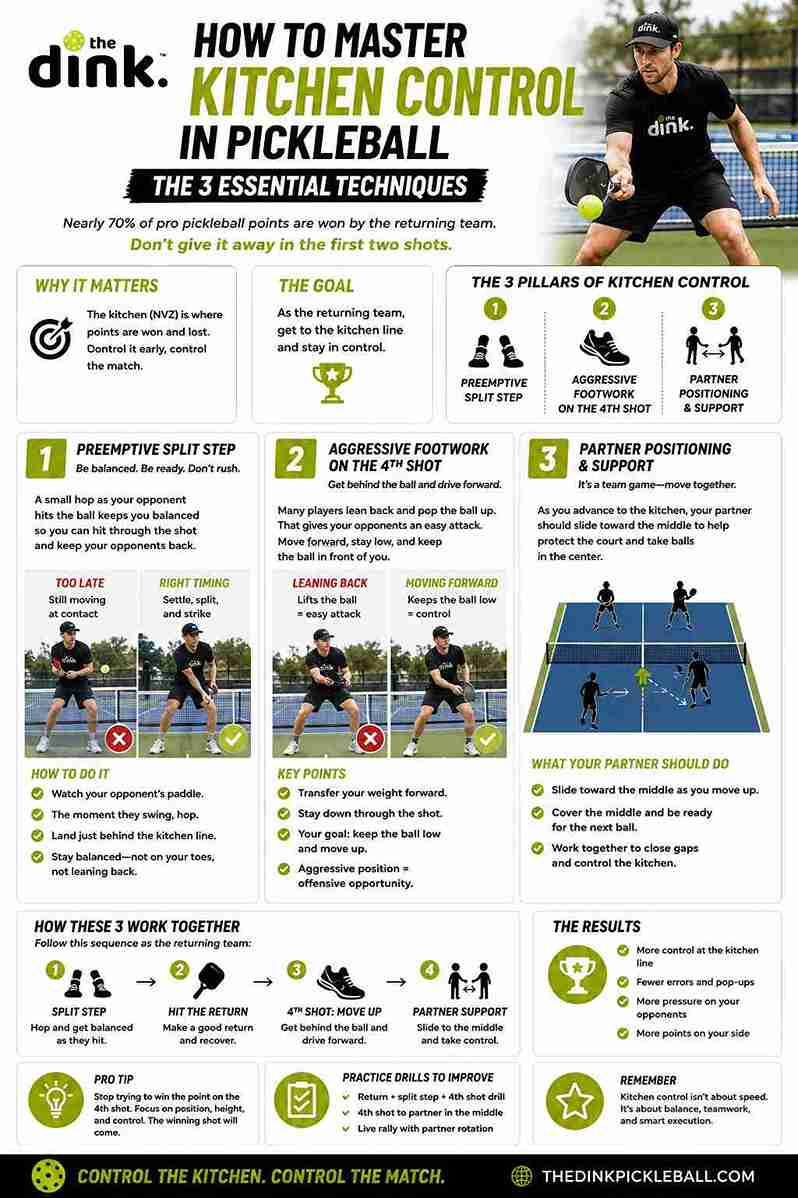
The statistics don't lie: professional pickleball data shows that nearly 70% of points are claimed by the returning team. Yet according to PPA professional Connor Garnett from Connor Garnett Pickleball, approximately 90% of recreational players throw away this crucial advantage in just the first two shots.
The gap between elite players and the rest often boils down to mastering kitchen control fundamentals. If you're consistently losing points despite having the statistical edge, these three professional techniques will transform your non-volley zone game.
Understanding the Kitchen Advantage
Before diving into techniques, it's essential to understand why the returning team holds such a significant statistical advantage. When you're receiving serve, you have the opportunity to dictate the pace and placement of the rally from the third shot onward.
However, most players immediately surrender this control by attempting low-percentage shots or failing to establish proper positioning. The key is maintaining patience and executing fundamentally sound shots that preserve your tactical advantage.
Technique #1: The Neutral Reset Shot
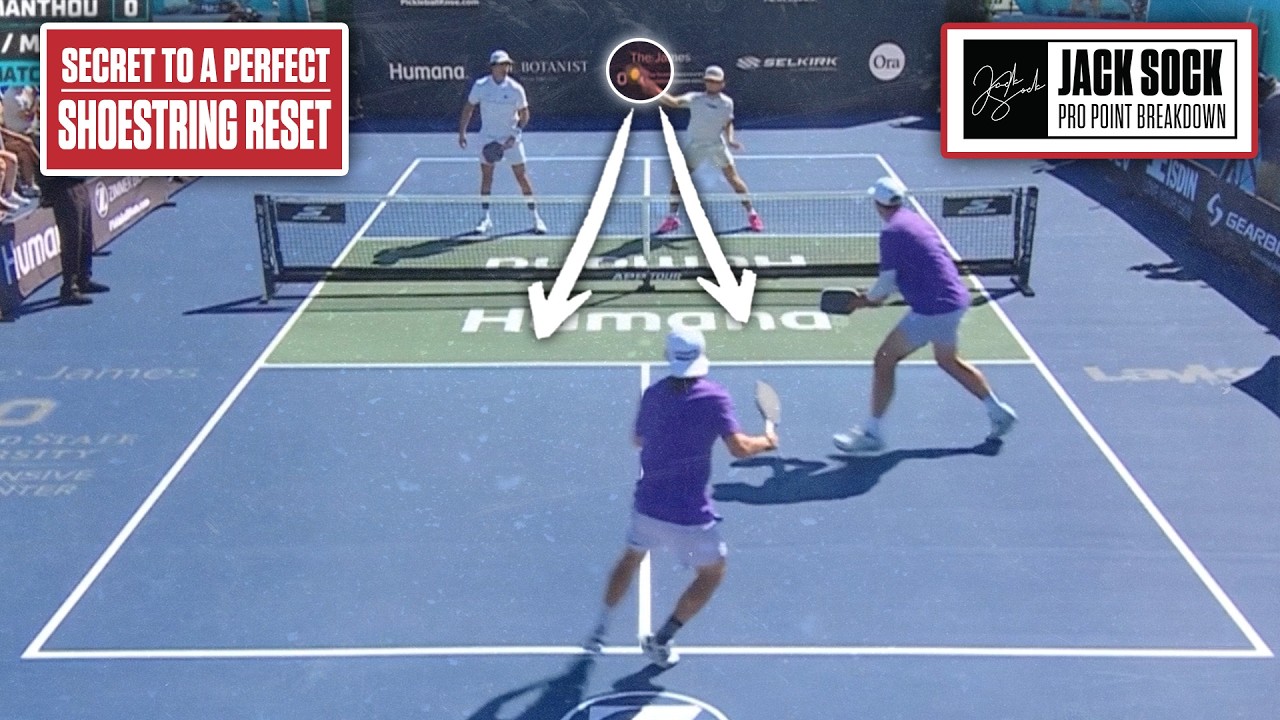
Connor Garnett's first essential technique focuses on the neutral reset shot. This shot serves as your foundation for maintaining kitchen control when under pressure.
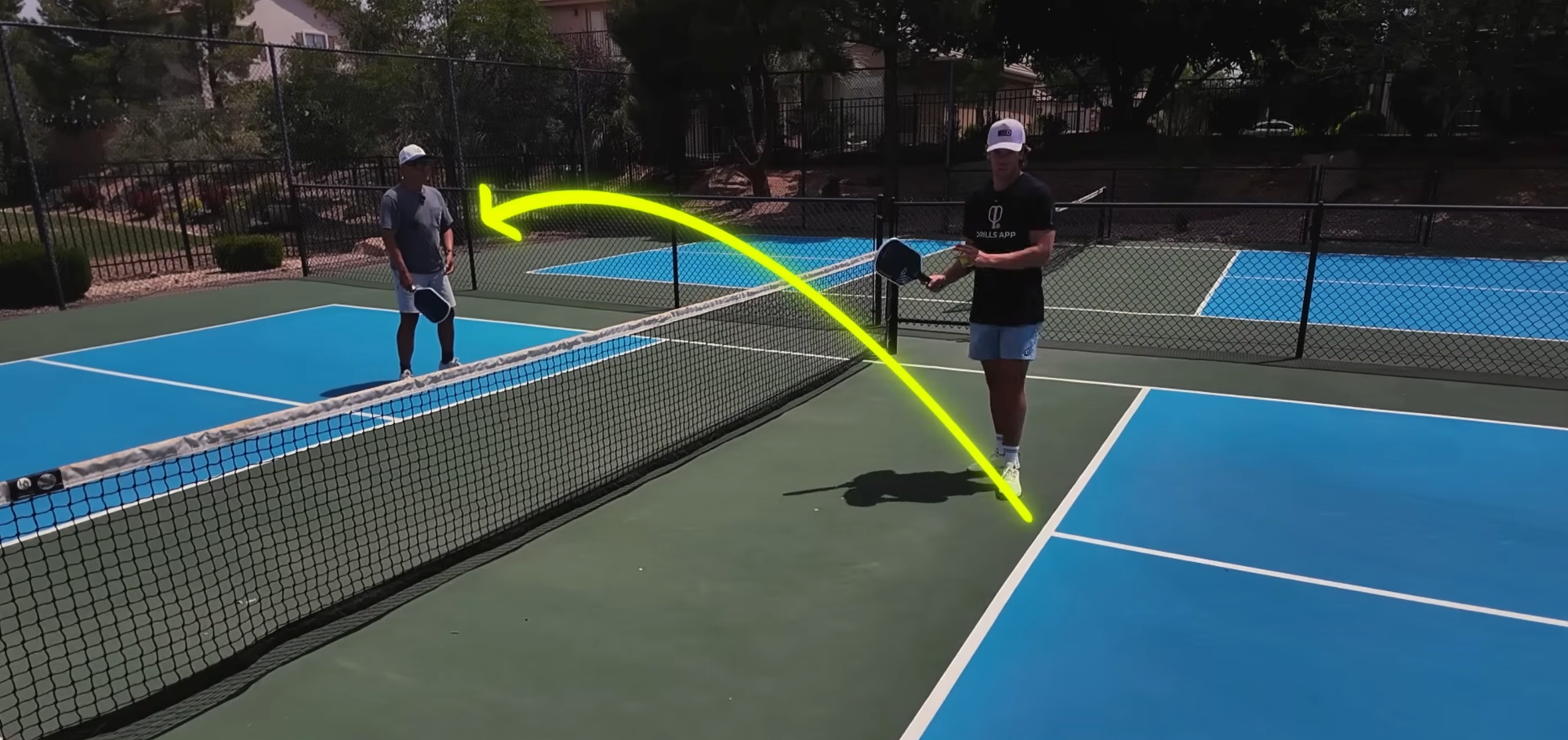
The neutral reset involves hitting a soft, controlled shot that arcs gently over the net and lands deep in your opponent's kitchen. The goal isn't to win the point immediately but to reset the rally's pace and regain your positioning advantage.
Key Elements of the Reset:
- Use an abbreviated backswing to maintain control
- Focus on arc over pace
- Target the deepest part of the kitchen
- Keep your paddle face slightly open at contact
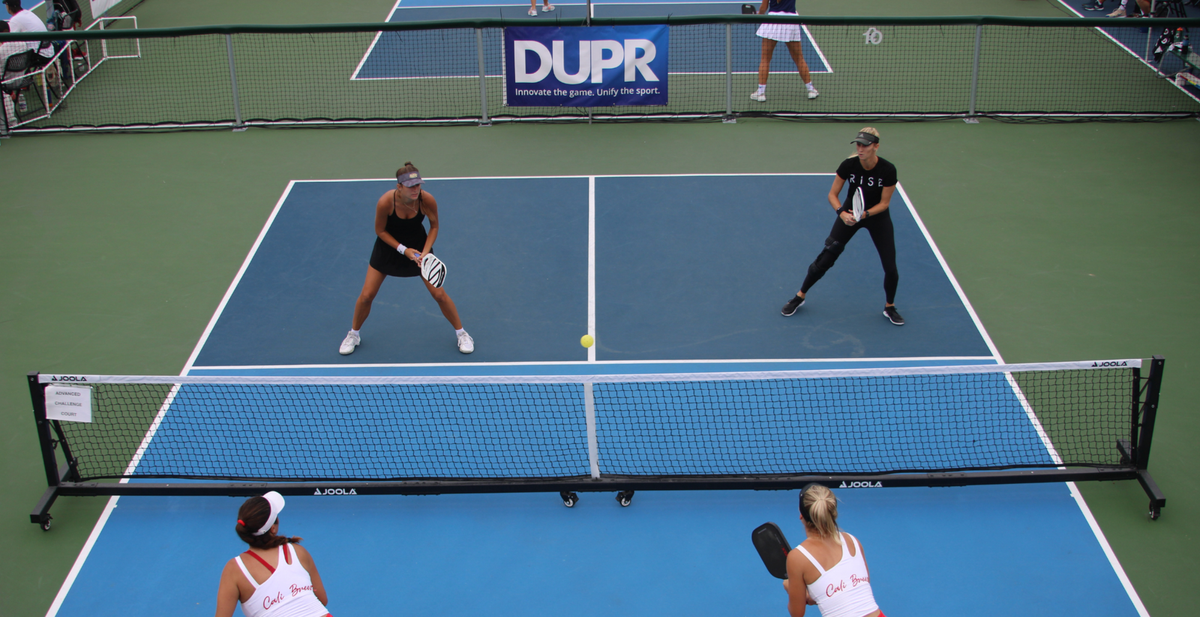
Technique #2: Directional Kitchen Placement
The second technique involves strategic directional placement within the non-volley zone. Rather than always hitting to the center, advanced players use targeted placement to create openings and maintain offensive pressure.
Garnett emphasizes hitting to specific zones based on your opponent's positioning and weaknesses. This includes targeting the sidelines, attacking the middle between two players in doubles, or exploiting backhand weaknesses.
Placement Priorities:
- Attack the opponent's feet when they're moving forward
- Use sharp angles when opponents are positioned centrally
- Target the weaker player in doubles scenarios
- Vary placement to prevent predictable patterns
Technique #3: The Offensive Dink Attack
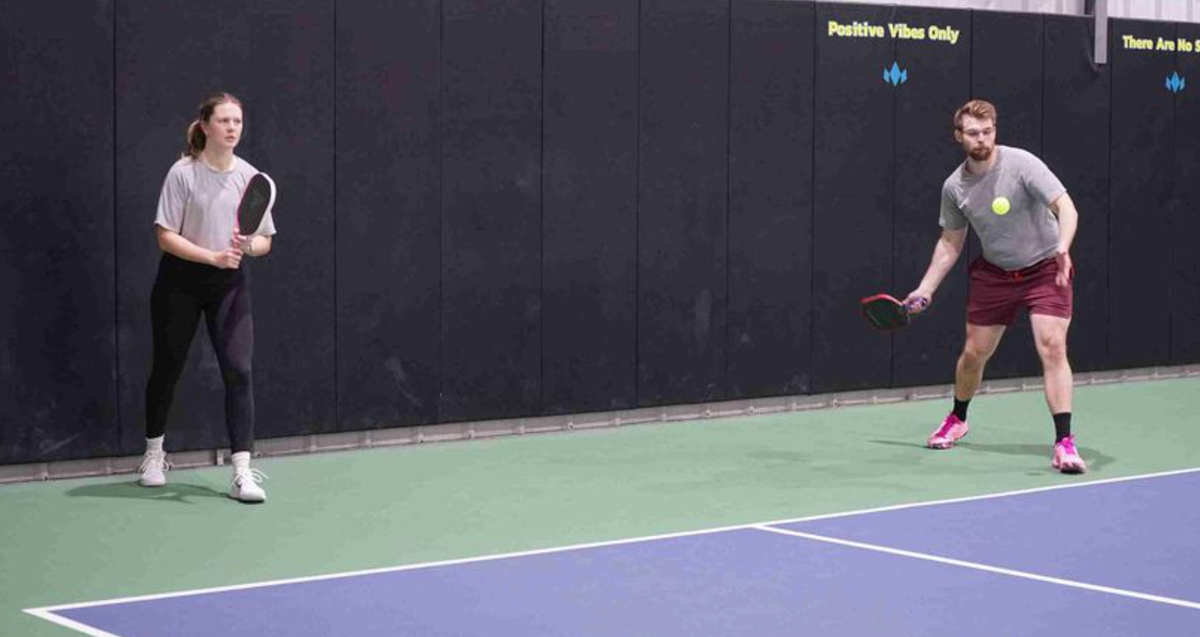
The third technique transforms the traditional dink from a purely defensive shot into an offensive weapon. This advanced approach allows you to maintain kitchen control while applying consistent pressure.
The offensive dink involves subtle variations in pace, spin, and trajectory that force your opponents into defensive positions. By mixing soft touches with slightly more aggressive shots, you keep opponents guessing while maintaining your positional advantage.
Offensive Dink Variations:
- Speed dinks: Slightly faster shots that rush opponents
- Drop dinks: Extremely soft shots that die in the kitchen
- Topspin dinks: Shots that kick up after bouncing
- Cross-court dinks: Shots that change the angle of attack
Implementing Kitchen Control in Your Game
Successfully implementing these techniques requires consistent practice and patience. Start by focusing on one technique at a time during practice sessions, gradually incorporating all three into your competitive play.
Remember that kitchen control isn't about hitting winners immediately. It's about maintaining positional and tactical advantages that eventually create winning opportunities. The best players understand that controlling the non-volley zone often leads to points won several shots later.
Practice these techniques systematically, and you'll begin converting that 70% statistical advantage into actual wins on the court.
Frequently Asked Questions
How long does it take to master kitchen control techniques?
Most players see noticeable improvement in their kitchen control within 2-3 weeks of focused practice. However, mastering these techniques to a professional level typically takes several months of consistent training and match play.
Should I prioritize power or placement in kitchen shots?
Placement should always be your primary focus in kitchen play. Power shots from the non-volley zone often result in errors or easy put-aways for opponents. Focus on precise placement and let the opportunities for more aggressive shots develop naturally.
What's the biggest mistake players make in kitchen control?
The most common mistake is rushing to end points instead of building them methodically. Players often attempt low-percentage shots when a patient, controlled approach would maintain their advantage and create better opportunities later in the rally.