Master the Aggressive Third Shot Drop: Pro Secrets Revealed
Why the Third Shot Drop Is Your Gateway to Winning
The third shot drop stands as pickleball's most crucial yet challenging stroke. This shot transforms defensive returns into offensive opportunities, allowing you to transition from the baseline to the coveted non-volley zone. However, mastering an aggressive third shot drop requires understanding the fundamental mechanics that separate recreational players from pros.
The Foundation: Get Low and Stay Balanced
Professional players understand that an effective third shot drop begins with proper body positioning. Getting low isn't just about bending your knees—it's about creating a stable platform that allows for consistent contact and precise ball placement.
Key positioning elements:
- Bend at the knees and hips, not just the waist
- Keep your chest up and eyes focused on the target
- Position your feet shoulder-width apart for maximum stability
- Maintain balance throughout the entire stroke motion
The Psychology of Aggressive Positioning
An aggressive third shot drop doesn't mean hitting harder—it means being more intentional with placement and spin. By getting lower, you naturally create an upward swing path that generates the necessary arc and spin to clear the net while dropping softly into the kitchen.
Shoulder Mechanics: The Secret Weapon
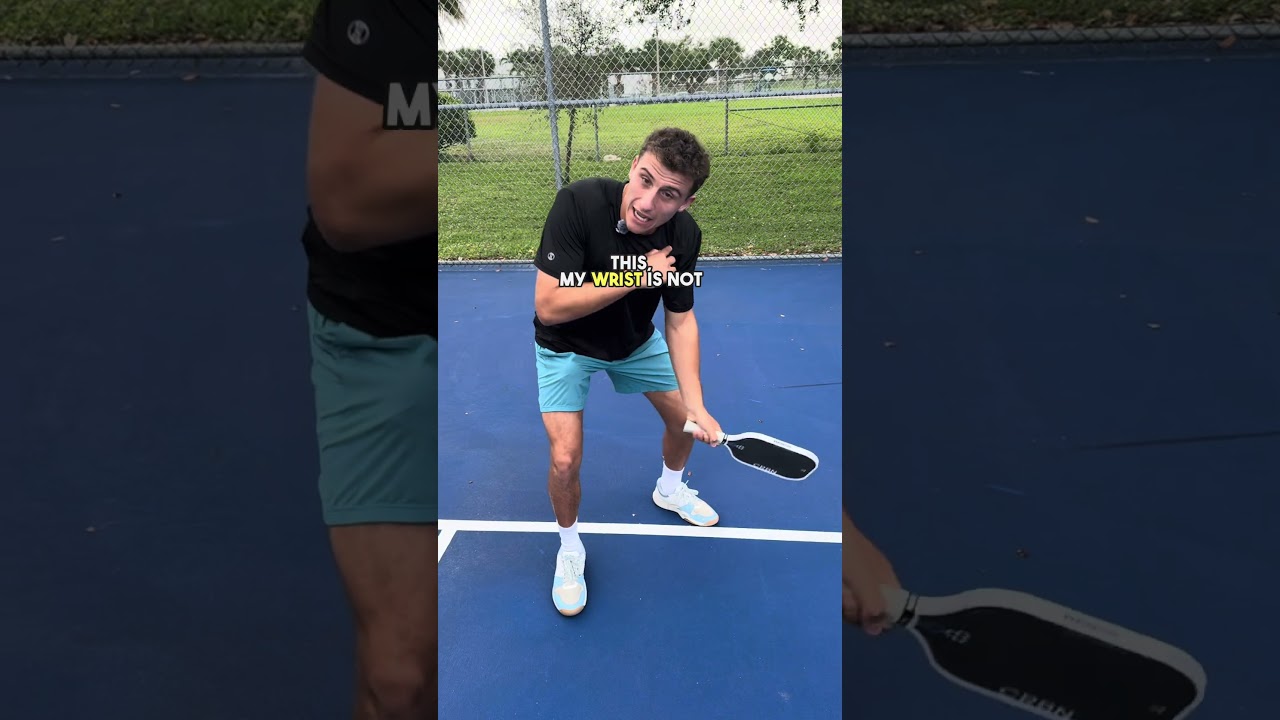
The most common mistake recreational players make is relying heavily on wrist action. Professional instruction emphasizes shoulder-driven motion for several critical reasons:
Why Shoulders Trump Wrists
Consistency: Shoulder motion provides a larger, more repeatable movement pattern. The shoulder joint offers greater stability and control compared to the smaller, more variable wrist joint.
Power Control: Your shoulder allows for better pace regulation. Rather than trying to control speed with your wrist, shoulder motion gives you a broader range of motion to fine-tune ball speed and placement.
Spin Generation: Proper shoulder rotation creates natural topspin, which is essential for an aggressive third shot drop that clears the net with margin while still dropping effectively.
Technical Execution: Step-by-Step Breakdown
The Setup Phase
Begin your preparation early, ideally as your opponent is hitting their return. Position yourself with your paddle back and shoulder rotated, creating a loaded position that generates power through your kinetic chain rather than arm strength alone.
The Contact Zone
Make contact with the ball at a comfortable distance from your body, typically around waist height when you're in your low, athletic position. The key is maintaining consistent contact point regardless of the incoming ball's characteristics.
The Follow-Through
Your follow-through should be smooth and directed toward your target. The shoulder-driven motion naturally creates the upward trajectory needed for proper net clearance while maintaining the soft touch required for kitchen placement.
Advanced Aggressive Techniques
Placement Strategy
An aggressive third shot drop targets specific areas of the kitchen to create maximum difficulty for your opponents. Aim for:
- Deep corners of the non-volley zone
- The middle of the court to create confusion
- The backhand side of the weaker opponent
Spin Variations
Advanced players incorporate different spin types to keep opponents guessing. Topspin creates a higher bounce, while slice generates lower, skidding action. The shoulder-driven technique accommodates both spin types naturally.
Common Mistakes and Corrections
Most players fail at the aggressive third shot drop because they:
- Stand too upright: This creates a flat swing path leading to net errors or high balls
- Over-rely on wrist action: This causes inconsistent contact and poor spin generation
- Rush the shot: Taking time to set up properly is crucial for execution
- Aim too low: Fear of hitting long often results in net errors
Practice Drills for Mastery
Develop muscle memory through targeted practice. Start with stationary ball drops, focusing purely on shoulder motion and low positioning. Progress to live ball feeds, then match-play situations. Consistency comes through repetition with proper form.
FAQ
How do I know if I'm using too much wrist in my third shot drop?
If your shots are inconsistent in height and placement, or if you're experiencing wrist fatigue after practice sessions, you're likely over-relying on wrist action. Focus on keeping your wrist firm and driving the motion from your shoulder.
What's the ideal height for a third shot drop to clear the net?
Aim for 3-6 feet of net clearance depending on court position. From deeper in the court, you need more clearance. The shoulder-driven technique with proper low positioning naturally creates this trajectory.
How can I practice the aggressive third shot drop without a partner?
Use a ball machine or simply drop balls and practice the motion. Focus on getting low, using shoulder rotation, and hitting to targets in the kitchen area. Wall practice can also help develop consistent contact and follow-through patterns.