Struggling with dinks that float high and get smashed back at you? The topspin dink might be the game-changing technique you've been missing. This advanced shot has become essential for competitive players, especially in mixed doubles where precision and control separate good players from great ones.
Why the Topspin Dink Dominates Modern Pickleball
Unlike traditional flat dinks that rely purely on touch, the topspin dink uses spin physics to your advantage. The forward rotation creates a steeper downward trajectory, allowing you to hit with more pace while keeping the ball low over the net.
This technique offers several tactical advantages:
- Consistent net clearance: Topspin pulls the ball down naturally
- Aggressive positioning: You can hit harder without fear of sailing long
- Opponent pressure: Low, spinning balls are difficult to attack
- Court positioning: Forces opponents into defensive stances
The Technical Breakdown: Perfecting Your Technique
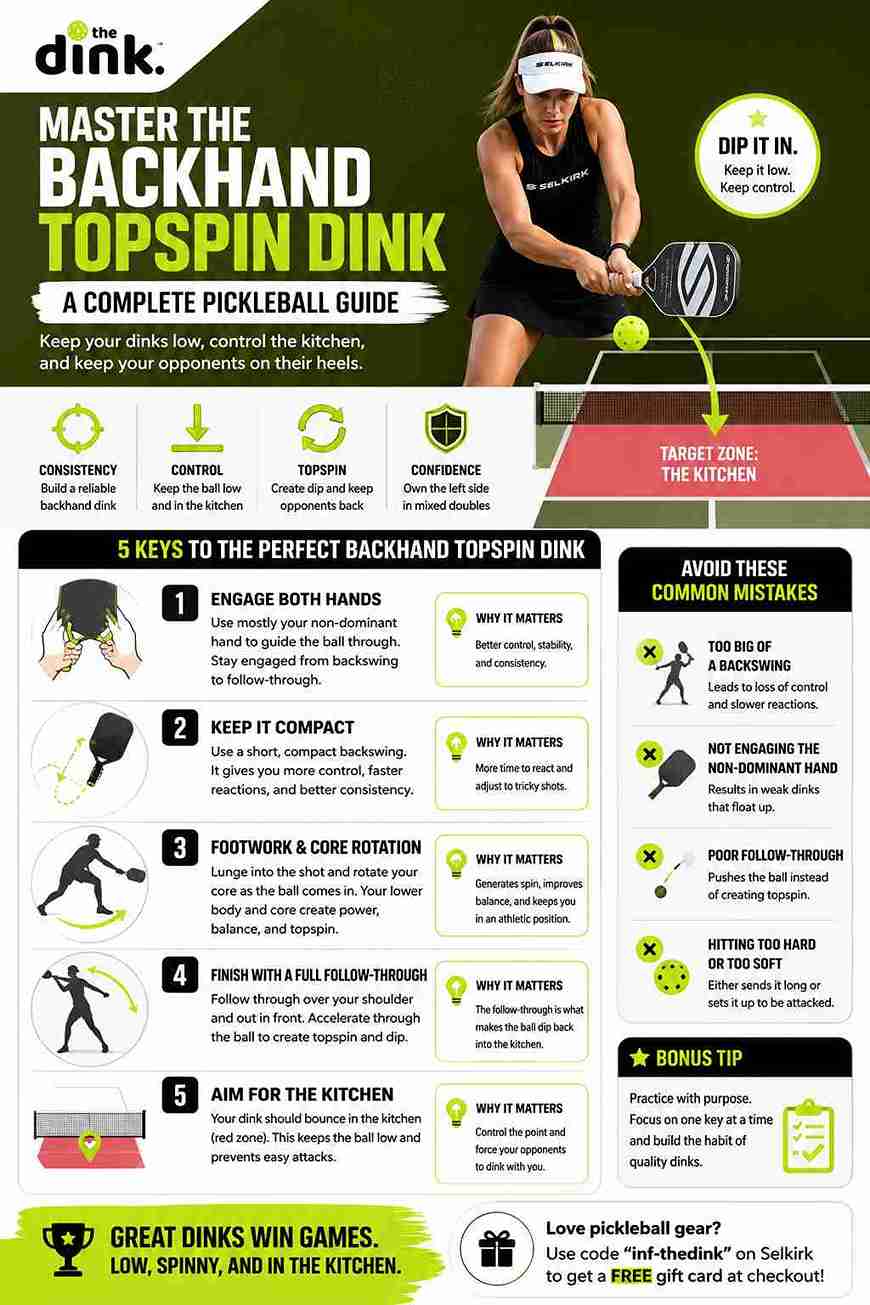
Professional instruction reveals the key mechanics that make this shot effective. The topspin dink requires specific body positioning and paddle movement that differs significantly from standard dinking technique.
Grip and Paddle Position
Start with a continental grip, positioning your paddle face slightly closed at contact. This angle is crucial for generating the necessary spin while maintaining control. Many players struggle because they keep their paddle too open, resulting in balls that sail high.
The Swing Path
The magic happens in your swing trajectory. Instead of the traditional straight-through motion, create a low-to-high path that brushes across the ball's surface. This upward motion generates topspin while the closed paddle face keeps the ball's direction controlled.
Key technical points include:
- Start your paddle below the ball's contact point
- Accelerate upward through contact
- Follow through toward your target
- Keep your wrist firm throughout the motion
Strategic Applications in Game Situations
The topspin dink shines brightest in specific game scenarios. Mixed doubles players particularly benefit from this technique when playing the left side, where backhand dinks are frequently required.
Breaking Up Dinking Rallies
When stuck in long dinking exchanges, the topspin dink adds aggression without excessive risk. The spin creates an awkward bounce that often forces weak returns, setting up your next attacking opportunity.
Neutralizing Power Players
Against opponents who prefer to speed up the pace, consistent topspin dinks keep balls low and difficult to attack. This forces them into your preferred rhythm rather than their power game.
Common Mistakes and Quick Fixes
Even with proper instruction, players often struggle with specific aspects of this technique. The most frequent error involves timing the upward swing motion with the ball's approach.
Problem: Balls consistently flying long
Solution: Close your paddle face more and focus on the low-to-high swing path
Problem: Insufficient spin generation
Solution: Increase your upward acceleration through contact while maintaining paddle control
Problem: Inconsistent contact point
Solution: Practice the motion slowly, focusing on meeting the ball at the same height each time
Practice Drills for Skill Development
Developing reliable topspin dinks requires focused practice sessions. Start with cooperative drilling before progressing to competitive situations.
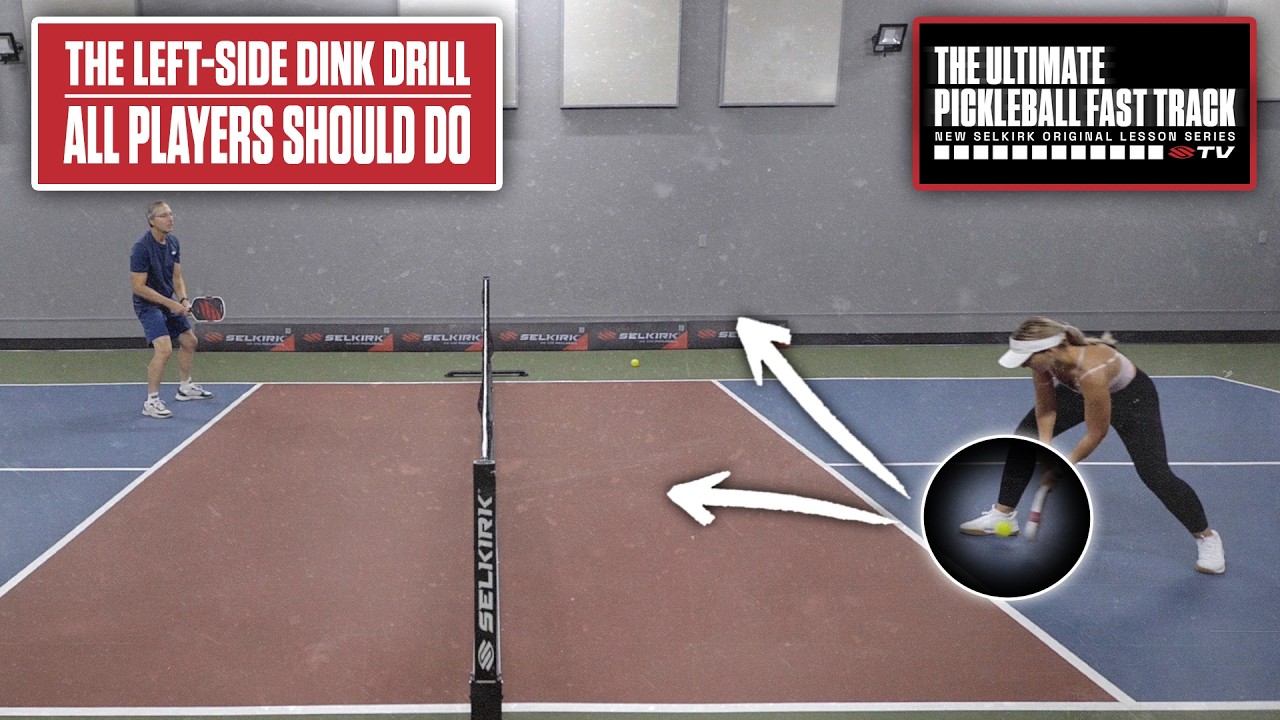
Begin with cross-court practice, alternating topspin dinks with your partner. Focus on consistency over power, gradually increasing pace as your technique solidifies. Advanced players can incorporate target zones, aiming for specific areas that create maximum difficulty for returns.
Frequently Asked Questions
When should I use a topspin dink versus a regular dink?
Use topspin dinks when you want to add aggression to the rally while maintaining control, particularly when your opponent is positioned to attack higher balls. Regular dinks work better for pure placement shots or when you need maximum touch.
Is the topspin dink harder to master than other pickleball techniques?
The topspin dink requires more precise timing and coordination than basic shots, but it's achievable with focused practice. Most players see improvement within 2-3 weeks of regular drilling.
Can I use topspin dinks effectively from both forehand and backhand sides?
While possible from both sides, the backhand topspin dink is generally more practical and commonly used, especially in mixed doubles play where it provides excellent defensive and offensive options.