The third shot drop stands as pickleball's most game-changing stroke, yet countless players struggle to master it simply because they're waiting for the perfect practice partner. The reality? You can develop elite-level touch and consistency training completely solo.
Solo drilling isn't a backup plan—it's often superior to partner practice for developing the precise muscle memory and court feel that makes third shot drops automatic under pressure.
Why Solo Practice Transforms Your Third Shot Drop
Third shot drops require thousands of repetitions to develop proper touch. During typical rec games, you might attempt 20-30 third shots maximum. Solo drilling lets you execute 200+ reps in the same timeframe, with perfect ball placement every time.
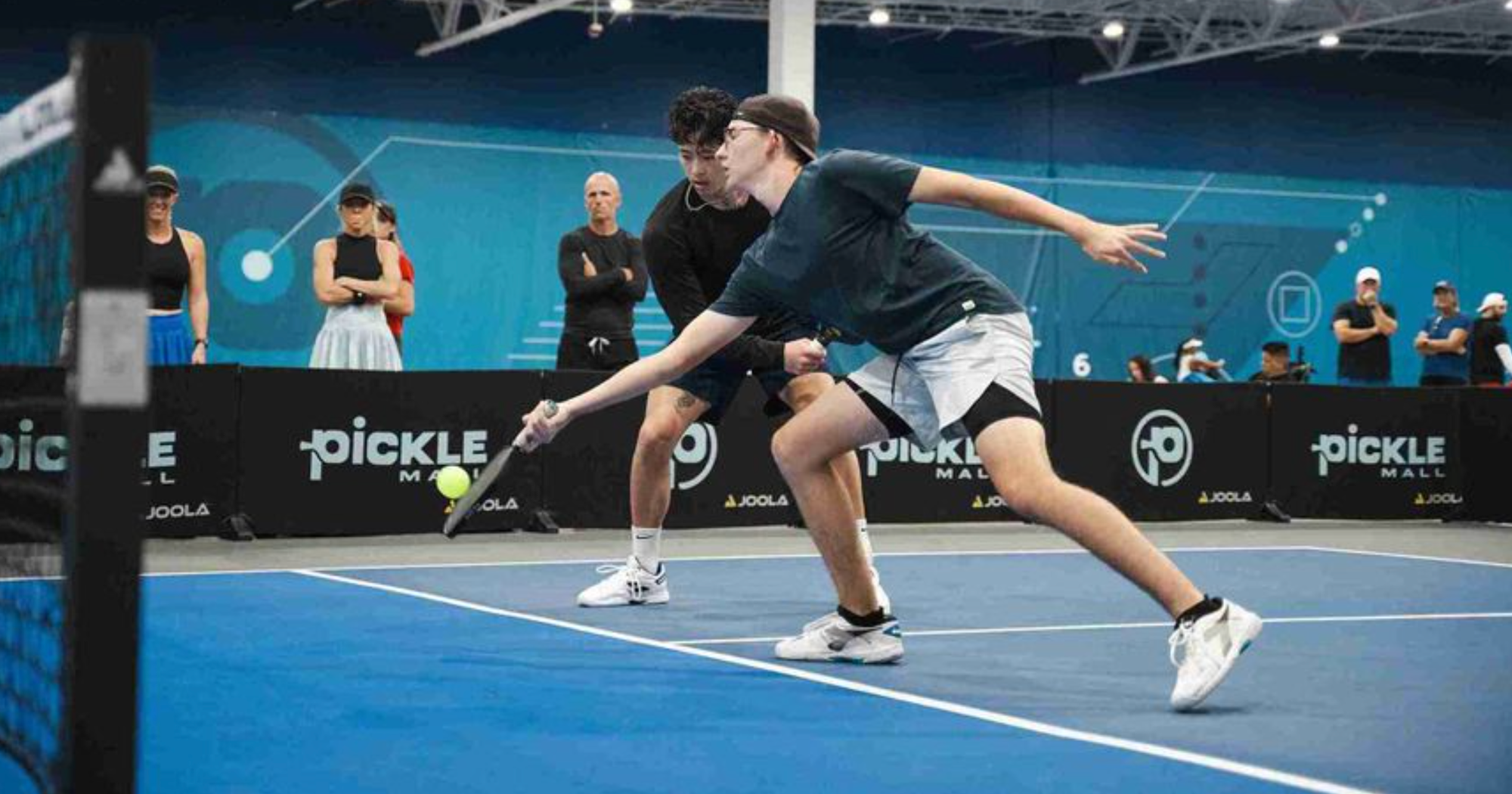
More importantly, solo practice eliminates variables. No unpredictable returns, no partner scheduling conflicts, no waiting between shots. Just pure, focused repetition that builds the neural pathways essential for consistent execution.
Essential Equipment for Solo Third Shot Drop Training
Your solo practice arsenal needs just four items:
- Ball hopper or basket (60+ balls recommended)
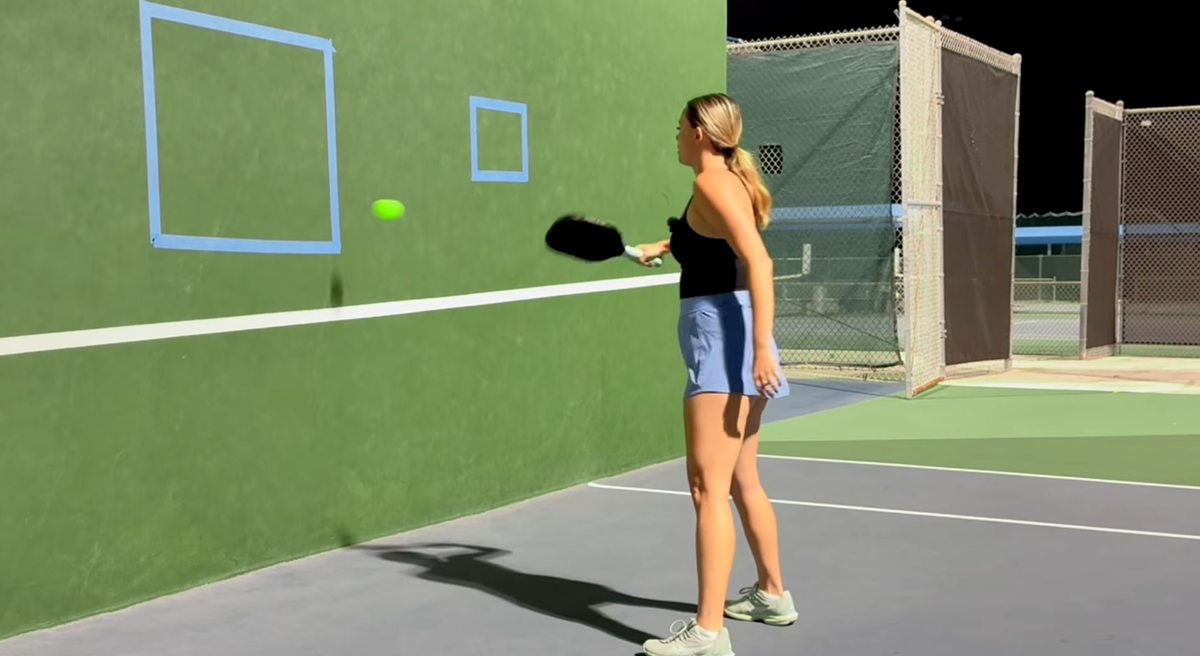
- Solid wall or backboard (tennis court backboards work perfectly)
- Court or marked practice area
- Chalk or tape for target zones
The 5 Most Effective Solo Third Shot Drop Drills
1. Wall Drop Progression
Stand 15 feet from a wall and practice dropping balls into an imaginary kitchen. Start with gentle feeds to yourself, focusing on paddle angle and follow-through. Target: 100 consecutive drops that would clear the net and land short.
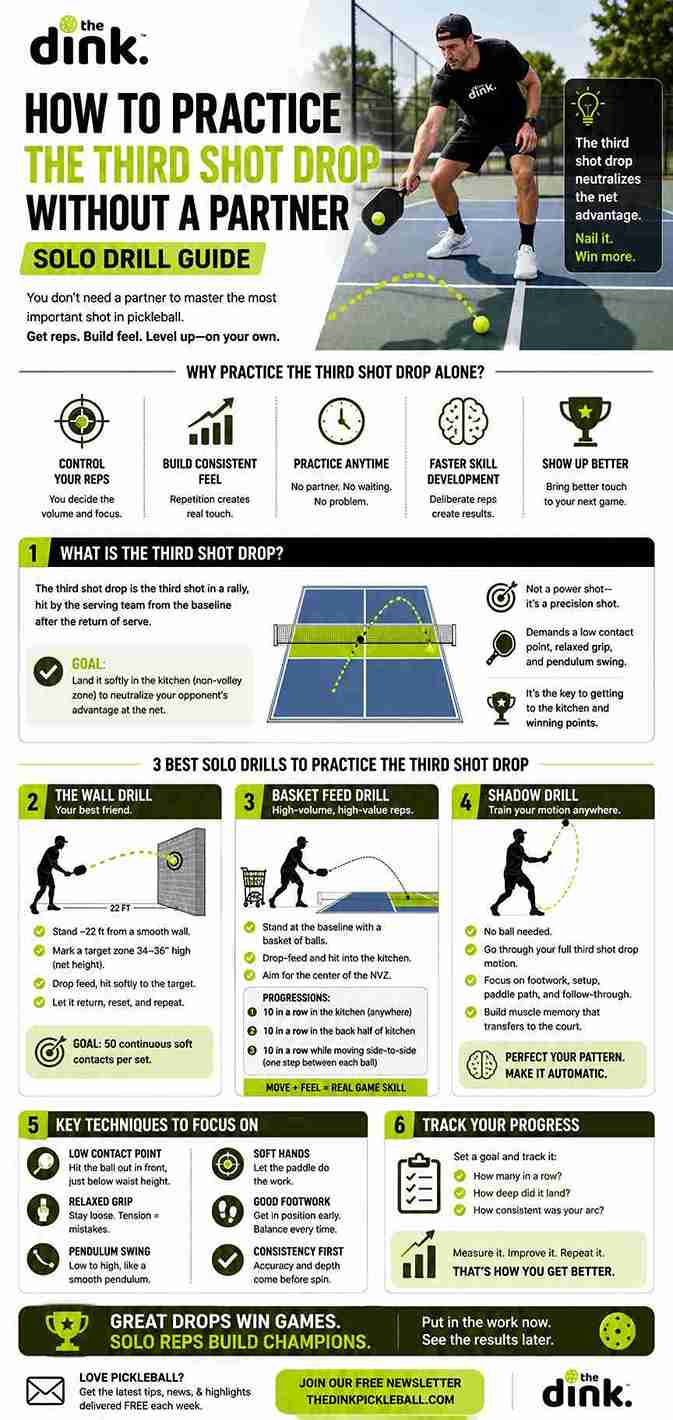
2. Cross-Court Angle Drops
Position yourself at the baseline corner and practice cross-court drops to maximize your margin for error. This drill builds confidence in your most reliable third shot option while developing precise directional control.
3. Pressure Drop Simulation
Feed yourself challenging balls—high, low, wide—then execute drops under pressure. This mimics real game conditions where your third shot rarely comes from a perfect setup.
4. Target Zone Accuracy
Create 2x2 foot target squares in your practice kitchen using chalk or cones. Aim for specific zones with each drop, tracking your accuracy percentage. Elite players hit their intended target 70%+ of the time.
5. Rhythm and Timing Chains
Execute continuous drops against a wall, maintaining consistent rhythm and height. This builds the smooth, repeatable stroke tempo essential for match play consistency.
Technical Focus Points During Solo Practice
Paddle Face: Maintain slight upward angle throughout contact. The paddle face direction at contact determines ball trajectory more than swing path.
Contact Point: Strike the ball at knee height or below. Higher contact points make consistent drops exponentially more difficult.
Follow Through: Finish with your paddle pointing toward your target zone. Short, controlled follow-through prevents overhitting.
Footwork Foundation: Practice getting into proper position before each drop. Rushed footwork kills touch and consistency.
Tracking Your Solo Practice Progress
Effective solo drilling requires measurable goals. Track these key metrics:
- Consecutive successful drops (build to 50+ in a row)
- Target accuracy percentage (aim for 70%+ success rate)
- Consistency under pressure (maintain form with challenging feeds)
- Cross-court vs. down-the-line success rates
When Solo Practice Pays Off in Match Play
Players who commit to regular solo drilling typically see dramatic improvement within 2-3 weeks. The thousands of perfect repetitions create automatic responses that function even under competitive pressure.
Your third shot drop becomes a weapon rather than a hope-and-pray shot, fundamentally changing your strategic options and court positioning throughout entire points.
Frequently Asked Questions
How often should I practice third shot drops solo?
Aim for 15-20 minutes of focused solo drilling 3-4 times per week. Consistency trumps marathon sessions—regular practice builds muscle memory more effectively than sporadic long sessions.
Can I really improve my third shot drop without live ball practice?
Absolutely. Solo drilling builds the fundamental technique and touch required for success. Once your mechanics are solid, live ball practice becomes far more productive as you're reinforcing correct patterns rather than hoping to stumble into them.
What's the biggest mistake players make during solo third shot practice?
Rushing through repetitions without focus on technique. Quality matters more than quantity—100 focused, technically sound drops beat 300 sloppy attempts every time.