Ever wonder why some players consistently outperform others despite having similar technical abilities? The secret lies in their pickleball IQ – the strategic thinking and court awareness that transforms good players into champions.
Coach Jess reveals five game-changing strategies that focus on the mental aspects of pickleball. These aren't about perfecting your serve or mastering the perfect dink – they're about developing the tactical mindset that wins matches.
Understanding Pickleball IQ vs. Technical Skills
While technical proficiency gets you to intermediate level, strategic intelligence separates the advanced players from the pack. Pickleball IQ encompasses court positioning, shot selection, opponent analysis, and situational awareness – skills that can be developed regardless of your current skill level.
The beauty of focusing on pickleball IQ is that these improvements show immediate results. You don't need months of practice to implement smarter decision-making on the court.
The Five Game-Changing IQ Moves
1. Reading Your Opponent's Body Language
Advanced players constantly gather information about their opponents' tendencies, weaknesses, and telegraphed shots. By observing paddle position, body stance, and movement patterns, you can anticipate shots before they happen.
Watch for players who favor their forehand, struggle with backhand volleys, or consistently target the same court areas. This intelligence gathering should begin during warm-up and continue throughout the match.
2. Strategic Court Positioning
Smart positioning isn't just about getting to the kitchen line – it's about understanding angles, coverage zones, and creating offensive opportunities. Successful players position themselves to cut off angles while maintaining optimal court coverage.
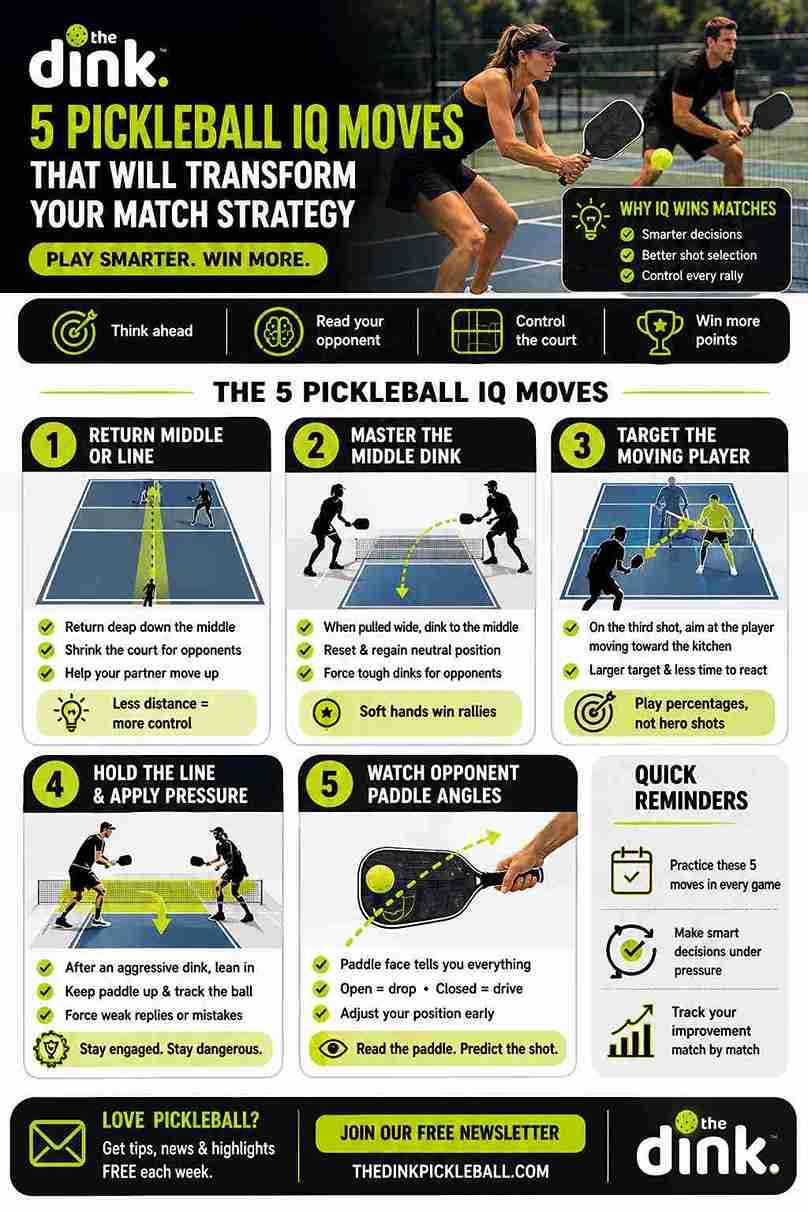
Consider your partner's position, the opponents' likely shot options, and your own strengths when choosing where to position yourself for each point.
3. Pattern Recognition and Breaking
Most recreational players fall into predictable patterns during rallies. High-IQ players identify these patterns quickly and disrupt them with unexpected shot placement or pace changes.
If opponents consistently dink cross-court, surprise them with a sharp angle or down-the-line shot. When they expect soft play, introduce controlled aggression.
4. Percentage Play Decision-Making
Every shot presents multiple options, but smart players choose the highest-percentage play based on court position, score, and situation. This means sometimes hitting the "boring" shot that keeps you in the point rather than attempting a flashy winner.
Understanding when to be aggressive versus when to be patient often determines match outcomes. The key is recognizing opportunity moments when the risk-reward ratio favors attacking.
5. Mental Reset Between Points
High pickleball IQ includes emotional regulation and mental preparation between points. Successful players use this time to analyze what just happened, adjust their strategy, and prepare mentally for the next rally.
Whether you won or lost the previous point, approach each new point with a clear head and specific tactical plan.
Implementing These Strategies
Start by focusing on one strategy per practice session or match. Trying to implement all five simultaneously can be overwhelming and counterproductive.
Keep a mental or physical note of what patterns you observe and which strategic adjustments prove successful. Over time, this analytical approach becomes second nature.
Remember that developing pickleball IQ is an ongoing process. Even professional players continuously work on reading opponents, improving positioning, and refining their strategic decision-making.
Frequently Asked Questions
How long does it take to develop better pickleball IQ?
Strategic improvements can show results immediately, but developing consistent high-level decision-making typically takes 2-3 months of focused practice and match play.
Can beginners benefit from focusing on pickleball IQ?
Absolutely. While beginners need to develop basic technical skills, incorporating strategic thinking early accelerates overall improvement and prevents the development of poor tactical habits.
What's the most important IQ skill to develop first?
Court positioning and percentage play decision-making provide the biggest immediate impact. These skills improve your consistency and reduce unforced errors while creating better opportunities for winners.