The Foundation of Competitive Pickleball
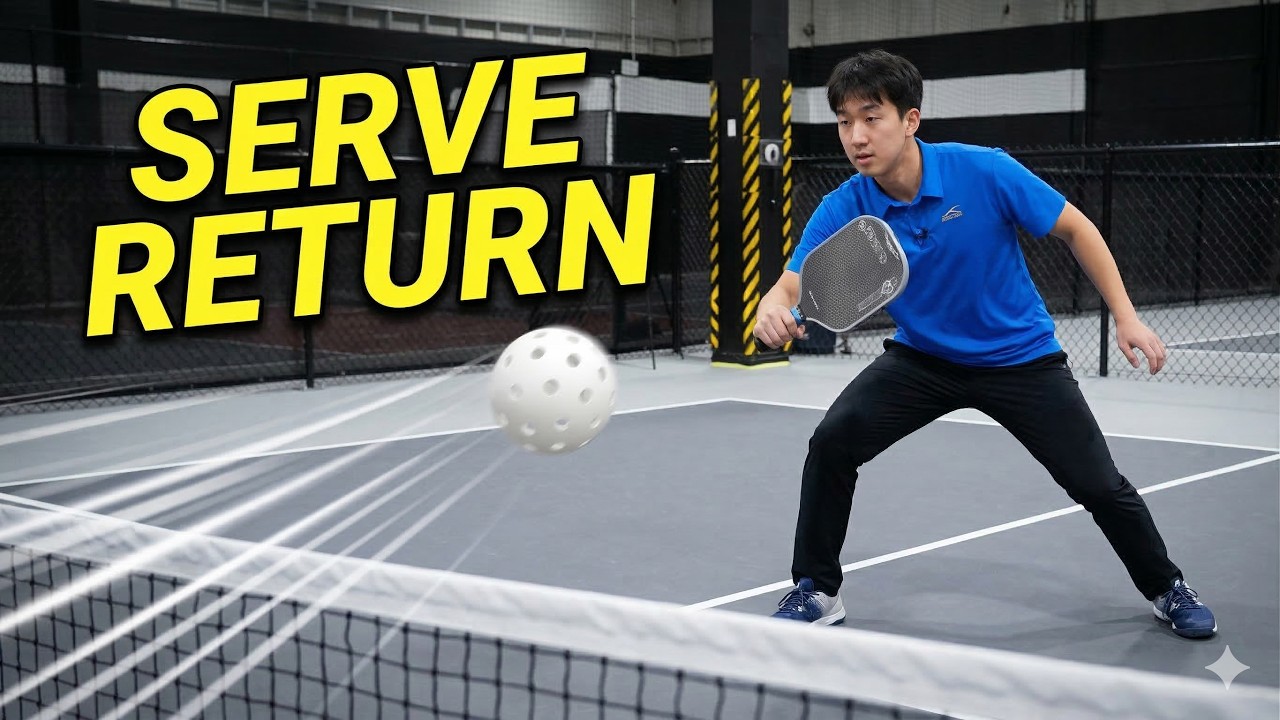
The serve return in pickleball represents a pivotal moment that can determine the entire trajectory of a rally. While beginners often treat it as a defensive necessity, advanced players understand that a well-executed return serves as the foundation for offensive play and court control.

These five fundamental steps create a progressive system that transforms your return game from reactive to proactive, giving you the tools to immediately pressure your opponents and seize control of each point.
Step 1: Master Your Return Position
Proper positioning begins before your opponent even strikes the ball. Stand approximately 3-4 feet behind the baseline, giving yourself adequate reaction time while maintaining the ability to step forward for short serves. Your feet should be shoulder-width apart with knees slightly bent, creating a stable athletic stance.
Position yourself directly behind where you anticipate the serve will land, typically favoring your forehand side slightly since most players have stronger forehand returns. This positioning allows you to cover the entire service box effectively while maintaining balance and quick reaction capability.
Reading the Server
Watch your opponent's paddle angle and body positioning during their serve motion. These visual cues help you anticipate serve direction and spin, allowing for better positioning adjustments. Experienced players learn to read these tells and position themselves accordingly before the ball is even struck.

Step 2: Prioritize Depth and Consistency
Your primary objective with every return should be achieving consistent depth, landing the ball deep in your opponent's court near their baseline. Deep returns force your opponents to hit their third shot from a disadvantaged position, preventing aggressive attacks and giving you time to reach the non-volley zone.
Aim for a target area within three feet of the baseline. This margin for error ensures that even slightly mishit returns still achieve the desired depth while minimizing the risk of hitting long. Consistency trumps power in return strategy – a reliable deep return is far more valuable than an occasional winner mixed with frequent errors.
Step 3: Develop Efficient Movement Patterns
Effective return movement combines quick lateral adjustments with forward momentum toward the net. After making contact with your return, immediately begin moving toward the kitchen line while staying balanced and ready for the incoming third shot.
Practice the split-step timing, where you land on both feet just as your opponent makes contact with their third shot. This athletic position allows for quick directional changes and optimal reaction time to whatever shot comes your way.
Recovery and Court Position
Your movement after the return should be purposeful and efficient. Move forward and slightly toward the center of the court, maintaining proper spacing with your partner in doubles play. This positioning sets up optimal court coverage for the remainder of the rally.
Step 4: Perfect Your Contact Timing
Contact timing separates good returners from great ones. Meet the ball at the optimal point in its bounce – typically at the peak or just after the peak of the bounce. This timing allows for maximum control while the ball maintains predictable trajectory.
Practice hitting returns with a compact swing that emphasizes control over power. A shorter backswing with firm wrist control produces more consistent results than long, powerful swings that are difficult to time consistently.
Step 5: Incorporate Strategic Variety
Once you've mastered consistent deep returns, begin incorporating strategic variety to keep opponents guessing. Mix in cross-court returns, down-the-line shots, and occasional short returns to create uncertainty and exploit weaknesses in your opponent's third shot strategy.
Consider the specific tendencies of your opponents when selecting return placement. If they struggle with backhand third shots, target that side consistently. If they tend to hit third shots down the middle, create angles that force them out of their comfort zone.
Advanced Return Tactics
Experiment with different spins and paces to disrupt your opponent's rhythm. A slow, high return can be just as effective as a fast, low one when used at the appropriate time. The key is maintaining the element of surprise while ensuring your variations still achieve adequate depth.
Building Your Return Weapon
These five steps create a progressive system that transforms your return game systematically. Start with positioning and depth, master the movement and timing elements, then add variety as your consistency improves. This methodical approach ensures that each component builds upon the previous ones, creating a complete and formidable return game.
Frequently Asked Questions
How deep should my pickleball serve returns be?
Aim to land your returns within 3 feet of the opponent's baseline. This depth forces them to hit third shots from a defensive position while providing you with a reasonable margin for error.
Should I prioritize power or placement on my returns?
Placement and consistency should always take priority over power. A controlled, deep return is far more effective than a powerful shot that frequently goes out or sets up easy attacks for your opponents.
When should I start adding variety to my returns?
Only incorporate variety once you can consistently hit deep, controlled returns at least 80% of the time. Variety without consistency becomes a liability rather than an asset in competitive play.