Why Most Players Struggle with the Backhand Flick
The backhand flick stands as one of pickleball's most powerful yet misunderstood shots. Many players inadvertently blend it with the backhand roll, creating a confused motion that lacks both power and precision. This fundamental misunderstanding costs countless points and limits offensive potential.
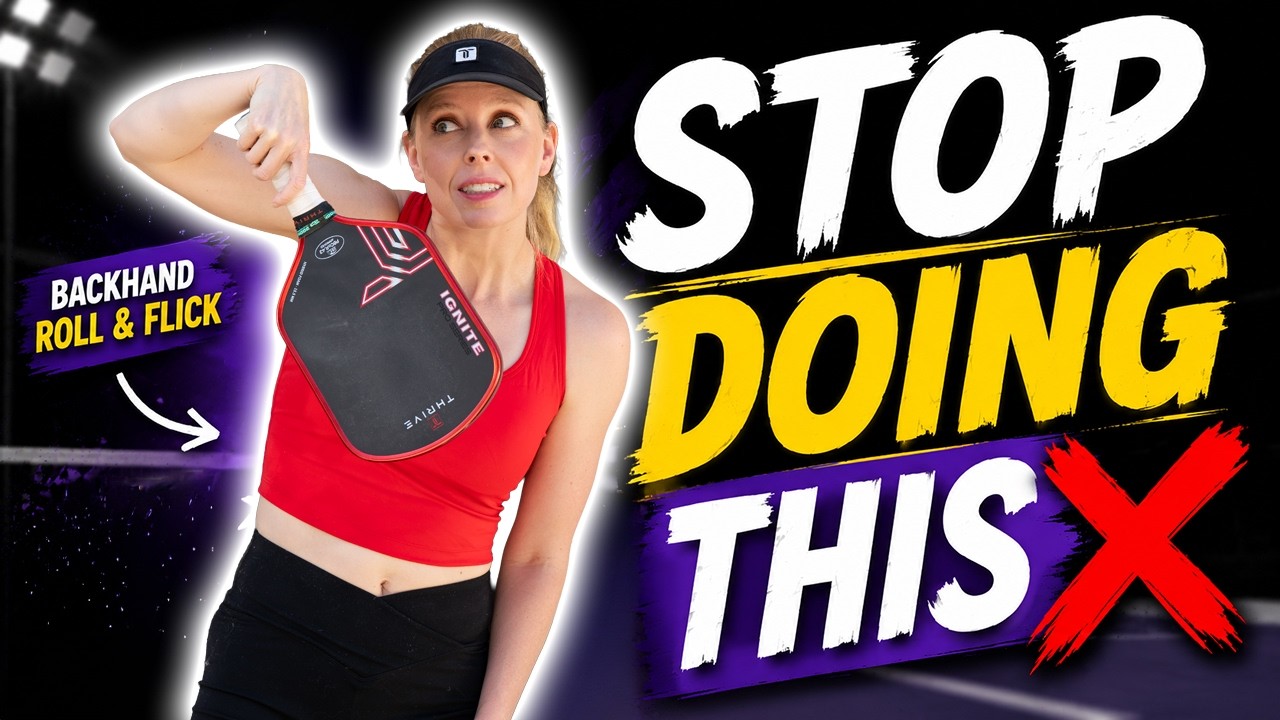
Understanding the distinction between these shots is crucial for developing a complete backhand arsenal. While the backhand roll focuses on placement and spin, the backhand flick emphasizes speed, angle, and aggressive court positioning.
Essential Mechanics of the Backhand Flick
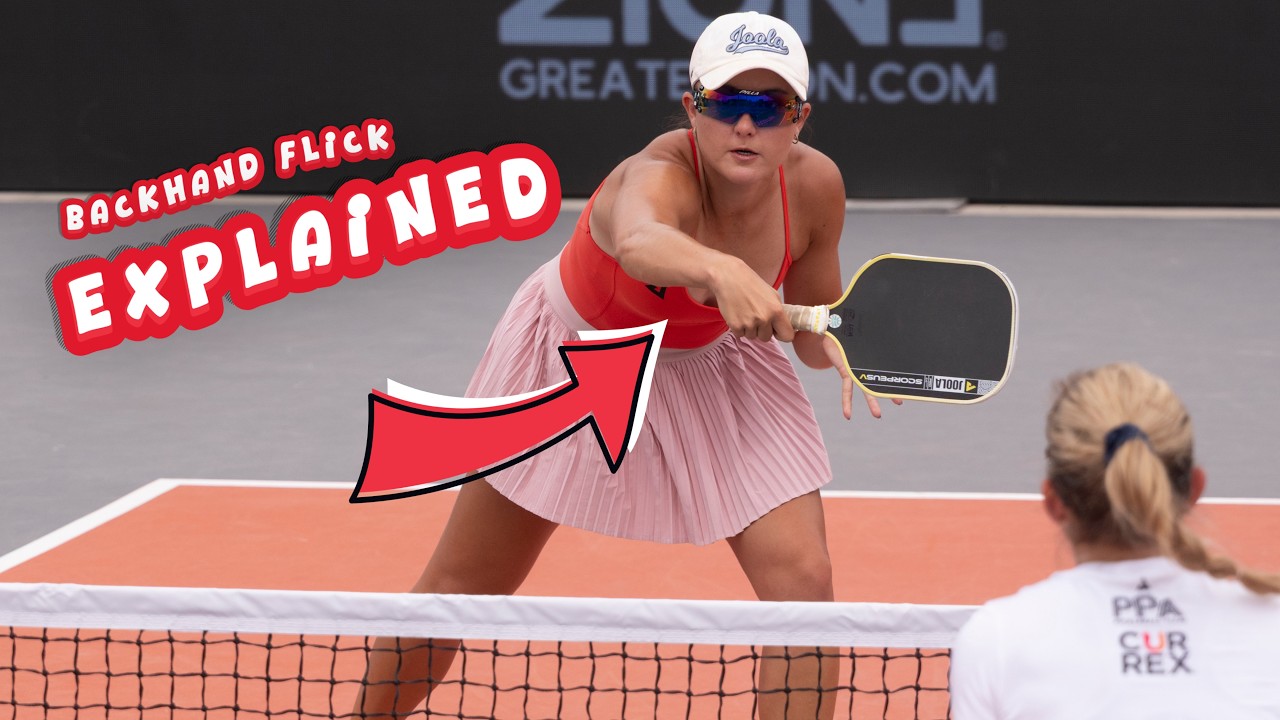
Proper backhand flick execution begins with your stance and grip. Position your feet with a slight forward lean, allowing for quick weight transfer during the shot. Your paddle grip should be firm but flexible, enabling rapid wrist action at contact.
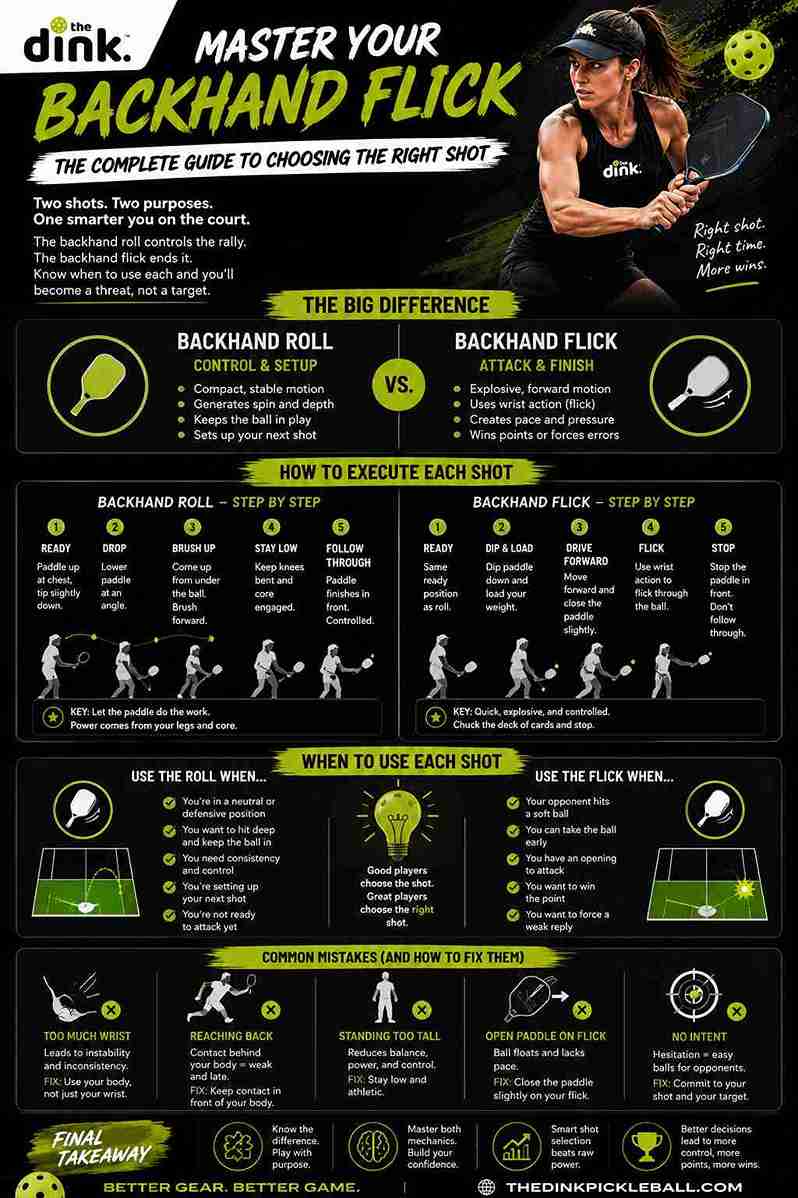
The stroke itself requires a compact backswing followed by an explosive forward motion. Unlike the backhand roll's longer, more deliberate swing path, the flick demands quick acceleration through a shorter range of motion.
Body Positioning and Timing
Your body mechanics play a pivotal role in backhand flick success. Keep your shoulders square to the net initially, then rotate through the shot for maximum power generation. The timing window is narrower than other backhand shots, requiring precise coordination between your upper and lower body.
Weight transfer occurs rapidly from your back foot to front foot, creating the foundation for explosive shot execution. This dynamic movement separates effective flicks from weak, passive attempts.
Strategic Applications on the Court
The backhand flick excels in specific game situations where aggressive offense is advantageous. Use this shot when opponents position themselves too close to the net, leaving gaps in court coverage that can be exploited with sharp angles.
Timing your flick attempts is equally important. Look for opportunities when the ball sits slightly higher than usual, providing the ideal trajectory for downward attacking shots. Patience is key – forcing flicks from poor positions often results in unforced errors.
Reading Your Opponent's Positioning
Successful backhand flicks require keen court awareness and opponent analysis. Watch for players who crowd the kitchen line without adequate lateral coverage, creating vulnerability to well-placed flick shots.
Additionally, observe your opponent's reaction time and movement patterns. Slower-moving players or those with poor split-step timing become prime targets for aggressive backhand flick attacks.
Common Mistakes and Corrections
Many players rush their backhand flick preparation, resulting in poor contact points and inconsistent results. Take time to properly set up your stance and paddle position before attempting the shot.
Another frequent error involves over-hitting the ball. The backhand flick's power comes from technique and timing, not raw force. Focus on clean contact and proper mechanics rather than maximum swing speed.
Practice Drills for Improvement
Develop your backhand flick through targeted practice sessions. Start with stationary ball feeding, focusing on contact point consistency and follow-through mechanics. Gradually increase the pace and add movement to simulate game conditions.
Partner drills work exceptionally well for backhand flick development. Have your practice partner feed balls at various heights and speeds, allowing you to experience different flick scenarios you'll encounter during competitive play.
Integration with Overall Game Strategy
The backhand flick becomes most effective when integrated into your broader tactical approach. Use it as part of a varied offensive attack, mixing flicks with drops and drives to keep opponents guessing.
Consider court positioning when planning flick attempts. Your location relative to the baseline and sidelines influences both shot selection and execution success rates.
Frequently Asked Questions
When should I choose a backhand flick over other backhand shots?
Select the backhand flick when you have a higher ball position, your opponent is positioned close to the net with limited lateral coverage, and you can execute the shot from a balanced, athletic stance. Avoid flicks when the ball is below net height or when you're off-balance.
How can I increase the power of my backhand flick without sacrificing control?
Focus on improving your weight transfer and contact point consistency rather than swing speed. Proper body mechanics and timing generate more power than arm strength alone. Practice with a shorter, more compact swing that emphasizes acceleration through the contact zone.
What's the biggest difference between a backhand flick and backhand roll?
The backhand flick uses a shorter, more explosive motion designed for aggressive attacks with sharp angles, while the backhand roll employs a longer swing path focused on topspin and placement. Flicks target specific court areas for immediate points, whereas rolls set up future attacking opportunities.