Why Deception Beats Power at the Net

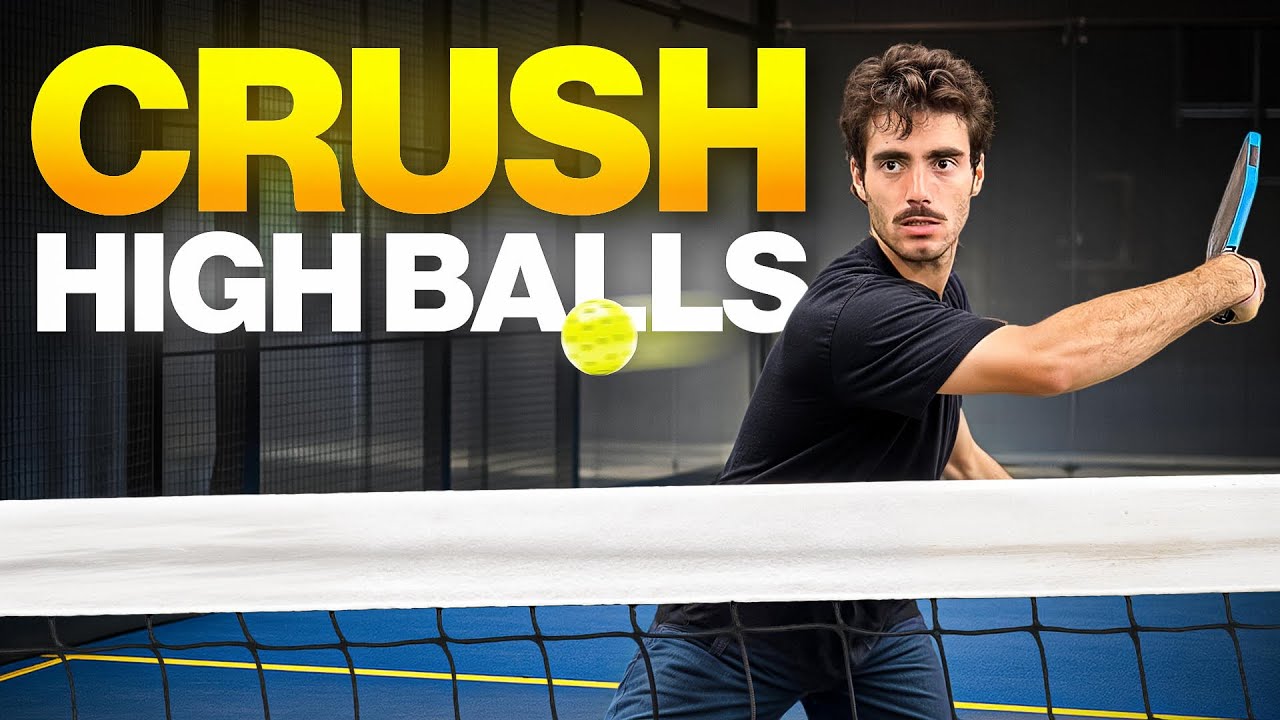
Picture this scenario: You're positioned perfectly at the net when your opponent sends up a floater that's practically screaming for you to attack. Your natural reaction? Wind up for a devastating cross-court slam that will end the rally in spectacular fashion.
But here's the problem - your opponent is already reading your body language and moving to cover that exact shot. The best net players understand that winning overhead opportunities isn't about generating maximum power; it's about outsmarting your opponent through strategic deception.
Understanding the Deceptive Putaway Strategy
The deceptive putaway transforms what should be a predictable power shot into a tactical masterpiece. This technique revolves around one fundamental principle: make your opponent commit to defending the wrong area of the court.
The mechanics are beautifully simple yet devastatingly effective. You position your body, load your paddle, and telegraph every signal that suggests you're unleashing a cross-court rocket. Your shoulders turn, your paddle preparation mimics a hard strike, and your opponent instinctively starts their defensive positioning.
Then comes the magic moment - instead of following through with the expected power shot, you make a subtle adjustment and place the ball precisely where your opponent can't reach it.
Technical Execution of Deceptive Overhead Shots
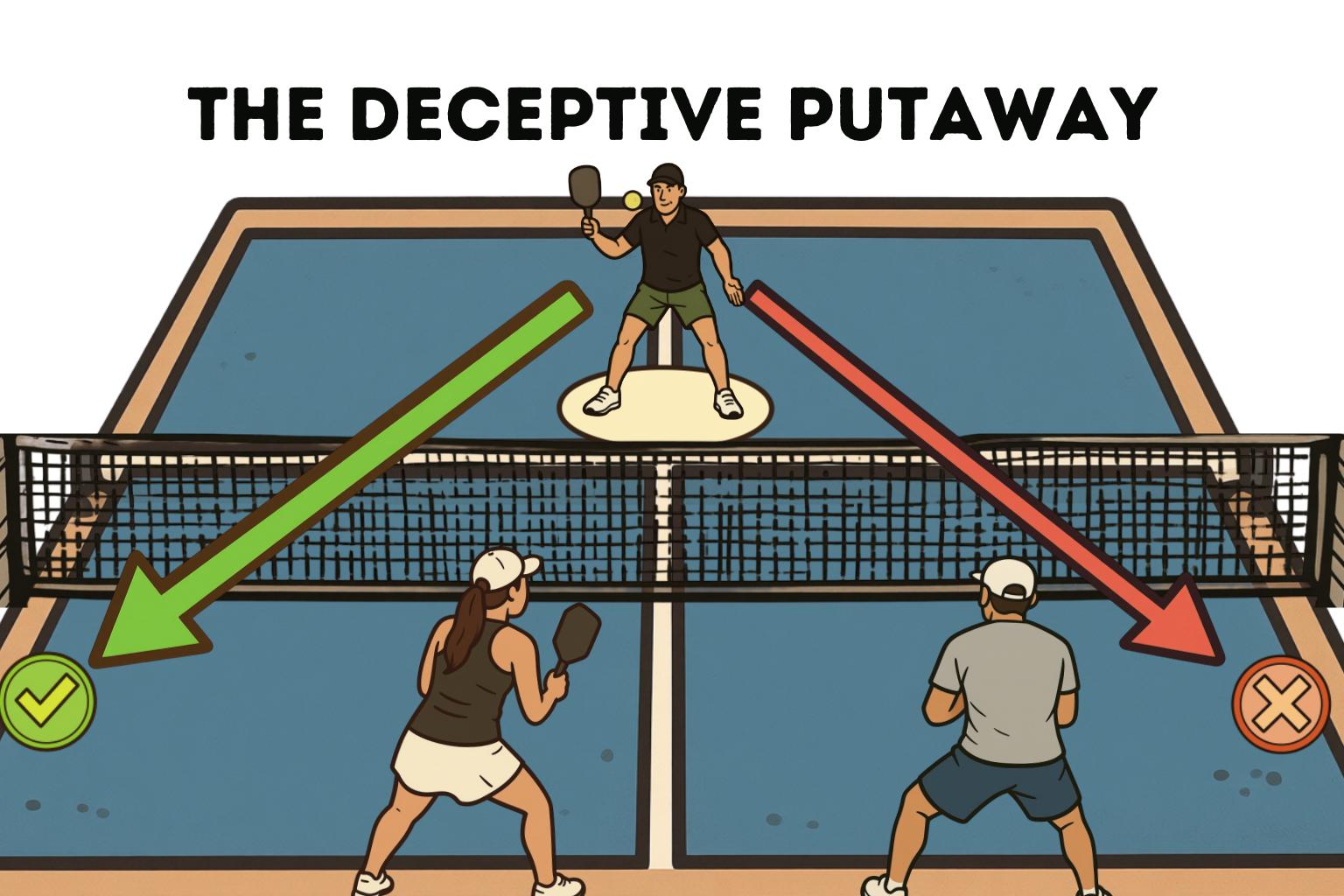
Mastering this technique requires understanding the subtle differences between selling the fake and executing the actual shot:
Setting Up the Deception
Your initial setup must be identical to a legitimate power overhead. Position your non-paddle shoulder toward your intended "fake" target, rotate your hips, and raise your paddle with the same timing and energy you'd use for a crushing blow. The key is commitment - if you don't sell the fake convincingly, experienced players will see through your strategy.
The Critical Transition
The difference between a successful deceptive putaway and a failed attempt happens in the final milliseconds before contact. Instead of driving through with maximum force, you make micro-adjustments:
- Slight paddle face angle changes redirect the ball's path
- Contact point variations alter trajectory without obvious preparation changes
- Controlled swing speed maintains deception while ensuring accuracy
Target Selection Strategy
The most effective deceptive putaways exploit the gaps created by your opponent's defensive positioning. If they're covering cross-court, a sharp down-the-line placement becomes nearly unreturnable. When they cheat toward the line, a well-disguised cross-court shot leaves them stranded.
Advanced Applications and Variations
Once you've mastered the basic concept, several advanced variations can enhance your net game:
The Pace Change Deception
Sometimes the most effective misdirection involves speed rather than direction. Load up for a power shot but deliver a perfectly placed dink that drops just over the net. This variation is particularly effective against aggressive players who retreat expecting a hard-driven ball.
Double Deception Sequences
Advanced players can layer multiple deceptions within a single rally. Use an obvious fake early in the point, then counter your opponent's adjustment with a genuine version of the original fake later when they least expect it.
Reading Opponent Reactions
Success with deceptive putaways depends heavily on recognizing how opponents respond to different visual cues. Watch for these telling behaviors:
Players who consistently take large steps toward anticipated shot directions are prime candidates for misdirection strategies. Conversely, opponents who stay centered and react only after ball contact require more subtle deceptive techniques.
Practice Drills for Deceptive Putaways
Developing reliable deception skills requires structured practice. Start with stationary drills where a partner feeds high balls while you practice identical preparation for different shot outcomes. Gradually add movement and pressure until the technique becomes instinctive.
Focus on maintaining consistent body language regardless of your intended target. The best deceptive putaway artists show no difference in their preparation until the final moment of contact.
Frequently Asked Questions
How can I practice deceptive putaways without a partner?
Use a ball machine or wall practice to work on consistent preparation mechanics. Focus on making identical paddle preparations for different shot directions. You can also practice the body language and timing elements through shadow swings.
What's the biggest mistake players make when attempting deceptive putaways?
The most common error is telegraphing the actual shot direction through subtle preparation changes. Many players unknowingly adjust their stance or paddle angle too early, giving away their true intentions before making contact with the ball.
When should I avoid using deceptive putaways?
Avoid deceptive shots when you have a clear, easy putaway opportunity with minimal risk. Also, be cautious when you're out of position or rushing - deception requires precise execution that's difficult to achieve under pressure or poor court positioning.