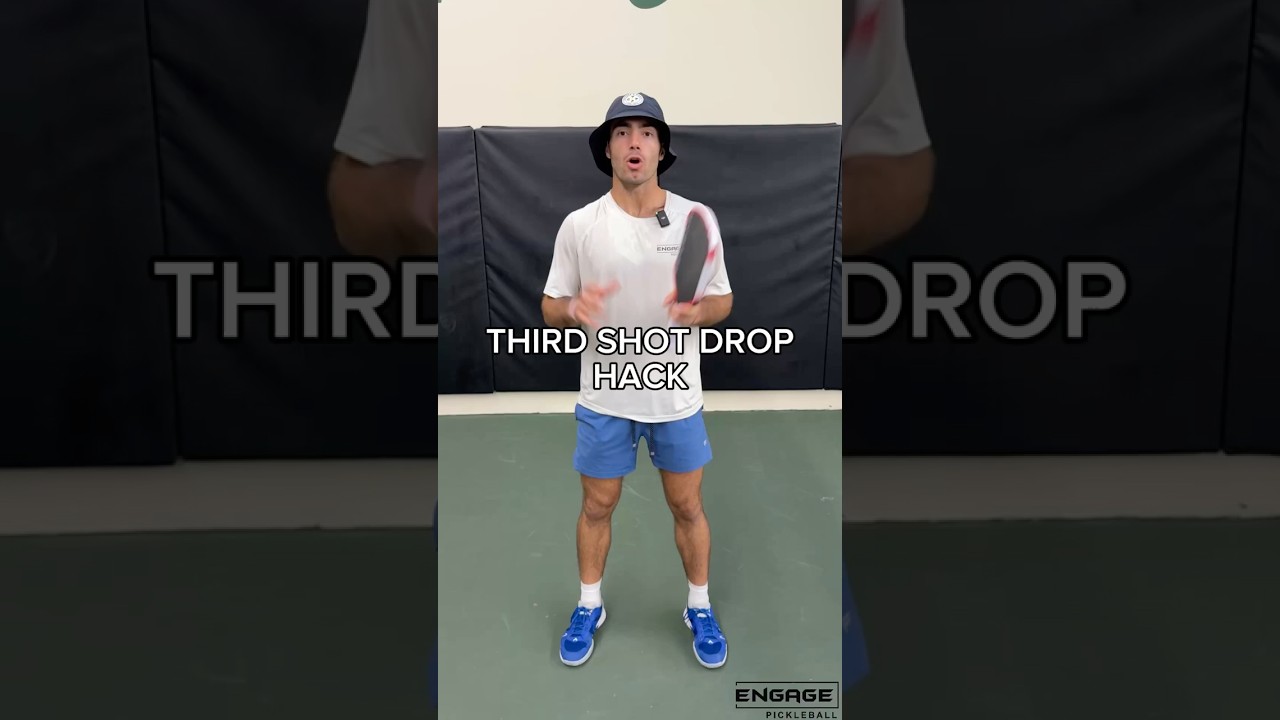
The third shot drop remains one of pickleball's most challenging yet essential shots. While players spend countless hours practicing different drop variations, they're often missing the fundamental element that separates consistent players from those who struggle to reach the non-volley zone.
Professional player Richard Livornese has identified the core issue plaguing recreational players: inconsistent contact points. This revelation changes everything we know about developing a reliable third shot drop.
The Hidden Problem With Most Third Shot Drops
Most players focus on paddle angle, swing speed, and follow-through while completely ignoring where they make contact with the ball. This oversight leads to unpredictable results, even when using proper form.
The contact point determines trajectory, spin, and ultimately where your ball lands. When this variable changes with every shot, consistency becomes impossible regardless of your technique.
Why Contact Point Matters More Than Technique
Professional players don't succeed because they know more drop variations—they succeed because they hit every ball at the exact same contact point. This consistency allows them to develop muscle memory and predict outcomes.
When you establish a consistent contact point, several benefits emerge:
- Predictable ball trajectory
- Better depth control
- Improved timing and rhythm
- Reduced unforced errors
The Contact Point Solution
Livornese's approach focuses on finding your optimal contact point and maintaining it regardless of the incoming ball's characteristics. This means adjusting your positioning and preparation rather than changing your swing.
Establishing Your Ideal Contact Point
Your optimal contact point should be:
- Slightly in front of your body
- At a comfortable height (usually waist level)
- Within your natural reach
- Repeatable under pressure
Once you identify this position, every third shot drop should connect with the ball at this exact spot. This requires exceptional footwork and preparation, but the consistency gains are immediate.
Adjusting to Different Situations
The key insight is that you adapt your body position to achieve the same contact point, not the other way around. Whether facing a high bouncing ball or a low skimmer, you move to ensure contact occurs at your predetermined spot.
This approach requires:
- Quick recognition of ball trajectory
- Immediate positioning adjustments
- Disciplined swing mechanics
- Mental commitment to the system
Practice Drills for Contact Point Consistency
Developing consistent contact point requires focused practice. Start with stationary drills where you can control variables and gradually introduce movement and pressure.
The Wall Drill Method
Practice against a wall, focusing solely on hitting every ball at the same contact point. Mark your ideal position with tape or a cone to provide visual feedback. This drill builds muscle memory without the pressure of court positioning.
Partner Feed Exercises
Have a partner feed balls with varying heights and speeds while you focus exclusively on achieving consistent contact. Don't worry about where the ball lands initially—concentrate on the contact point first.
Common Mistakes to Avoid
Many players understand the concept but fail in execution. The most common error is trying to adjust the swing to accommodate different ball positions rather than moving the body to maintain contact point consistency.
Another frequent mistake is abandoning the system under pressure. During competitive play, players often revert to adjusting their swing mechanics instead of trusting their positioning work.
Frequently Asked Questions
How long does it take to develop consistent contact point?
Most players see improvement within 2-3 weeks of focused practice, but developing automatic responses under game pressure typically requires 6-8 weeks of consistent training.
Should I change my contact point for different shots?
For third shot drops specifically, maintaining the same contact point is crucial for consistency. Other shots may require different contact points, but the principle of consistency within each shot type remains important.
What if I can't reach my ideal contact point during a point?
When positioning isn't possible, focus on getting as close as possible to your ideal contact point. The goal is consistency, so having a backup contact point for emergency situations can be valuable.