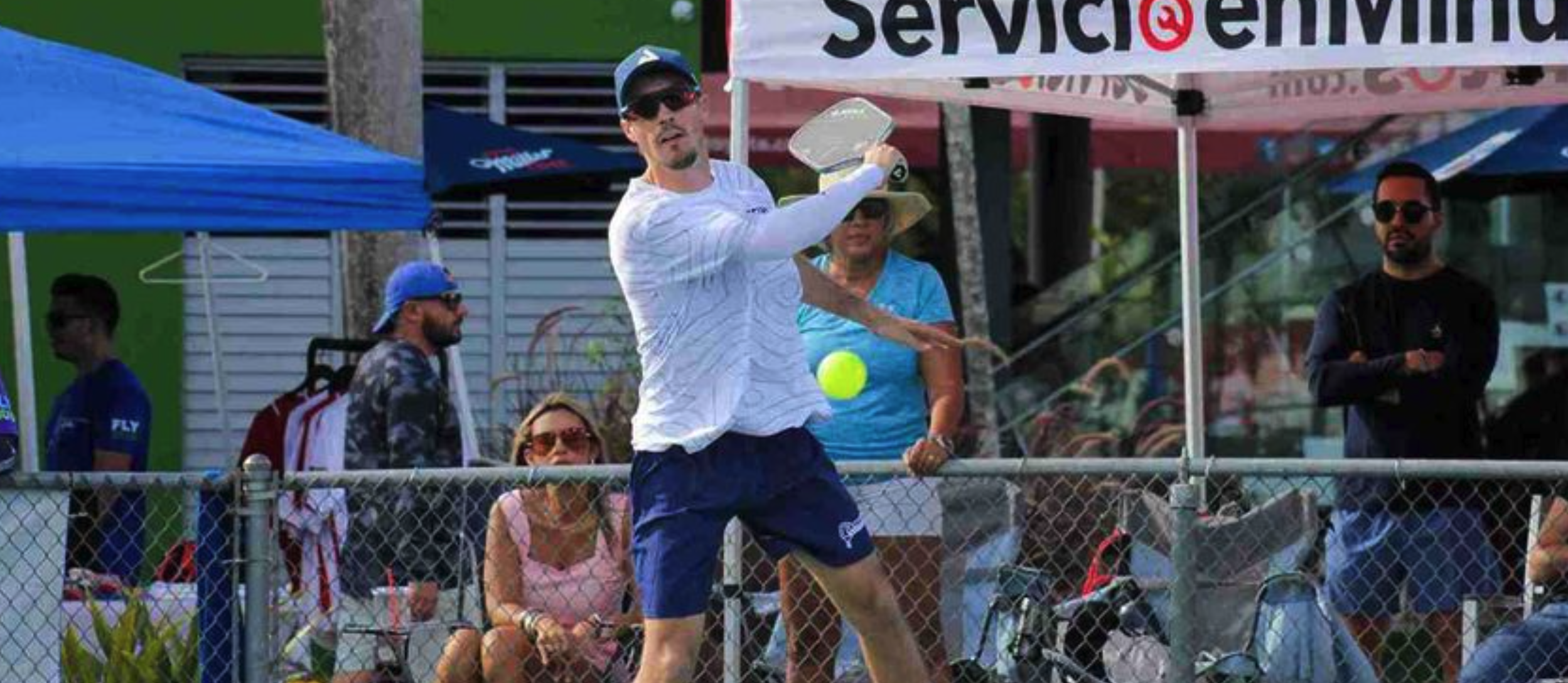
Topspin is the game-changing technique that transforms average pickleball players into court commanders. It's not about generating more power—it's about mastering the precise mechanics that create shots your opponents can't handle.
When executed correctly, topspin shots drop quickly over the net, land deep in the court, and bounce aggressively high, forcing opponents into defensive scrambles. The best part? These techniques are completely learnable with focused practice.
The Two Pillars of Topspin Success
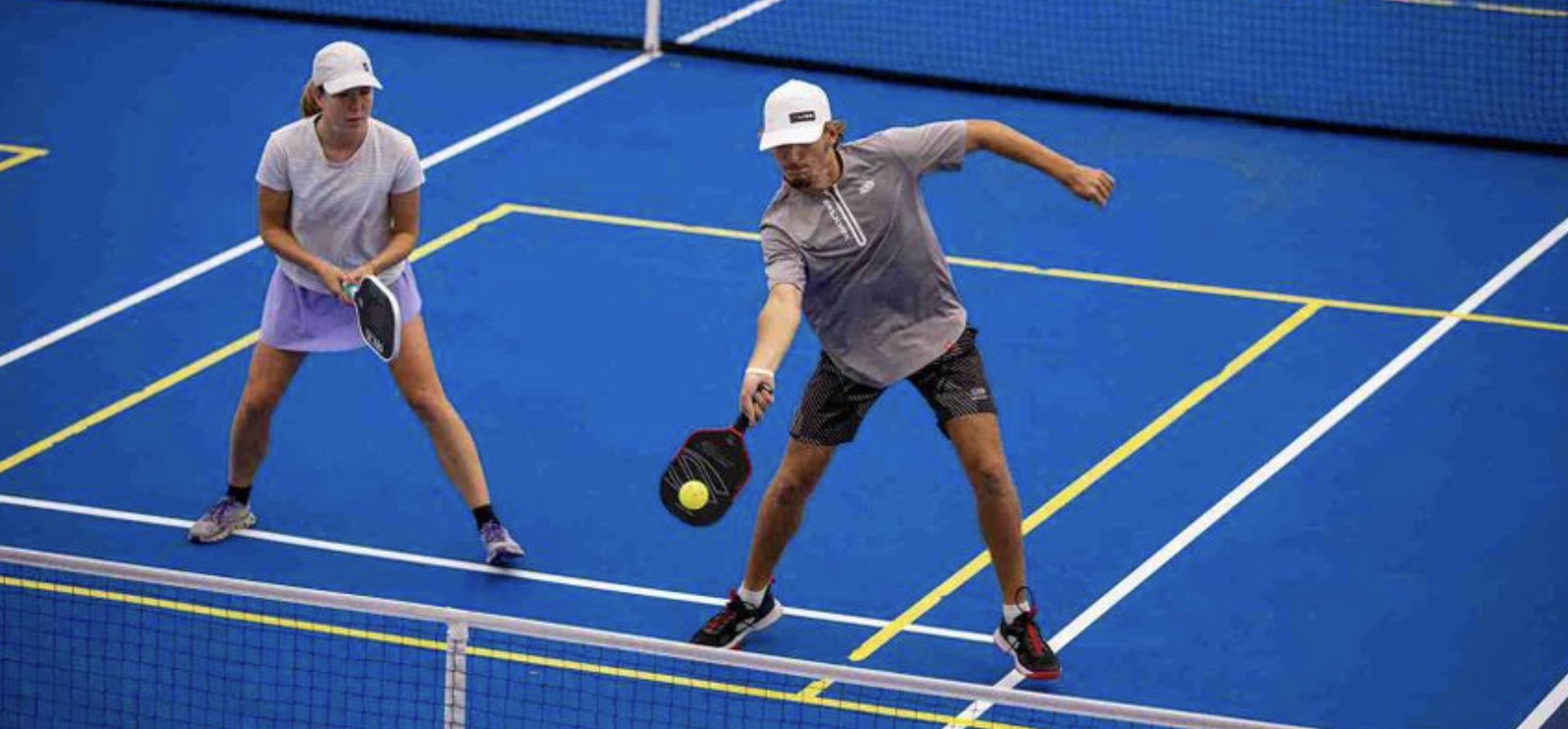
Effective topspin relies on two critical components working in harmony: your brush angle and paddle path. Miss either element, and your shots will lack the spin needed to control rallies.
Component 1: Achieving the Perfect Brush Angle
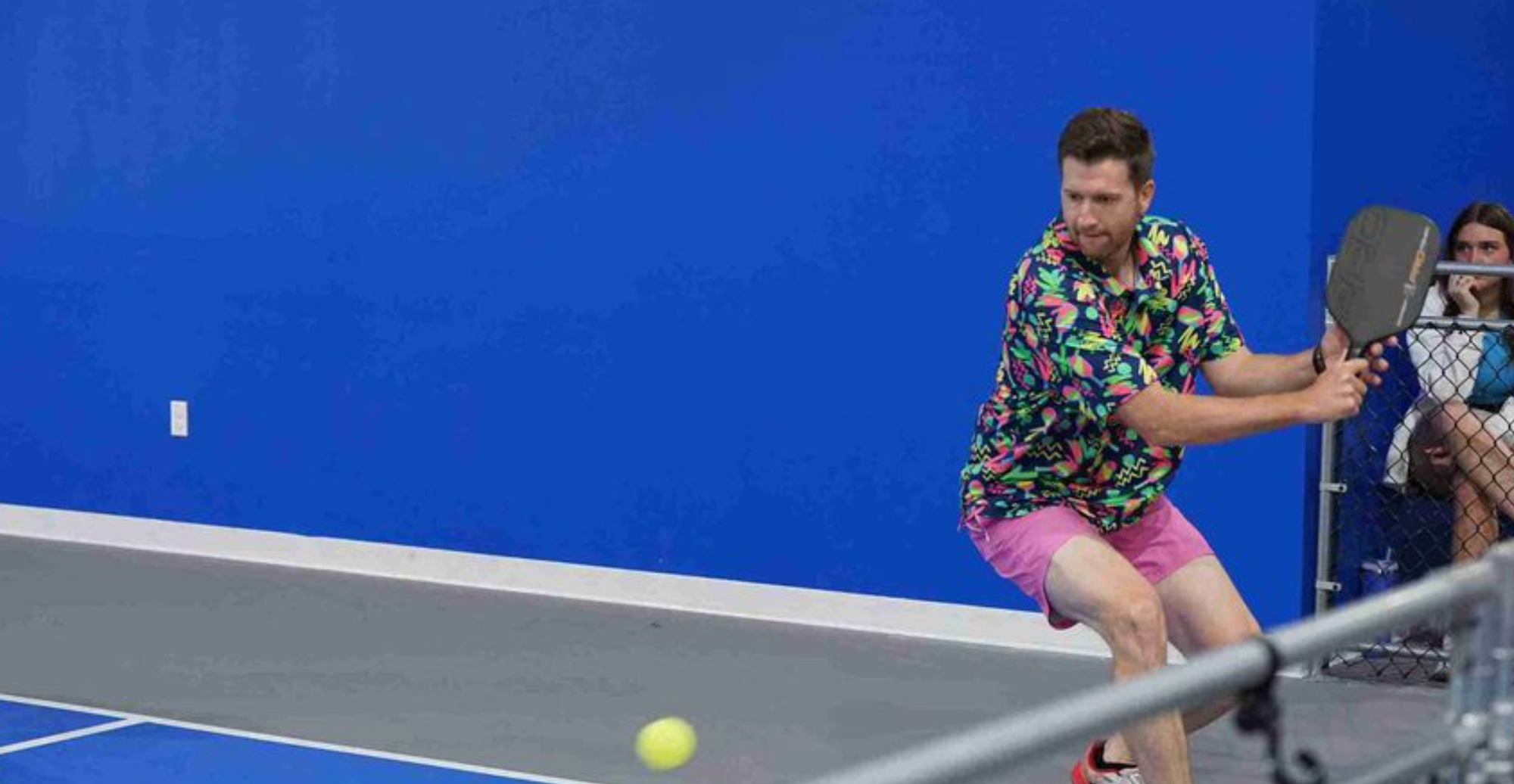
The brush angle refers to how your paddle face contacts the ball during impact. For maximum topspin, you need a steep upward brushing motion that grips the ball's surface.
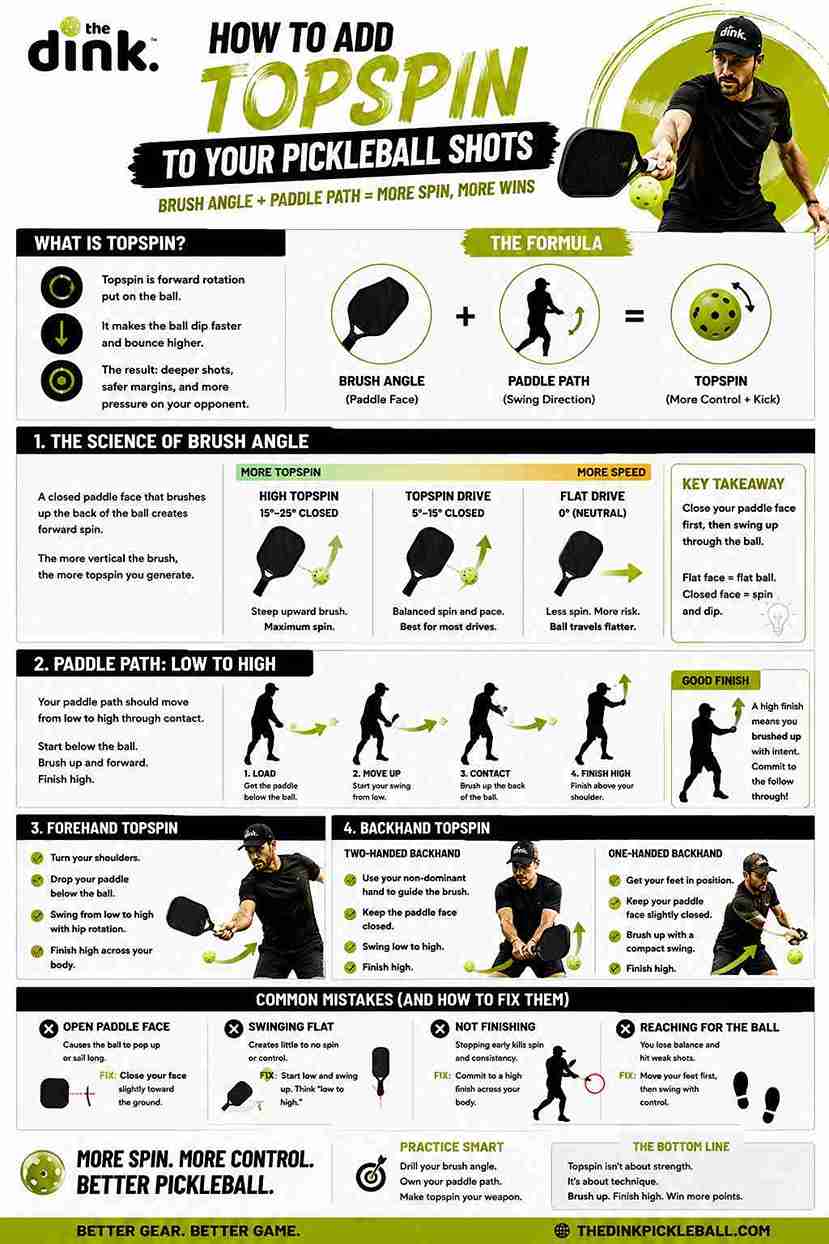
Think of it like brushing lint off clothing—your paddle should sweep upward across the ball's back surface. This contact creates the forward rotation that makes your shots so effective.
Common mistakes include:
- Hitting through the ball instead of brushing across it
- Using too flat of a paddle angle at contact
- Rushing the brushing motion
Component 2: Low-to-High Paddle Path
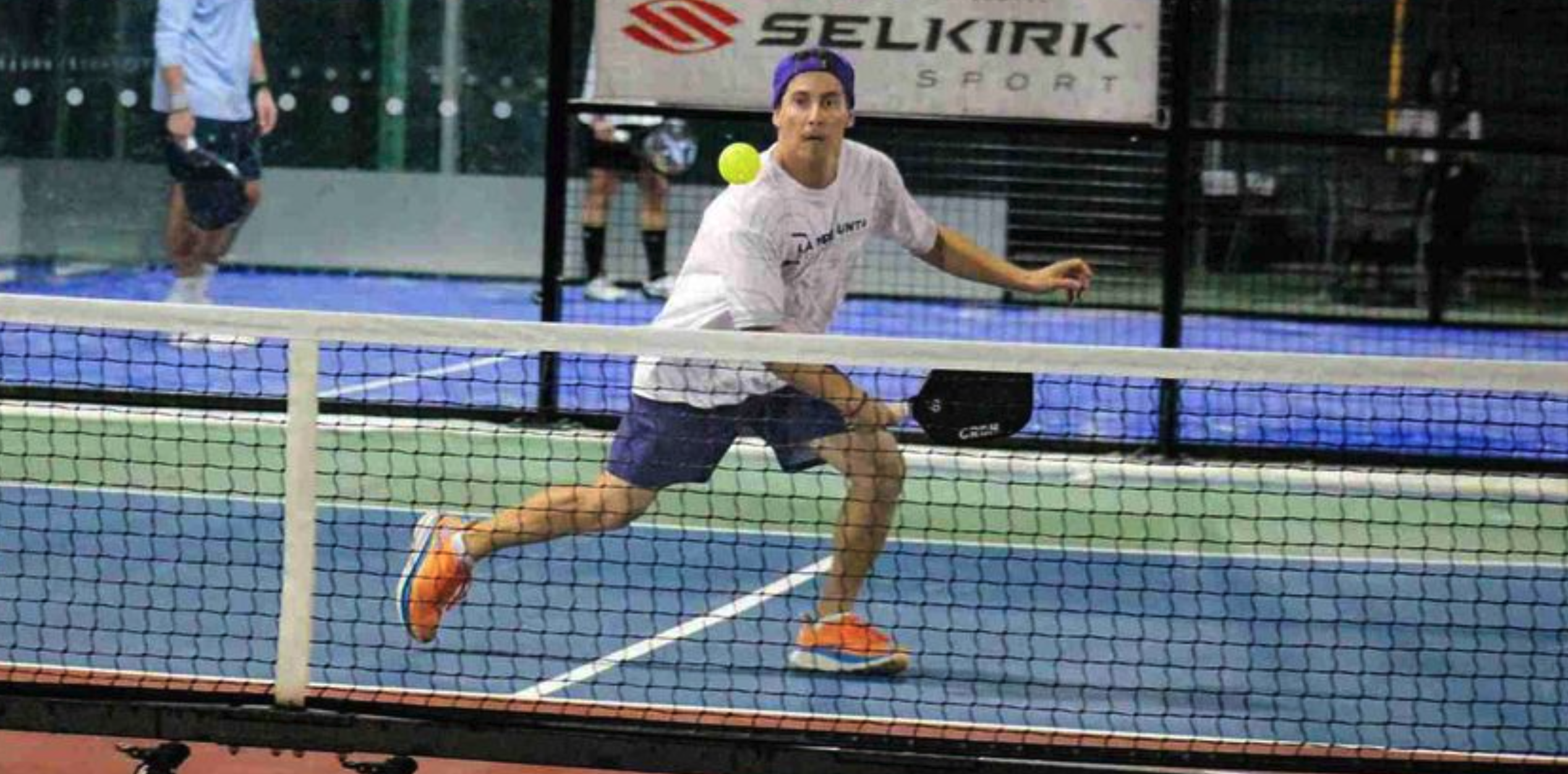
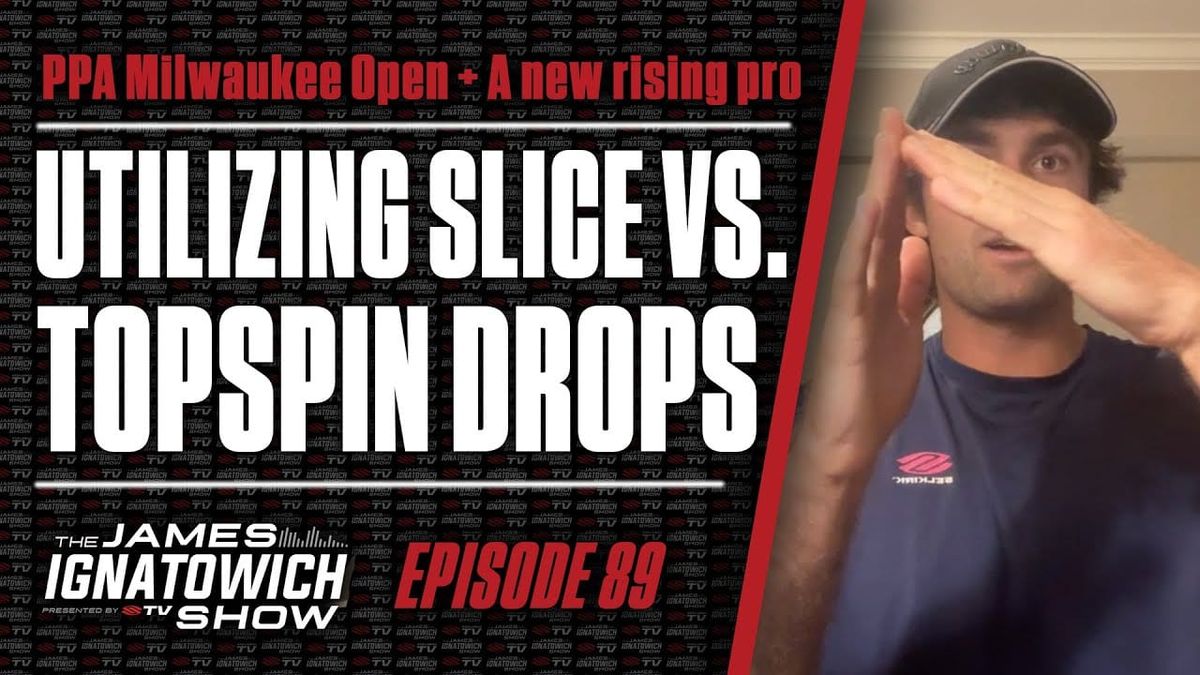
Your paddle's trajectory is equally crucial. The most effective topspin comes from starting your swing below the ball's contact point and finishing well above it.
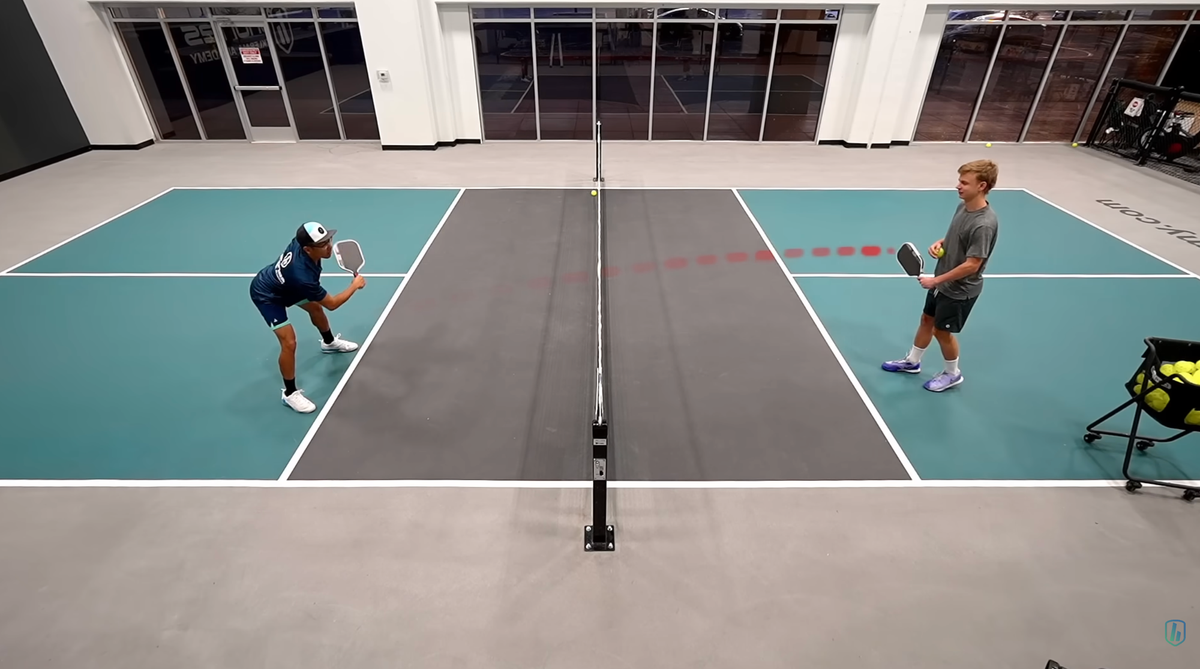
This low-to-high motion accomplishes several things:
- Creates natural upward brushing action
- Generates consistent ball rotation
- Allows for better shot clearance over the net
- Provides built-in margin for error
The key is maintaining this upward swing path even on balls that seem too high. Resist the temptation to swing level or downward—trust the technique.
Practice Progressions That Work
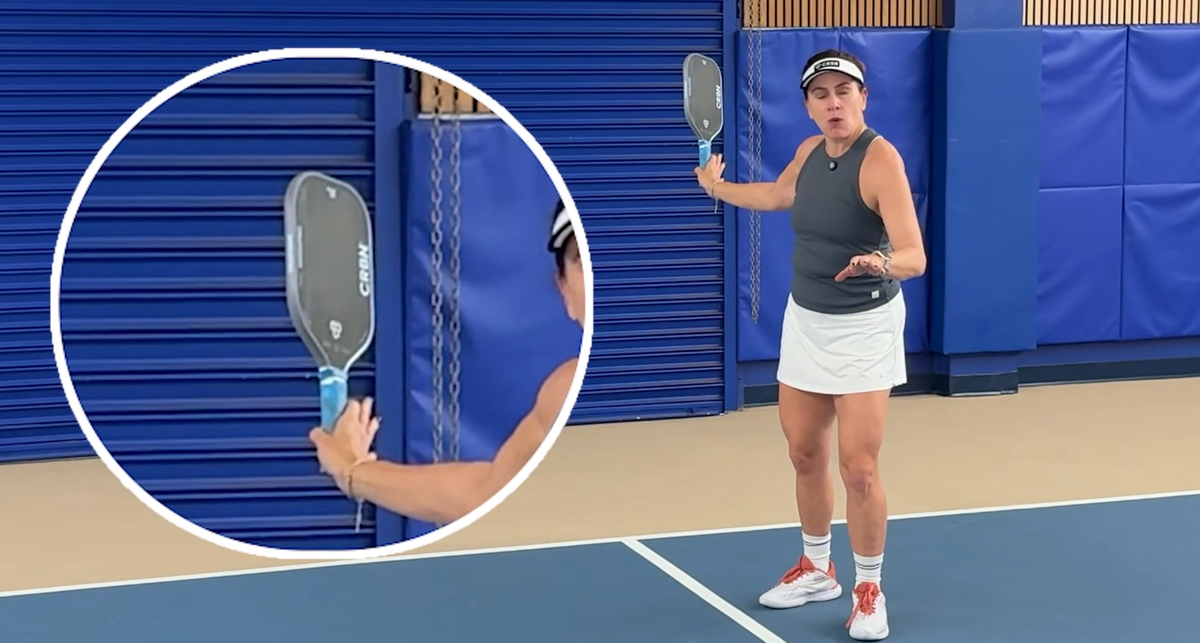
Stage 1: Wall Practice
Start against a wall to groove the fundamental motions. Focus purely on brush angle and paddle path without worrying about court positioning or opponent reactions.
Hit 50-100 balls daily, concentrating on the upward brushing sensation. You should hear a distinct "whoosh" sound when executing proper topspin technique.
Stage 2: Court Drilling
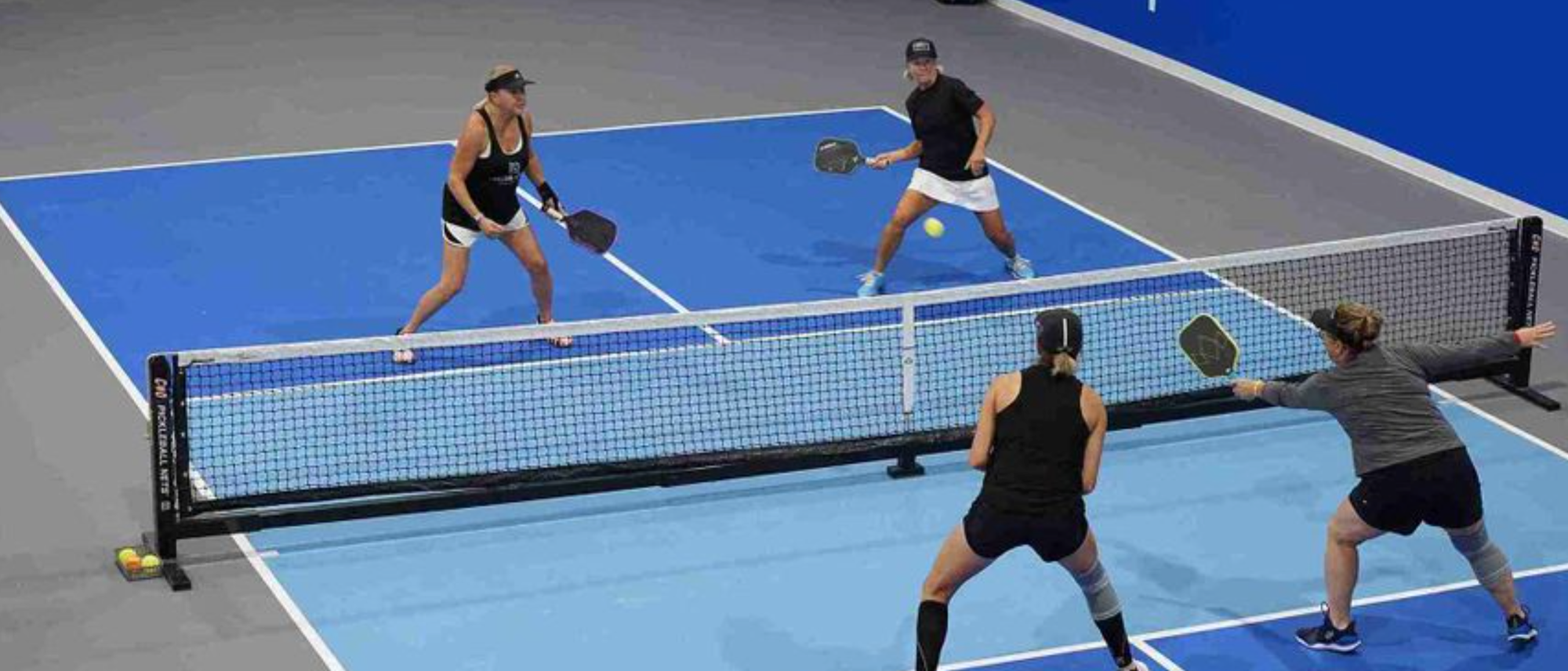
Move to cross-court practice with a partner. Aim for shots that land in the back third of the court and observe the high bounce pattern.
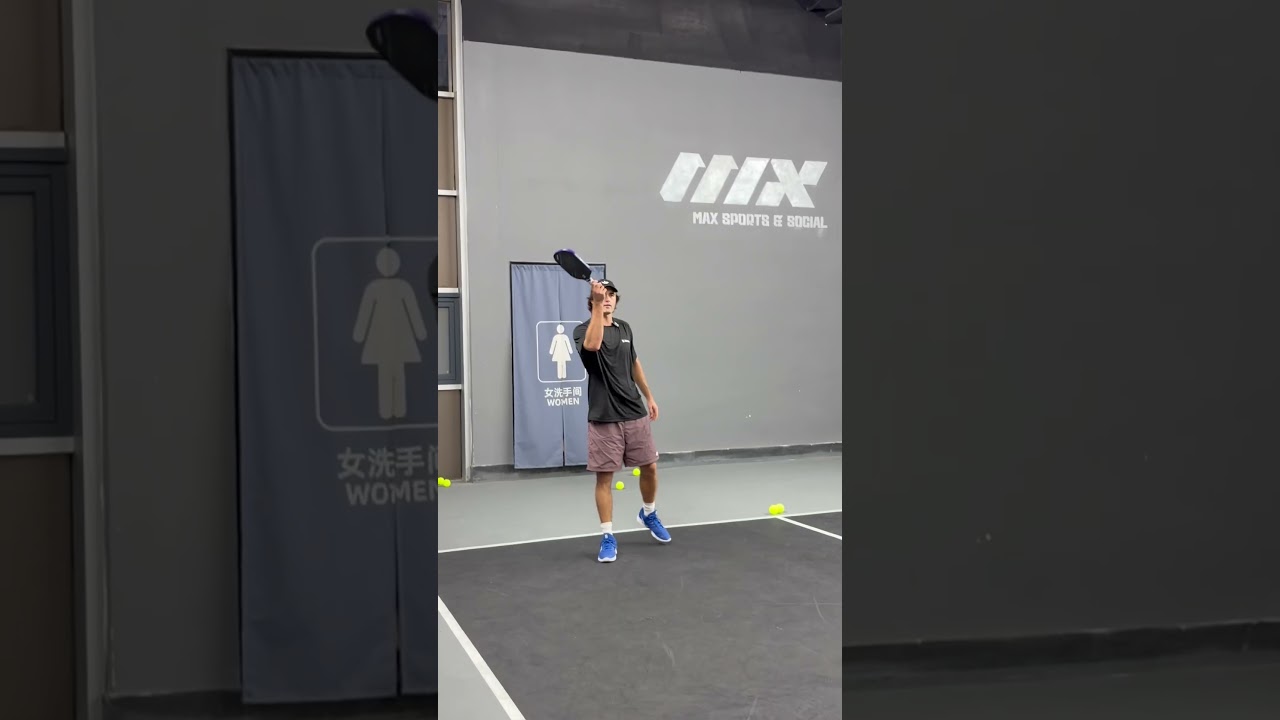
Start with slower-paced rallies to cement the mechanics, then gradually increase intensity while maintaining proper form.
Stage 3: Game Integration
Begin incorporating topspin shots during actual games. Focus on specific situations:
- Passing shots down the line
- Cross-court drives
- Offensive returns of serve
- Transition shots when moving forward
When to Use Topspin Strategically
Topspin isn't appropriate for every shot. The technique works best when you want to:
Apply offensive pressure: Deep topspin drives push opponents back and create court positioning advantages.
Clear the net safely: The high trajectory provides excellent net clearance while still landing deep.
Handle low balls: The low-to-high swing path naturally accommodates balls below net level.
Counter defensive lobs: Aggressive topspin shots can turn defensive situations into offensive opportunities.
Common Technical Fixes
If your topspin shots consistently sail long, you're likely not brushing steeply enough or your paddle face is too open. Conversively, balls hitting the net usually indicate insufficient upward swing path or closed paddle positioning.
Remember that topspin development takes patience. Focus on consistency over power initially—the speed will come naturally as your technique solidifies.
Frequently Asked Questions
How long does it take to develop reliable topspin shots?
Most players see noticeable improvement within 2-3 weeks of focused practice. However, developing consistent match-ready topspin typically takes 1-2 months of regular drilling and game integration.
Should I use topspin on every groundstroke?
No, topspin is a strategic tool rather than a default shot. Use it when you want to apply pressure, handle low balls, or create aggressive court positioning. Soft game situations often call for different techniques.
Can beginners learn topspin, or should they master basics first?
Beginners can absolutely learn topspin, but they should have consistent contact and basic stroke mechanics first. Once you can rally reliably, adding topspin becomes much more manageable and rewarding.