Pro Pickleball Point in Slow Motion Reveals Hidden Secrets
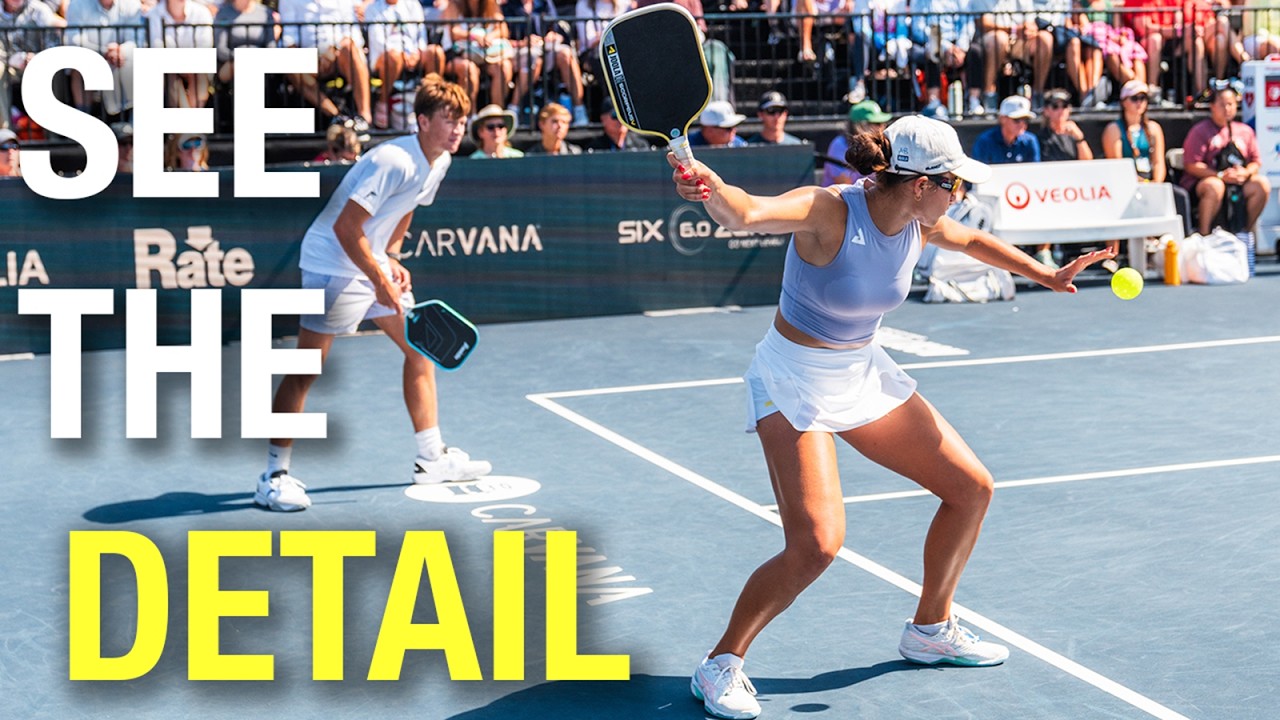
The Hidden World of Professional Pickleball
At tournament speed, professional pickleball appears to be pure chaos. Players move with lightning reflexes, paddles blur through the air, and the ball travels so fast that spectators can barely follow the action. But when we strip away the speed and examine elite gameplay in ultra-slow motion, an entirely different picture emerges—one that reveals the incredible precision, strategy, and technique that separates pros from recreational players.
What Slow Motion Reveals About Elite Play
When professional points are captured at high frame rates and played back in slow motion, several remarkable elements become visible that are completely imperceptible during real-time viewing. The controlled chaos transforms into a chess match of calculated movements and split-second decisions.
Paddle Face Control and Ball Manipulation
In slow motion, you can observe how elite players subtly adjust their paddle face angle throughout each stroke. What appears to be a simple forehand or backhand in real time actually involves micro-adjustments that allow pros to place the ball with surgical precision. The paddle face opens and closes by mere degrees, creating spin variations that recreational players often miss entirely.
Footwork Fundamentals in Detail
Professional footwork becomes a masterclass when viewed frame by frame. Elite players don't just move to where the ball is going—they position themselves optimally for their next shot while still executing their current one. Their weight transfer, split-step timing, and recovery movements follow patterns that maximize court coverage and shot quality.
The Science Behind Elite Shot Selection
Slow-motion analysis reveals that professional players begin preparing their shots much earlier than amateur players realize. Before their opponent's paddle even contacts the ball, elite players are already reading the trajectory, spin, and likely landing zone. This early preparation allows them to execute shots that seem impossible at full speed.
Anticipation vs. Reaction
While recreational players often rely on reaction, professionals operate primarily on anticipation. Slow-motion footage shows how they position themselves based on visual cues like their opponent's body position, paddle angle, and court positioning. This anticipatory movement creates the illusion of superhuman reflexes when viewed at normal speed.
Strategic Positioning and Court Geometry
The geometric precision of professional play becomes crystal clear in slow motion. Players don't just hit the ball hard—they manipulate angles, create openings, and force their opponents into disadvantageous positions. Every shot serves multiple purposes: immediate scoring opportunity, court positioning, and setting up future shots.
Learning from Slow-Motion Analysis
For developing players, slow-motion professional footage serves as an invaluable learning tool. It reveals the subtle techniques that separate good players from great ones and provides a roadmap for improvement that's invisible during live play.
Key Takeaways for Your Game
Studying professional play in slow motion can dramatically improve your understanding of proper technique. Focus on paddle preparation, weight transfer timing, and early shot recognition. Notice how pros maintain balance throughout their shots and how they position themselves for optimal shot angles.
The most important lesson from slow-motion analysis is that professional pickleball isn't about raw power or impossible reflexes—it's about perfect technique executed with precise timing. When you understand the mechanics behind elite play, you can begin incorporating these elements into your own game.
The Future of Pickleball Analysis
As high-speed camera technology becomes more accessible, slow-motion analysis is revolutionizing how players and coaches understand the game. This technology provides unprecedented insights into technique refinement and strategic development that were previously invisible to the human eye.
Frequently Asked Questions
How can slow-motion analysis improve my pickleball game?
Slow-motion footage reveals proper technique details that are invisible at normal speed, including paddle face control, footwork patterns, and timing sequences. By studying these elements, you can identify areas for improvement in your own game and understand the mechanics behind advanced shots.
What should I focus on when watching professional pickleball in slow motion?
Pay attention to paddle preparation, weight transfer, early positioning, and how players set up shots multiple moves in advance. Notice the subtle paddle face adjustments and how professionals maintain balance throughout complex movements.
Do I need special equipment to analyze my own game in slow motion?
Most modern smartphones can record in slow motion at sufficient quality for basic analysis. While professional-grade high-speed cameras provide more detail, smartphone slow-motion features can reveal many technique improvements for recreational players.