Why Most Players Get Caught Flat-Footed at the Kitchen
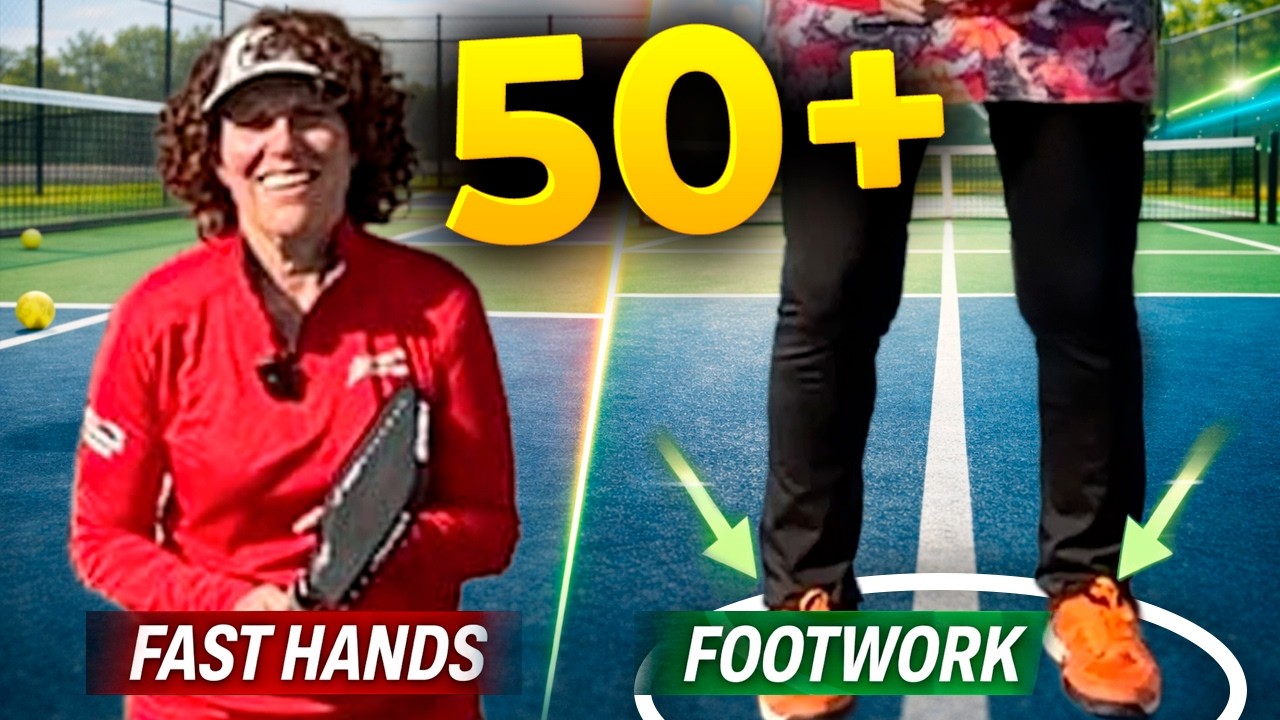
If you've ever found yourself scrambling to return a fast-paced volley at the non-volley zone, you're not alone. Most recreational players believe the solution is developing "faster hands," but professional coaches know the real secret lies in your feet.
The split step is a fundamental footwork technique that separates intermediate players from advanced competitors. This simple yet powerful move stops your forward momentum at precisely the right moment, giving your brain the critical split second needed to read your opponent's paddle and react accordingly.
What Is the Split Step in Pickleball?
The split step is a small hop or bounce that players execute just as their opponent makes contact with the ball. During this brief moment, both feet leave the ground simultaneously, then land in a balanced, athletic position with feet shoulder-width apart.
This technique serves multiple purposes:
- Halts forward momentum that could throw you off balance
- Activates your leg muscles for explosive movement in any direction
- Creates a stable base for quick lateral movement
- Provides crucial reaction time to process shot direction and speed
When to Execute the Perfect Split Step
Timing is everything with the split step. The key is to initiate the small hop just before your opponent's paddle makes contact with the ball. This timing allows you to:
At the Kitchen Line
Execute a split step when approaching the non-volley zone as your opponent prepares to hit. This stops your forward momentum and prepares you for rapid directional changes during fast exchanges.
During Transition Play
Use the split step when moving from the baseline toward the kitchen. As you advance and your opponent sets up for their shot, the split step helps you pause and assess before continuing forward or moving laterally.
On Defense
When facing aggressive attackers, the split step becomes your defensive anchor. It allows you to maintain balance while preparing for powerful drives or unexpected drop shots.
Step-by-Step Split Step Technique
1. Read Your Opponent's Setup
Watch your opponent's paddle preparation and body positioning. Start anticipating their contact point as they begin their swing.
2. Execute the Hop
Perform a small, controlled hop with both feet leaving the ground simultaneously. The movement should be subtle—think "bounce" rather than "jump."
3. Land in Athletic Position
Land with feet shoulder-width apart, knees slightly bent, and weight on the balls of your feet. Your paddle should be in the ready position in front of your body.
4. React and Move
From this balanced position, explosively push off in the direction needed to reach the ball. Your first step should be quick and decisive.
Common Split Step Mistakes to Avoid
Jumping Too High: The split step should be a small bounce, not a dramatic jump. Excessive height increases your time in the air and delays your ability to move.
Poor Timing: Split stepping too early or too late negates the benefits. Practice timing your split step with your opponent's paddle contact.
Landing Heavy: Avoid landing flat-footed or with stiff legs. Maintain athletic flexion in your knees and ankles for optimal mobility.
Drills to Master the Split Step
Shadow Split Step: Without a ball, practice split stepping as you imagine opponent shots. Focus on timing and landing position.
Partner Feed Drill: Have a partner feed balls while you practice split stepping before each return. Start slowly and gradually increase pace.
Kitchen Line Simulation: Practice approaching the kitchen with split steps, focusing on stopping forward momentum while maintaining balance.
Advanced Split Step Applications
As you master the basic technique, incorporate directional preparation into your split step. Slightly favor the foot in the direction you anticipate moving, giving yourself a head start on ball pursuit.
Elite players often combine split steps with weight shifts, leaning slightly toward their opponent's most likely target areas based on court positioning and paddle angle.
FAQ
How often should I use the split step during a point?
Use the split step whenever you're uncertain about your opponent's next shot direction, especially during kitchen exchanges and transition play. It's better to split step too often than not enough while learning.
Does the split step work for both singles and doubles?
Yes, the split step is essential in both formats. In doubles, it's particularly valuable at the kitchen line where quick reactions to volleys are crucial. In singles, it helps during baseline rallies and approach shots.
Can the split step help with my serve return?
Absolutely. Execute a split step as your opponent contacts their serve. This helps you react more quickly to serves directed to different areas of your service box and improves your return positioning.