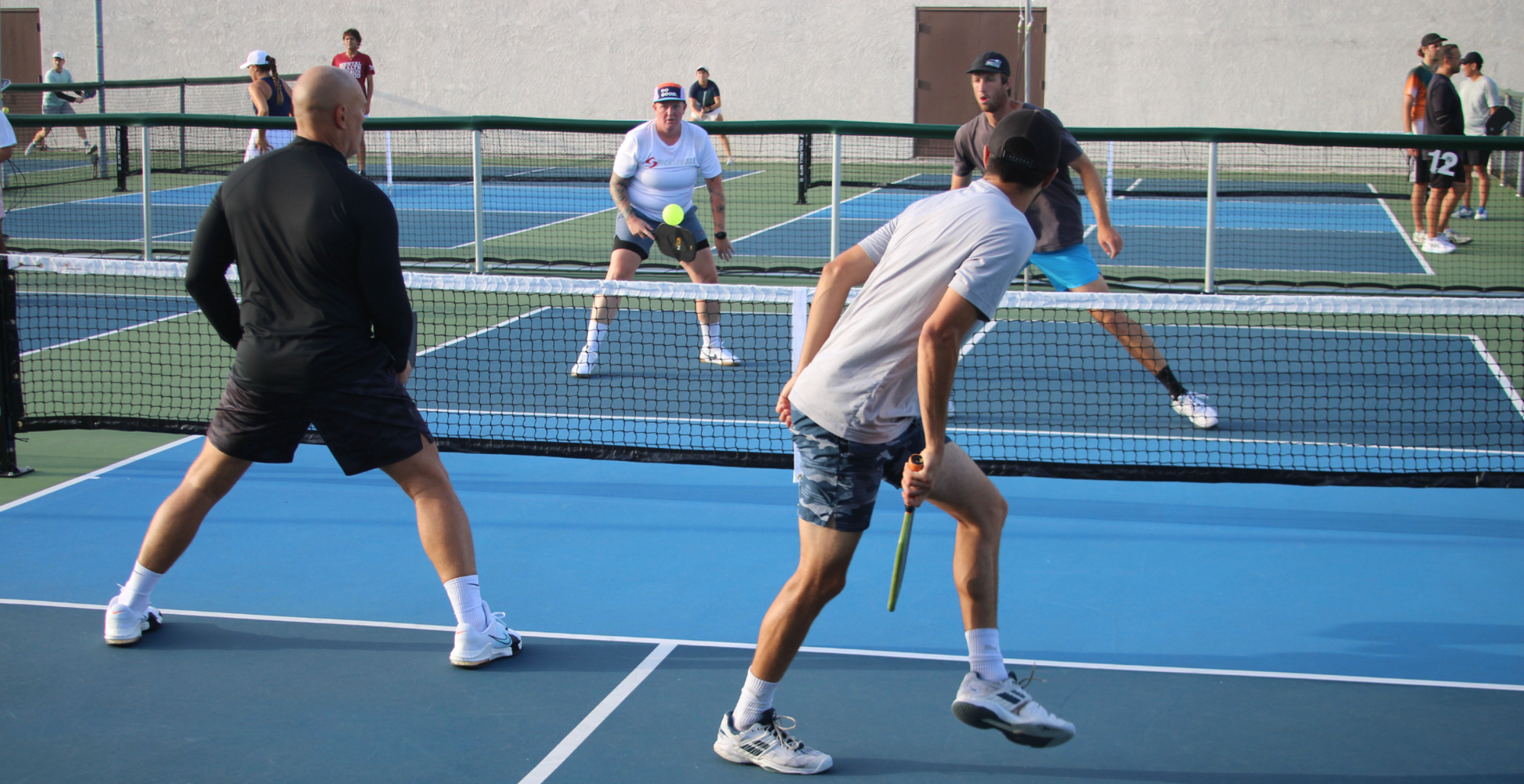
Every recreational pickleball player has been there: a shot comes down the middle, both players hesitate or collide, and the point is lost. Suddenly, everyone's debating who should have taken that ball. It's the most contentious issue on recreational courts nationwide.
The confusion ends today. While the basic rule seems simple—forehand player takes the middle—the reality involves multiple factors that determine proper court coverage in doubles play.
The Fundamental Rule: Forehand Takes Middle
The primary principle is straightforward: the player who can hit a forehand from the middle takes the shot. This rule exists because forehand shots typically offer better control, power, and accuracy than backhand returns.
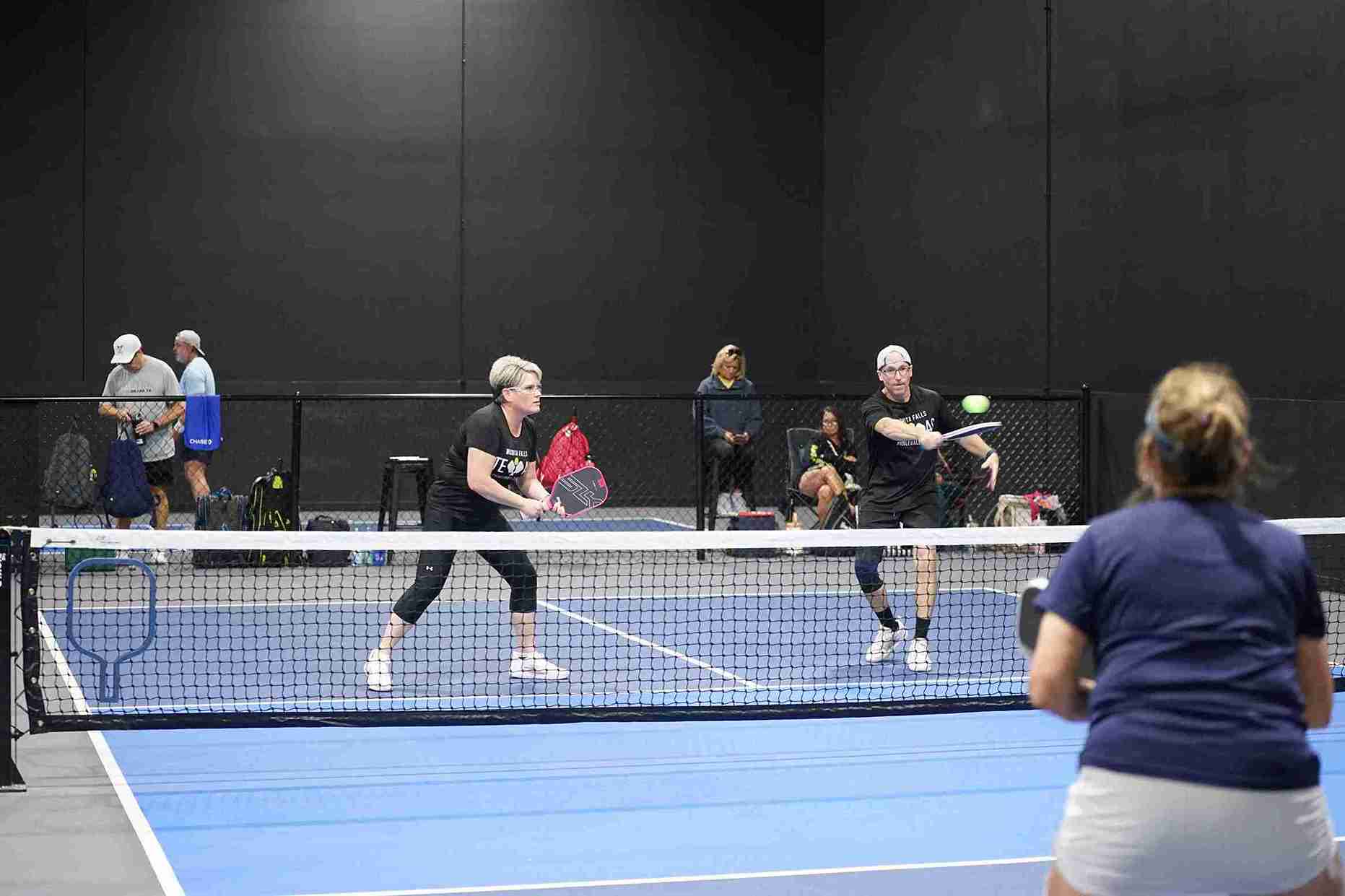
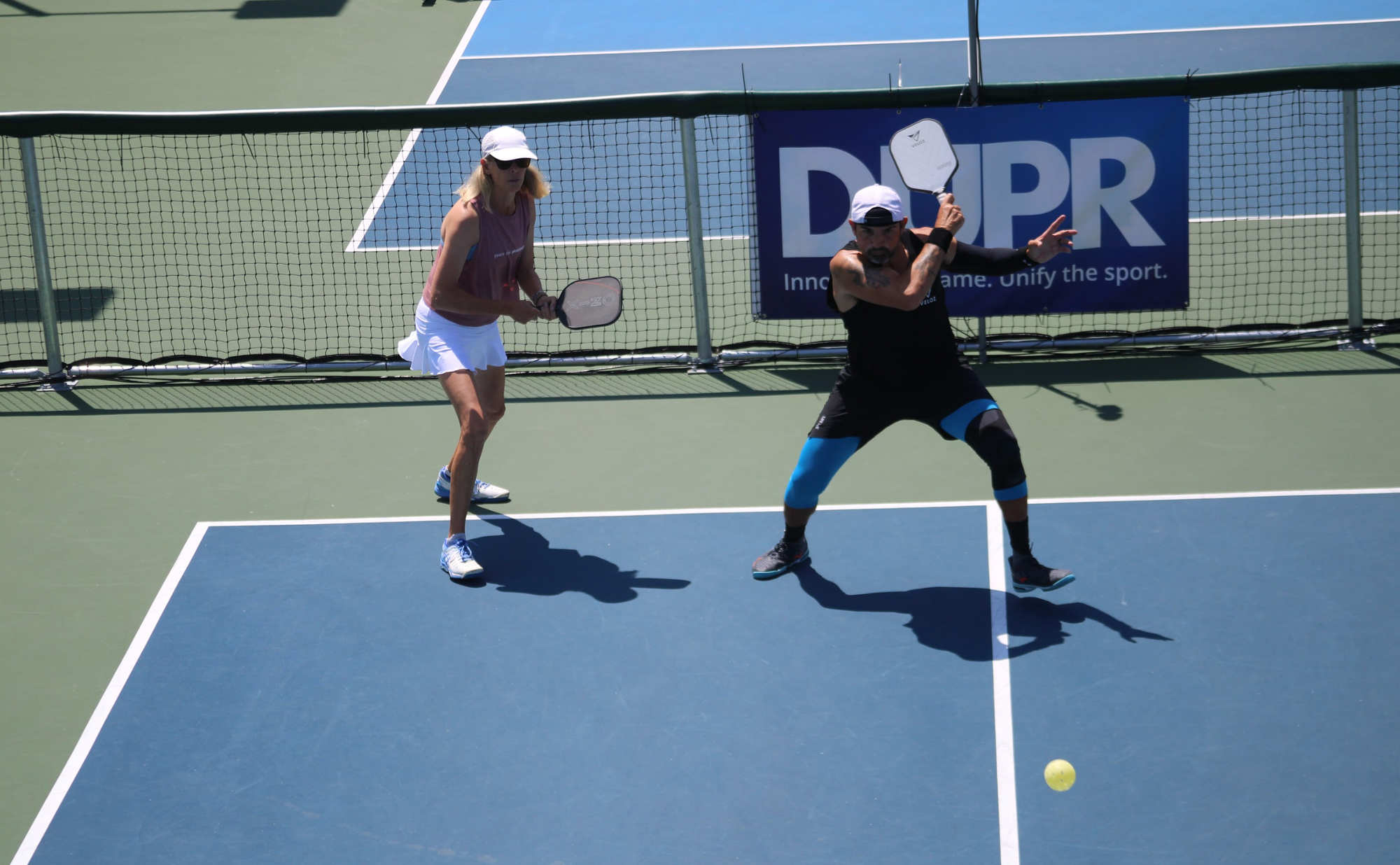
When both players are positioned at the baseline or both at the net, the player whose forehand side faces the middle of the court has responsibility for balls hit between partners. This creates cleaner shot execution and reduces awkward reaching across the body.
Court Position Changes Everything
However, court positioning significantly impacts middle coverage responsibilities. The forehand rule applies when partners are positioned at similar depths on the court—both at baseline or both at the non-volley zone.
When Players Are at Different Depths
During transition play, when one player advances to the net while their partner remains back, different rules apply:
- Net player covers short middle balls regardless of forehand position
- Baseline player handles deep middle shots even if it requires a backhand
- Communication becomes crucial for balls landing in the transition zone
The Communication Factor
Effective partnerships establish clear communication patterns that override the basic forehand rule when necessary. Verbal and non-verbal cues help partners make split-second decisions about middle coverage.
Essential Communication Strategies
"Mine" calls override positioning rules. When a player calls for a ball confidently, their partner should clear the space immediately. Hesitant or late calls create more problems than silence.
"Switch" or "yours" helps redirect responsibility when court position makes it obvious the non-forehand player has a better angle or setup for the return.
Advanced Positioning Considerations
Experienced players recognize that middle coverage involves more than just forehand positioning. Several factors influence optimal shot selection:
Player Strengths and Weaknesses
Smart partnerships adapt the forehand rule based on individual capabilities. If one player has a significantly stronger backhand or better reach, they might take middle balls even from the backhand side.
Shot Setup and Angle
The incoming ball's trajectory and speed determine which player has the better setup. A ball with heavy topspin might favor the player with better low-ball handling skills, regardless of forehand positioning.
Similarly, sharply angled shots toward the middle might be better handled by whichever player can maintain better balance and court position after the return.
Common Middle Coverage Mistakes
Understanding what not to do helps prevent the most frequent middle-ball disasters:
- Both players going for the same ball creates collisions and weak returns
- Both players backing off leaves easy putaway opportunities
- Late decision-making results in rushed, off-balance shots
- Ignoring court positioning in favor of rigid rule following
Practice Drills for Better Middle Coverage
Developing consistent middle coverage requires deliberate practice. Partners should drill specific scenarios where middle balls create confusion, practicing both the physical positioning and communication elements.
Start with stationary drills where both players position themselves at the baseline or net, then progress to dynamic situations involving transitions and varying ball speeds.
Frequently Asked Questions
What if both players are left-handed or right-handed?
When both players have the same dominant hand, the player positioned on their forehand side of the court (right side for righties, left side for lefties) typically covers the middle. However, communication and court positioning become even more critical.
Should the stronger player always take middle balls?
While skill level matters, consistently abandoning positional rules creates confusion and poor court coverage. It's better to maintain consistent positioning while making occasional exceptions through clear communication.
How do you handle middle balls during fast exchanges?
During rapid-fire exchanges, pre-established positioning rules become crucial since there's no time for discussion. Partners should agree beforehand on their middle coverage system and trust their positioning rather than trying to communicate mid-point.